
People Movement
Anuj Rathi Named Next CEO of HSBC Mutual Fund

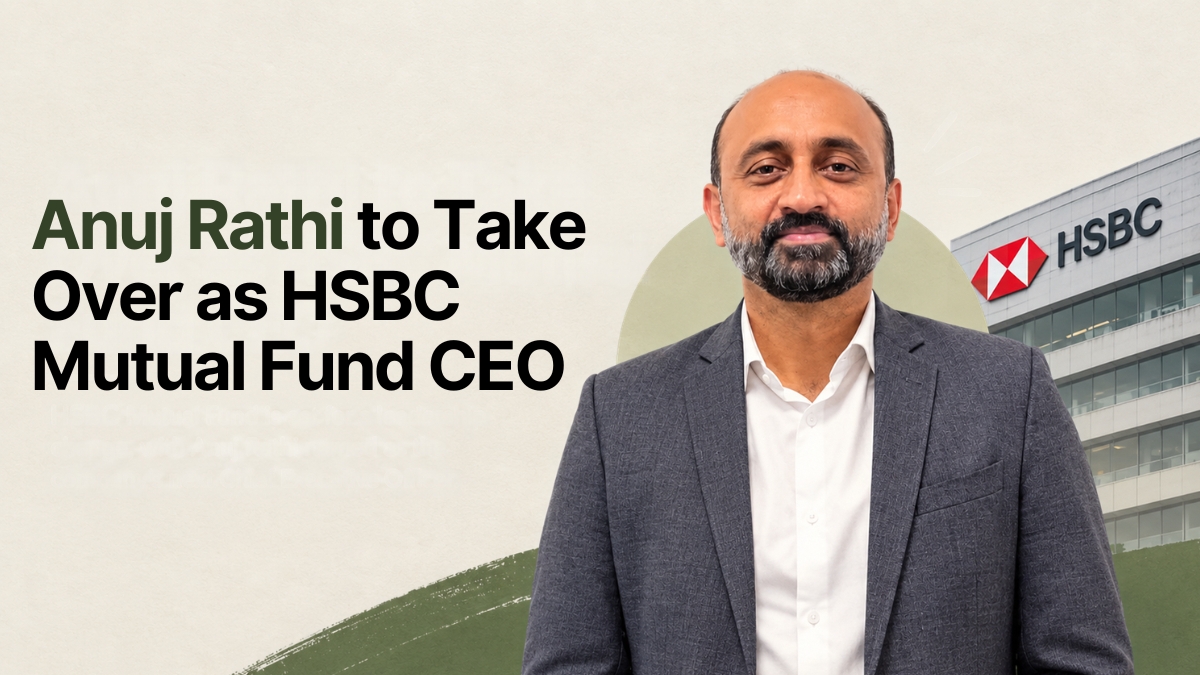
HSBC Mutual Fund has announced a leadership transition, with Anuj Rathi appointed as the next Chief Executive Officer of the fund house.
Rathi, who currently serves as Managing Director and Head of HSBC Securities Services, India, will succeed Kailash Kulkarni, who is expected to retire early next year.
As part of the planned transition, Rathi will work closely with Kulkarni to ensure a smooth handover and continuity at the asset management business, HSBC said.
Rathi has been with HSBC for over 21 years and has held several leadership roles within the organisation. His appointment marks an internal leadership transition, with the top position at HSBC Mutual Fund continuing to remain within the HSBC group.
Kulkarni has been associated with HSBC Mutual Fund for more than three years. Prior to HSBC’s acquisition of L&T Investment Management, he had served as the CEO of L&T Mutual Fund for over a decade.
As of June 2026, HSBC Mutual Fund had assets under management of around ₹1.44 lakh crore, according to the Association of Mutual Funds in India (AMFI). The fund house offers 45 mutual fund schemes.
The leadership transition comes as HSBC continues to strengthen its asset management business in India, with Rathi set to take charge of the fund house in the coming months.



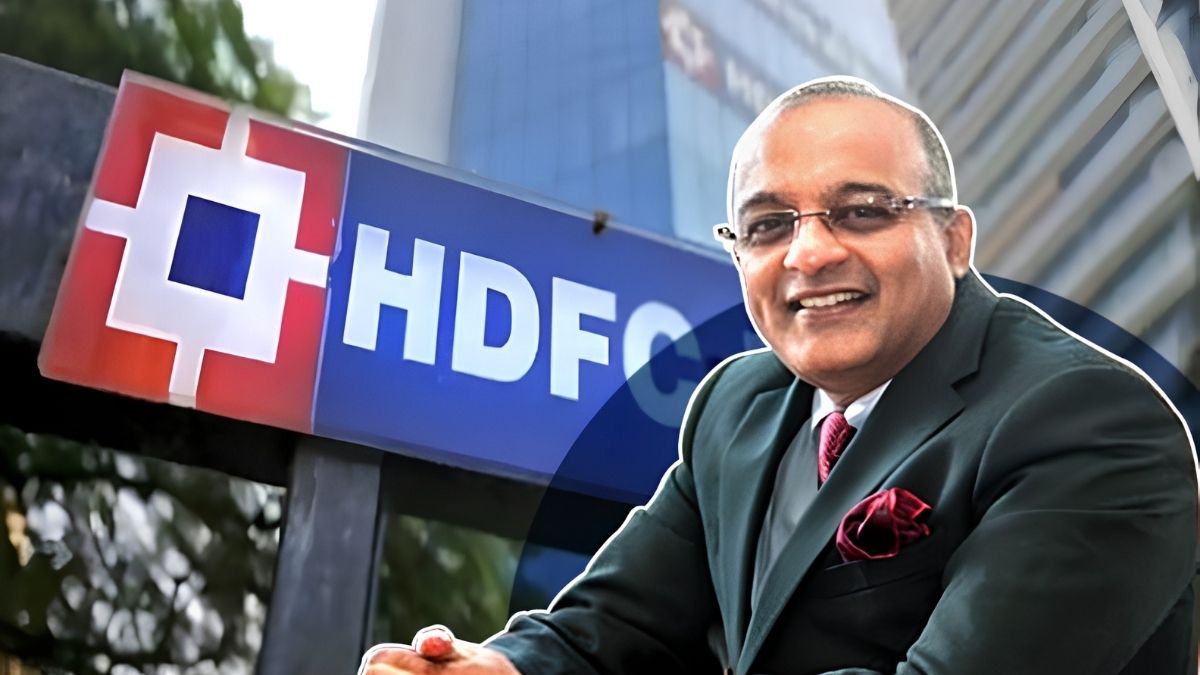
The leadership change is unlikely to affect day-to-day banking immediately, but the next CEO’s strategy could influence lending, deposit rates, digital services and the bank’s financial performance. HDFC Bank Managing Director and CEO Sashidhar Jagdishan’s decision to retire in October 2026 has brought the leadership of India’s largest private-sector bank into focus.
While the immediate concern for the bank is finding a successor, the change also raises questions for millions of HDFC Bank customers, borrowers, depositors and shareholders.
Moody’s Ratings has said the unexpected leadership transition introduces a degree of risk, particularly around strategy execution and risk management. However, it also noted that HDFC Bank’s strong franchise, senior management team and financial profile could help limit these risks.
The bank’s board has said it has already started the succession process.
Will HDFC Bank Customers Be Affected?
For most customers, there is unlikely to be an immediate change in routine banking services because of the CEO’s retirement.
Existing savings accounts, fixed deposits, loans, credit cards and digital banking services will continue to operate under the bank’s existing policies.
However, the new leadership could eventually influence how the bank approaches products and services. Changes in business strategy could affect areas such as lending growth, deposit mobilisation, digital banking, customer acquisition and pricing.
For customers, this means the impact is more likely to emerge over time rather than immediately after the leadership transition.
What About Loan Customers?
The appointment of a new CEO could become relevant for borrowers depending on the bank’s future lending strategy.
HDFC Bank’s approach towards retail and corporate lending, risk assessment and credit growth will be among the areas closely watched by investors and analysts.
A change in strategy could influence how aggressively the bank expands lending and how it balances loan growth with asset quality.
For existing borrowers, however, a change in CEO does not automatically alter the terms of an existing loan. Any changes would depend on the terms of individual loan agreements and the bank’s subsequent policies.
Impact on Depositors
Depositors are also unlikely to see an immediate impact from the leadership transition.
Interest rates on savings accounts and fixed deposits are determined by the bank’s prevailing policies and market conditions, rather than directly by the CEO.
Over the longer term, however, the new management’s approach to deposits could matter. Banks need deposits to fund lending, and competition for deposits can influence the interest rates offered to customers.
A new leadership team may therefore reassess how HDFC Bank balances deposit growth, lending and profitability.
Why Investors Are Watching the Succession
HDFC Bank’s shares have already faced pressure. The bank’s stock fell 1.53% on August 31 to Rs 709 on the BSE and touched a 52-week low of Rs 704.40 during the session. The stock has underperformed by about 28% year to date, according to the source.
The leadership transition adds another factor for investors to consider.
Several brokerages have identified Deputy Managing Director Kaizad M. Bharucha as a potential internal successor, while external names have also emerged as possible candidates.
Analysts have highlighted that the choice of the next CEO could influence how the market views the bank’s future growth, profitability and strategy.
A credible successor with a clear plan could help improve investor confidence, while a prolonged or uncertain succession process could keep the stock under pressure.
What Could Change Under a New CEO?
The next CEO will inherit a large banking franchise but will also face several business priorities.
These include improving margins and profitability, maintaining asset quality, managing the balance sheet and sustaining growth following the merger with HDFC Ltd.
For customers, these decisions matter because a bank’s financial strategy eventually affects the products and services it offers.
For example, stronger competition for deposits could influence deposit rates, while changes in lending priorities could affect the availability and pricing of credit for different categories of borrowers.
The bank’s investment in digital services, branch expansion and customer-facing technology could also depend on the priorities of the incoming management.
What Should Customers Watch?
Customers do not need to make immediate changes simply because of the CEO transition.
Instead, they should continue to compare interest rates, loan offers, deposit rates and service charges when making financial decisions, rather than assuming that a leadership change will automatically affect their existing products.
For investors, the more important developments will be the appointment of the new CEO, the mandate given to the successor and any changes in the bank’s business strategy.
Succession Is the Key Focus
The immediate challenge for HDFC Bank is therefore to ensure an orderly transition.
Moody’s has said continuity in strategy and an orderly succession process will be important for maintaining stakeholder confidence.
For the common customer, the CEO’s retirement is unlikely to change how their bank account works tomorrow. But the leadership decision could shape how HDFC Bank approaches lending, deposits, technology and profitability over the coming years.
The eventual impact will depend largely on who takes charge and the strategy the new leadership adopts.
Source: The Hindu
-
 Podcast1 year ago
Nitin Jain: From IIT to Investment Titan, Managing ₹60,000 Crore AUM
-
 News3 weeks ago
SC Says No Stay On New UPI Charges Above ₹2,000
-
 News4 weeks ago
NSE Makes Long-Awaited Market Debut After ₹22,562-Crore IPO
-

 Explainer5 months ago
How Much SIP Do You Need to Build ₹1 Crore? The Power of Time and Compounding
-
 Podcast2 years ago
From ₹1 Lakh Lost to Managing ₹650 Crore: How Divam Sharma of Green Portfolio Built a Fundamental Investing Approach
-
 Podcast4 months ago
Can ₹200 SIPs Create India’s Next Investing Revolution? Ravi Kumar Jha’s Big Bet On Financial Inclusion
-
 Podcast1 year ago
From ₹1 Lakh Lost to Managing ₹650 Crore: How Divam Sharma of Green Portfolio Built a Fundamental Investing Approach
-
 Podcast2 months ago
Simple Hai! @ 100: Celebrating a Milestone in Making Finance Simple