
News
Why Indian Stocks Are Struggling: Nirmala Sitharaman Flags the Problem of Easy Exit


India’s economy may be holding up, but its stock market has been a different story. With benchmark indices Sensex and Nifty struggling to deliver positive returns over the past two years, Finance Minister Nirmala Sitharaman has highlighted a concern: investors can enter the market easily, but they can also pull their money out just as quickly.
Speaking to CNBC on the sidelines of the IMF-World Bank meetings in Bangkok, Sitharaman said that the easy availability of liquidity was allowing investors to exit equities with greater ease. Her comments come at a time when foreign investors have been selling Indian stocks in large numbers, adding pressure to the market.
What Does ‘Easy Exits’ Mean for the Stock Market?
Liquidity refers to how easily an asset can be bought or sold without significantly affecting its price. In the stock market, strong liquidity generally makes trading easier because buyers and sellers can find each other more readily.
However, the same liquidity can also make it easier for large investors to sell their holdings and withdraw money from the market.
India’s growing pool of domestic investments has helped provide buyers for stocks being sold by existing shareholders, including foreign investors and private equity funds. But when selling pressure remains high, it can weigh on share prices and market performance.
The issue, therefore, is not simply that investors can exit their investments. It is that sustained selling can put pressure on the market, even when the broader economy continues to grow.
Foreign Investors Have Pulled Out Billions
One of the biggest concerns is the scale of foreign investor selling.
According to data cited by The Economic Times, foreign investors have sold approximately $63.6 billion worth of Indian equities since October 2024. This has almost entirely offset the $63.5 billion they invested over the preceding nine years.
The selling has continued into 2026. Foreign investors withdrew $32.8 billion from Indian equities during the year, following outflows of $18.9 billion in 2025.
Several global factors have contributed to this trend:
- Higher US bond yields: When US government bonds offer attractive returns, foreign investors may shift money away from emerging markets such as India.
- A stronger US dollar: A stronger dollar and a weakening rupee can reduce returns for overseas investors when they convert their investments back into their home currency.
- Elevated oil prices: Higher crude oil prices can increase India’s import bill and put pressure on inflation and the rupee.
- The global AI investment boom: Investors have increasingly directed money towards markets such as Taiwan and South Korea, which have attracted interest because of their exposure to artificial intelligence and semiconductor companies.
Together, these factors have made Indian equities less attractive to some overseas investors compared with other investment opportunities.
Why Has the Indian Market Not Fallen Further?
While foreign investors have been selling, Indian investors have continued putting money into the stock market.
Equity mutual funds in India have recorded net inflows every month since March 2021, according to data from the Association of Mutual Funds in India (AMFI).
Regular investments through mutual funds and systematic investment plans (SIPs) have helped provide a steady source of domestic money for the market. This has offered some support even as overseas investors have pulled out funds.
However, domestic inflows do not automatically translate into rising share prices. If selling by foreign investors and other shareholders remains strong, local buying may not be enough to push the broader market higher.
This highlights an important distinction: money continuing to flow into mutual funds does not guarantee positive returns from the stock market.
Is India Losing Out to the Global AI Boom?
Another concern is where international investors are choosing to put their money.
As per a Goldman Sachs report cited by The Economic Times, India’s share of the MSCI Asia Pacific ex-Japan Index has declined from around 19% a few years ago to 10%. Taiwan and South Korea have gained greater representation, with their respective shares reaching 29% and 22%.
The growing interest in AI and semiconductor businesses has helped attract capital to these markets. Investors looking for exposure to these themes may see more opportunities in countries with a stronger presence in the relevant industries.
Sitharaman described the movement of capital towards the US and AI-related opportunities as a concern. At the same time, she indicated that India could be less exposed to a potential global AI bubble correction because it has not attracted the same scale of AI-driven investment.
She also pointed to India’s ongoing investments in semiconductor manufacturing and other advanced technologies, suggesting that the country is working to strengthen its position in these sectors.
What Does This Mean for Everyday Investors?
For retail investors, a weak stock market can be frustrating, particularly when they continue investing regularly but do not see their portfolios grow as expected.
However, market performance depends on several factors, including company earnings, valuations, global interest rates, currency movements and investor sentiment. Foreign investor selling is one part of this larger picture, rather than the sole explanation for weak returns.
It is also important to remember that a market index struggling to deliver positive returns does not mean every stock or mutual fund is performing poorly. Individual investments can behave differently depending on the underlying businesses, sectors and assets.
For investors with long-term financial goals, short-term market movements are a reminder to review their asset allocation, understand their risk tolerance and avoid making rushed decisions based only on headlines.
A disciplined investment approach does not guarantee profits, but it can help investors make decisions based on their goals rather than reacting to every market swing.
India’s continued domestic investment flows provide an important source of support for its markets. Whether that support can offset foreign selling and improve returns will depend on how global conditions, corporate earnings and investor confidence evolve.
The bigger picture: Easy access to the stock market works both ways. It makes investing more convenient, but it also allows money to move out quickly when investors find better opportunities elsewhere. For everyday investors, understanding these forces can help put market volatility into perspective.



Every Diwali, many Indian families buy gold. For some, it is a small gold coin. For others, it is a new ring, a necklace or a piece of jewellery they have been planning to buy for months.
Dhanteras is considered an auspicious day to buy gold, and the tradition has been part of Indian households for generations. But with gold prices changing so much this year, one question is worth asking: Should you buy gold because it is Dhanteras, or because it makes sense for your money?
The answer depends on what you are buying, why you are buying it and how much you can comfortably spend.
Gold Prices Have Changed the Way People Shop
Gold prices have seen sharp ups and downs in 2026. After reaching record highs, prices have also fallen in recent weeks.
For buyers, this might seem like a good time to shop. But even after a price drop, gold can take a big bite out of a household’s budget.
This is also changing how people shop. Some are choosing lighter jewellery, while others are considering gold coins and bars instead.
But a lower price does not automatically mean gold is affordable for everyone. Even a small purchase can cost a significant amount.
The point is simple: just because gold prices have fallen does not mean you need to buy more.
Buying Gold and Investing in Gold Are Not the Same Thing
For many families, buying gold is part of celebrating Diwali. It could be jewellery for a wedding, a gift for a loved one or simply a way to keep a family tradition alive.
There is nothing wrong with that.
But buying jewellery and investing in gold are two different things.
When you buy jewellery, you pay for more than just the gold. The final bill also includes making charges, which cover the work that goes into creating the piece, along with applicable taxes.
And if you decide to sell the jewellery later, you may not get back the full amount you spent. Making charges, for example, may not be returned.
So, even if gold prices rise, your jewellery may not give you the same return.
If you are buying jewellery to wear, enjoy it. If you are buying gold to grow your money, compare your options first.
Should You Buy Gold Now or Wait?
This is a question many people ask before Dhanteras.
Gold prices can change for several reasons, including global events, interest rates and changes in the value of the rupee. This makes it difficult to predict whether prices will rise or fall in the coming weeks.
Trying to find the perfect time to buy can become stressful, especially if you need gold for a wedding or a family occasion.
If you already know you want to buy gold, start by deciding how much you can spend. You could also consider buying in smaller amounts over time instead of trying to predict the lowest price. This does not guarantee a better deal, but it can help you avoid depending on a single day’s price.
And if the purchase is not urgent, there is no need to rush just because Dhanteras is around the corner.
Gold Jewellery, Coins or Gold ETFs: What Should You Choose?
There is more than one way to buy gold. The right choice depends on what you want from it.
Gold jewellery: If you want something to wear or gift, jewellery makes sense. Just remember to check the making charges and the final bill.
Gold coins and bars: These let you own physical gold without paying for an elaborate jewellery design. However, there may still be additional purchase costs. You should also check how easy it will be to sell them later.
Gold ETFs: These allow you to invest in gold through the stock market without storing physical gold. You generally need a demat and trading account, and there are costs and market risks to consider.
None of these options is the best choice for everyone. If you want gold to wear, jewellery may be right for you. If you want to invest, compare the costs and risks before deciding.
And remember, gold prices can fall too. Do not put all your savings into gold or use money you may need for emergencies.
Before You Buy Gold This Dhanteras, Ask Yourself Three Questions
Before heading to the jewellery store, take a moment to ask yourself three simple questions.
1. Can I afford this without borrowing?
Decide your budget before you shop. Avoid using your emergency savings or taking on expensive debt just to follow a festive tradition.
2. Am I buying it to wear or to invest?
Both are valid reasons. Knowing why you are buying gold can help you choose the right option.
3. Have I checked the final price?
Check the gold rate, purity, making charges and applicable taxes. Ask about the jeweller’s exchange and buyback rules, too.
A few simple checks can help you avoid surprises later.
Celebrate the Festival. Keep Your Finances in Mind.
Dhanteras is a time to celebrate prosperity, and buying gold can be a meaningful part of that celebration.
But being financially secure is about more than what you bring home from a jewellery store. It is also about the savings you build, the debt you avoid and the goals you work towards.
You do not have to spend a large amount to celebrate the festival. And you do not have to buy gold just because everyone else is doing it.
This Dhanteras, buy gold if it makes sense for you. Just make sure your budget decides how much you spend, not the occasion.
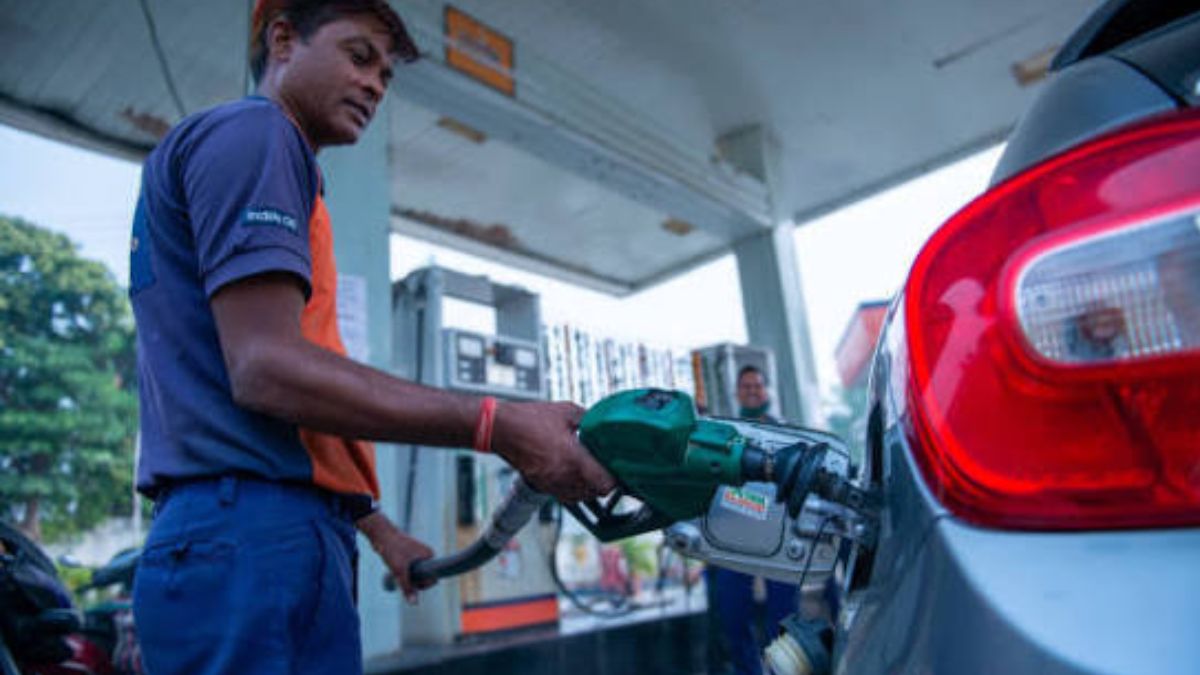
The government has increased the tax on petrol exports while cutting the levy on diesel exports. But does this mean fuel prices at Indian petrol pumps will change? Here’s what you need to know.
The government has revised the windfall gains tax on petrol and diesel exports, with the new rates coming into effect on October 16, 2026. The tax on petrol exports has been increased to ₹2.50 per litre from ₹0.50 per litre, while the levy on diesel exports has been reduced to ₹8.50 per litre from ₹16 per litre.
However, there is one important detail for consumers: the latest changes apply to fuel exports and do not directly change the existing tax rates on petrol and diesel sold in India. This means you should not expect an automatic change in the price you pay at the pump just because these export taxes have been revised.
What Has Changed?
The revised tax structure makes two key changes:
- Petrol exports: The tax has increased from ₹0.50 to ₹2.50 per litre.
- Diesel exports: The tax has decreased from ₹16 to ₹8.50 per litre.
- Aviation turbine fuel (ATF): The existing export levy remains unchanged.
The revised rates were announced by the Central Board of Indirect Taxes and Customs (CBIC). The government reviews these taxes every fortnight, taking into account international crude oil and petroleum product prices.
What Is a Windfall Gains Tax?
A windfall gains tax is a levy imposed when businesses earn unusually high profits because of favourable market conditions.
In the oil industry, refiners can benefit when international fuel prices rise or when the difference between the price at which they sell fuel overseas and the cost of producing it becomes particularly attractive.
When exporting fuel becomes more profitable, companies may have a stronger incentive to sell to international markets. The government can use export duties to influence these decisions and balance the interests of exporters with domestic fuel availability.
In simple terms, the tax helps the government respond to changing global energy markets and the potential gains that fuel companies make from them.
Will Petrol and Diesel Prices Fall in India?
Not necessarily.
The latest revision concerns taxes on petrol and diesel exported from India. The government has not announced a corresponding change in the existing excise duty rates on petrol and diesel meant for domestic consumption.
Retail fuel prices are influenced by several factors, including international crude oil prices, currency movements, taxes, transportation costs and pricing decisions by oil marketing companies.
A reduction in the export tax on diesel, therefore, does not automatically translate into cheaper diesel at your local petrol pump. Similarly, a higher tax on petrol exports does not automatically mean petrol prices will rise.
For households, the more relevant question is whether domestic fuel prices change. Petrol and diesel costs can affect everyday expenses, from commuting and deliveries to the transportation of food and other essentials.
Why Should Consumers Pay Attention?
Even when a tax change does not directly affect the price of fuel sold domestically, it is worth understanding how government decisions interact with global oil markets.
India’s fuel market is closely connected to international energy prices. Changes in export duties can influence the economics of exporting fuel, while global crude oil movements can affect the wider energy sector.
For consumers, fuel prices matter because their impact can extend beyond filling up a vehicle. Higher transportation costs may put pressure on the prices of goods and services, while lower costs can ease some of that pressure.
That said, the effect is not immediate or guaranteed. Businesses may respond differently depending on their costs, market conditions and pricing decisions.
The Bottom Line
The latest revision raises the windfall gains tax on petrol exports to ₹2.50 per litre and reduces the tax on diesel exports to ₹8.50 per litre. The changes took effect on October 16, 2026.
For everyday consumers, the important distinction is that export tax changes are not the same as retail fuel price changes. If you are watching your monthly budget, keep an eye on actual petrol and diesel prices rather than assuming that a change in export duties will immediately affect your expenses.
Understanding the difference can help you separate a major policy headline from what it actually means for your wallet.

India’s stock market has come a long way in the last decade. And according to Zerodha co-founder Nithin Kamath, one of the biggest reasons behind this growth is something many of us use every day: affordable mobile internet.
As Reliance Jio Platforms prepares for its IPO, Kamath has highlighted how Jio, along with Bharti Airtel, helped transform India’s digital economy and made it easier for businesses like Zerodha to grow.
While Kamath has refrained from advising investors on whether they should apply for the Jio IPO, he believes the telecom industry has played an important role in expanding access to financial markets.
How Jio helped bring more Indians into the stock market
When Jio was preparing to launch in 2015, Kamath was building Zerodha, a discount stockbroker that had recently made delivery-based investing brokerage-free.
He recalled being featured alongside Mukesh Ambani in The Economic Times’ list of businessmen to watch in 2016. While Ambani topped the list, Kamath was ranked sixth.
Looking back, Kamath said the remarkable part of Jio’s journey was not just how large the company became, but how much it changed India and helped other businesses grow.
Affordable internet made it easier for millions of Indians to access online services, including investment platforms. Alongside this, Aadhaar and UPI helped build the digital infrastructure that businesses such as Zerodha depend on.
In other words, the growth of online investing was not driven by stockbroking platforms alone. It was also made possible by the technology and connectivity that brought more people online.
From 2 crore investors to over 13 crore
India’s investor base has expanded significantly over the years.
According to Kamath, India had around 2 crore unique investors in 2016. Today, that number has grown to more than 13 crore.
He believes Jio and Airtel’s affordable data services, combined with digital systems such as Aadhaar and UPI, helped lay the groundwork for the expansion of India’s capital markets, particularly after the Covid-19 pandemic.
For everyday investors, this shift means that accessing financial markets is no longer limited to people who live in major cities or have easy access to traditional financial services.
With a smartphone and an internet connection, more people can now explore investment platforms, learn about financial products and participate in the stock market.
Why digital infrastructure matters for businesses
Kamath also pointed out that businesses often benefit from infrastructure built by other companies.
For instance, Zerodha’s growth would have been much harder without widespread internet access and digital systems that simplify identity verification and payments.
The same applies to several online-first businesses. Affordable connectivity allows companies to reach customers across the country without needing a physical presence in every location.
This is an important reminder that a company’s success is not always the result of its own efforts alone. It can also depend on the wider ecosystem that makes its business model possible.
Jio and Airtel helped expand internet access, Aadhaar enabled digital identity verification, and UPI made digital payments easier. Together, these developments have helped create opportunities for businesses and consumers alike.
So, should you apply for the Jio IPO?
Kamath has made it clear that he cannot tell investors whether they should apply for the upcoming Jio Platforms IPO. His comments focus on the company’s broader impact on India’s digital economy rather than offering a recommendation on the stock.
For investors, this distinction matters.
A company can play a major role in transforming an industry and still require careful evaluation before investing in it. Its business growth, financial performance, valuation and future prospects all need to be considered before making an investment decision.
Jio’s contribution to India’s digital transformation is one part of its story. Whether its IPO is suitable for an individual investor is a separate question.
Connecting the Dots
India’s growing investor base is not just a story about more people buying stocks. It is also a story about better access to the internet, digital payments and financial services.
Jio and Airtel helped bring millions of Indians online, while Aadhaar and UPI made several digital services easier to access. Together, these developments helped create an environment in which businesses such as Zerodha could grow.
The bigger lesson? Financial participation becomes easier when the infrastructure around it improves. But when it comes to investing your own money, understanding a company’s business is only the first step. You must also evaluate the investment itself before deciding whether it fits your financial goals.
-
 Podcast1 year ago
Nitin Jain: From IIT to Investment Titan, Managing ₹60,000 Crore AUM
-
 News3 weeks ago
SC Says No Stay On New UPI Charges Above ₹2,000
-
 News4 weeks ago
NSE Makes Long-Awaited Market Debut After ₹22,562-Crore IPO
-

 Explainer5 months ago
How Much SIP Do You Need to Build ₹1 Crore? The Power of Time and Compounding
-
 Podcast2 years ago
From ₹1 Lakh Lost to Managing ₹650 Crore: How Divam Sharma of Green Portfolio Built a Fundamental Investing Approach
-
 Podcast4 months ago
Can ₹200 SIPs Create India’s Next Investing Revolution? Ravi Kumar Jha’s Big Bet On Financial Inclusion
-
 Podcast1 year ago
From ₹1 Lakh Lost to Managing ₹650 Crore: How Divam Sharma of Green Portfolio Built a Fundamental Investing Approach
-
 Podcast2 months ago
Simple Hai! @ 100: Celebrating a Milestone in Making Finance Simple