
Explainer
Dhanteras and Gold: A Festive Tradition or a Financial Decision?

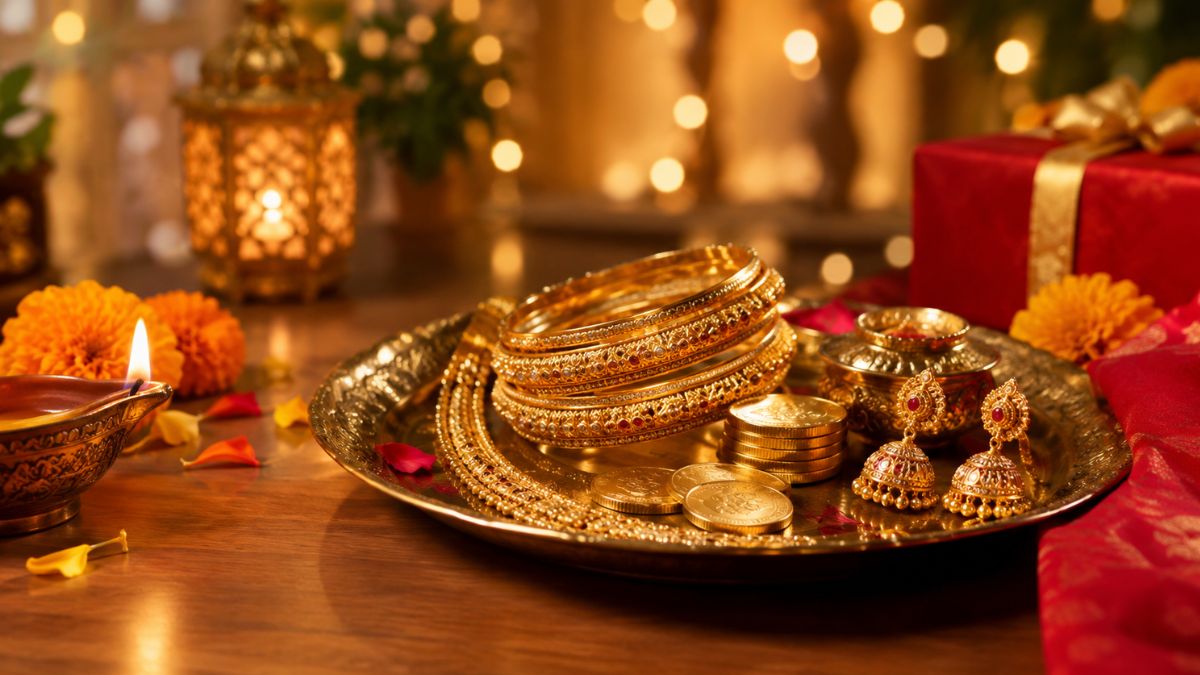
Every Diwali, many Indian families buy gold. For some, it is a small gold coin. For others, it is a new ring, a necklace or a piece of jewellery they have been planning to buy for months.
Dhanteras is considered an auspicious day to buy gold, and the tradition has been part of Indian households for generations. But with gold prices changing so much this year, one question is worth asking: Should you buy gold because it is Dhanteras, or because it makes sense for your money?
The answer depends on what you are buying, why you are buying it and how much you can comfortably spend.
Gold Prices Have Changed the Way People Shop
Gold prices have seen sharp ups and downs in 2026. After reaching record highs, prices have also fallen in recent weeks.
For buyers, this might seem like a good time to shop. But even after a price drop, gold can take a big bite out of a household’s budget.
This is also changing how people shop. Some are choosing lighter jewellery, while others are considering gold coins and bars instead.
But a lower price does not automatically mean gold is affordable for everyone. Even a small purchase can cost a significant amount.
The point is simple: just because gold prices have fallen does not mean you need to buy more.
Buying Gold and Investing in Gold Are Not the Same Thing
For many families, buying gold is part of celebrating Diwali. It could be jewellery for a wedding, a gift for a loved one or simply a way to keep a family tradition alive.
There is nothing wrong with that.
But buying jewellery and investing in gold are two different things.
When you buy jewellery, you pay for more than just the gold. The final bill also includes making charges, which cover the work that goes into creating the piece, along with applicable taxes.
And if you decide to sell the jewellery later, you may not get back the full amount you spent. Making charges, for example, may not be returned.
So, even if gold prices rise, your jewellery may not give you the same return.
If you are buying jewellery to wear, enjoy it. If you are buying gold to grow your money, compare your options first.
Should You Buy Gold Now or Wait?
This is a question many people ask before Dhanteras.
Gold prices can change for several reasons, including global events, interest rates and changes in the value of the rupee. This makes it difficult to predict whether prices will rise or fall in the coming weeks.
Trying to find the perfect time to buy can become stressful, especially if you need gold for a wedding or a family occasion.
If you already know you want to buy gold, start by deciding how much you can spend. You could also consider buying in smaller amounts over time instead of trying to predict the lowest price. This does not guarantee a better deal, but it can help you avoid depending on a single day’s price.
And if the purchase is not urgent, there is no need to rush just because Dhanteras is around the corner.
Gold Jewellery, Coins or Gold ETFs: What Should You Choose?
There is more than one way to buy gold. The right choice depends on what you want from it.
Gold jewellery: If you want something to wear or gift, jewellery makes sense. Just remember to check the making charges and the final bill.
Gold coins and bars: These let you own physical gold without paying for an elaborate jewellery design. However, there may still be additional purchase costs. You should also check how easy it will be to sell them later.
Gold ETFs: These allow you to invest in gold through the stock market without storing physical gold. You generally need a demat and trading account, and there are costs and market risks to consider.
None of these options is the best choice for everyone. If you want gold to wear, jewellery may be right for you. If you want to invest, compare the costs and risks before deciding.
And remember, gold prices can fall too. Do not put all your savings into gold or use money you may need for emergencies.
Before You Buy Gold This Dhanteras, Ask Yourself Three Questions
Before heading to the jewellery store, take a moment to ask yourself three simple questions.
1. Can I afford this without borrowing?
Decide your budget before you shop. Avoid using your emergency savings or taking on expensive debt just to follow a festive tradition.
2. Am I buying it to wear or to invest?
Both are valid reasons. Knowing why you are buying gold can help you choose the right option.
3. Have I checked the final price?
Check the gold rate, purity, making charges and applicable taxes. Ask about the jeweller’s exchange and buyback rules, too.
A few simple checks can help you avoid surprises later.
Celebrate the Festival. Keep Your Finances in Mind.
Dhanteras is a time to celebrate prosperity, and buying gold can be a meaningful part of that celebration.
But being financially secure is about more than what you bring home from a jewellery store. It is also about the savings you build, the debt you avoid and the goals you work towards.
You do not have to spend a large amount to celebrate the festival. And you do not have to buy gold just because everyone else is doing it.
This Dhanteras, buy gold if it makes sense for you. Just make sure your budget decides how much you spend, not the occasion.




A family business can take generations to build. But without clear documentation, deciding who owns what can become a challenge of its own.
India’s business families are increasingly bringing an important question into focus: when wealth is built across generations, how do you ensure it is divided fairly?
The latest developments within the TVS family offer an interesting perspective.
Lakshmi Venu, daughter of TVS Motor chairman emeritus Venu Srinivasan, has formally sought the partition of joint family assets held within her father’s branch of the family. In a notice to her father, she has sought a fair and lawful division, asserting her rights under the Hindu Succession Act, 1956, as amended in 2005.
The assets in question include family interests held through the VS Trust and other holding structures, covering interests in TVS Holdings, TVS Motor Company, TVS Credit Services and Sundaram-Clayton.
At the centre of the issue is a distinction between the larger TVS family arrangement of 2020 and the subsequent arrangements within the Venu Srinivasan family. While the broader family restructuring was implemented, Lakshmi maintains that the economic interests within her immediate family were never formally partitioned. Venu Srinivasan and his son Sudarshan, on the other hand, have maintained that the 2024 family arrangement constitutes a settlement.
The matter highlights an important aspect of succession planning: dividing responsibilities is not necessarily the same as dividing ownership.
Why documentation matters
In family-run businesses, decisions about ownership, management and inheritance can often overlap. One family member may manage a company, another may hold shares, while other assets may sit within trusts or separate holding entities.
Without clear documentation, these arrangements can become difficult to interpret, particularly when the next generation begins taking on larger responsibilities.
A well-documented family settlement can help establish who owns which assets, how shares are distributed, who has management responsibilities and what happens when ownership changes. It can also help distinguish personal wealth from business assets and clarify the role of trusts, holding companies and other structures.
The importance of getting the paperwork right
India’s Hindu Succession Act, particularly Section 6 following the 2005 amendment, recognises daughters as coparceners by birth in Hindu joint families governed by Mitakshara law, giving them the same rights and responsibilities as sons in qualifying coparcenary property.
This makes it important for families to understand the nature of their assets and document their arrangements accordingly. Not every family asset automatically falls under the same inheritance rules. Self-acquired property, ancestral property, company shares and assets held through trusts can involve different legal considerations.
For business families, succession planning is therefore not just about choosing the next leader. It is also about creating clarity around ownership, rights and responsibilities.
Because building an empire may take decades, but ensuring the next generation inherits it without confusion requires planning much earlier.

You spend years building wealth, buying property, investing and creating financial security for your family. But have you decided what happens to it when you are no longer around?
It is a question many people postpone. Making a Will is often associated with old age or enormous fortunes. But estate planning is not just for billionaires. Anyone who owns assets, investments or property can benefit from having one.
And the stories of some of India’s biggest business families show why.
When an empire has no clear instructions
Take the example of Dhirubhai Ambani, the founder of Reliance Industries.
When he passed away in July 2002, he did not leave a Will. His estate was subsequently dealt with through a Deed of Release signed by his wife Kokilaben, sons Mukesh and Anil, and daughters Nina and Dipti. The document recorded that Dhirubhai had died intestate, meaning without leaving a Will.
In the years that followed, differences between Mukesh and Anil over control of the Reliance business became a major corporate story. The family eventually reached a business division in 2005, with Kokilaben playing a key role in the settlement.
While the absence of a Will was not the sole reason for the brothers’ differences, the episode highlighted how complicated wealth distribution and business succession can become without clear arrangements.
Ratan Tata: A Will that reflected personal choices
A very different example emerged after Ratan Tata’s death in October 2024.
His Will attracted considerable attention because of the way he chose to distribute his personal wealth. Reports indicated that a significant portion of his estate was earmarked for charitable causes through the Ratan Tata Endowment Foundation and Trust.
His Will also made provisions for family members, close associates and people who had been part of his personal life. Even his beloved German Shepherd, Tito, was remembered through arrangements for his care.
The Will demonstrated that estate planning is not simply about dividing wealth among immediate family members. It allows individuals to decide which causes, people and responsibilities they want their wealth to support.
It is also important to distinguish between personal inheritance and corporate succession. A Will can distribute assets owned by an individual, but it does not automatically decide who will run an entire business group.
So, what exactly does a Will do?
A Will is a legal document that records how a person wants their assets distributed after their death. It can cover property, bank deposits, investments, shares and other assets owned by the individual.
It allows a person to:
- Decide who inherits what: Specify beneficiaries and the assets they should receive.
- Reduce confusion: Give family members a clear record of the person’s wishes.
- Appoint an executor: Identify someone responsible for carrying out the instructions in the Will.
- Make provisions beyond family: Leave assets to charities, friends or other individuals.
- Plan for dependants: Include arrangements for minor children and other dependants.
What happens if you don’t have a Will?
If someone dies without a valid Will, they are said to have died intestate. Their estate is then distributed according to the succession laws applicable to them.
For example, the Hindu Succession Act governs intestate succession for Hindus, Buddhists, Jains and Sikhs, while other communities may be governed by different personal laws.
This means the distribution may not necessarily reflect what the individual would have wanted.
A little planning today can prevent a lot of confusion tomorrow
Making a Will does not mean you are expecting the worst. It means you are taking responsibility for the wealth you have built and the people who may depend on it.
It is also important to review your Will as your financial circumstances change, keep asset records updated and ensure that the document is properly executed and witnessed under applicable law.
Explainer
India’s Love for Gold vs Economic Reality: What Does Modi’s Appeal Mean for Jewellers This Diwali?

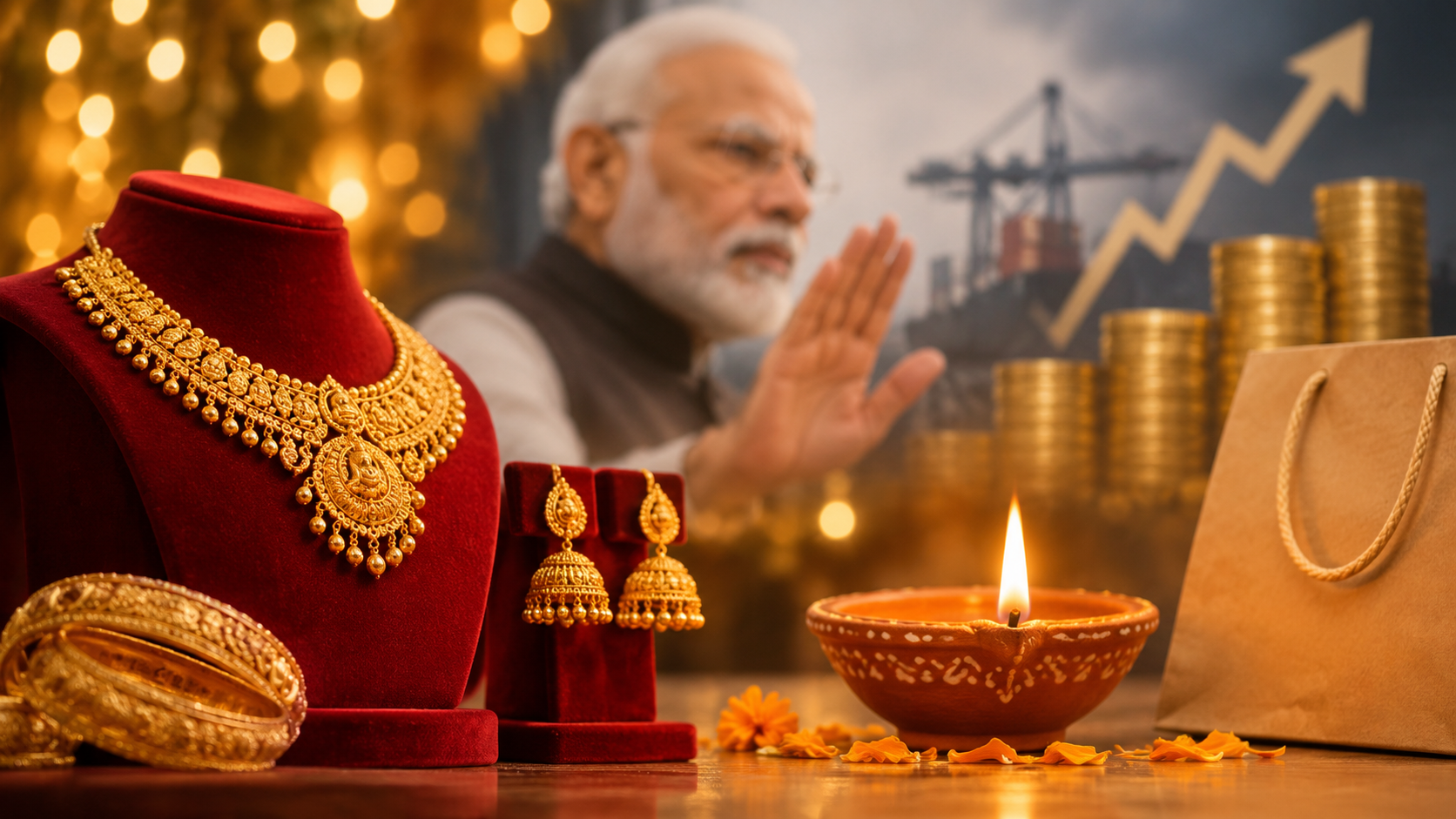
For many Indian households, Diwali is incomplete without gold. Whether it is a small coin bought on Dhanteras, a new piece of jewellery or a wedding purchase, gold has long been associated with prosperity and financial security.
But this festive season, the tradition comes with a question: should Indians rethink their gold purchases?
Prime Minister Narendra Modi’s appeal to citizens to avoid purchasing gold for a year has brought India’s gold-buying habits into the larger economic conversation. The appeal comes amid concerns over rising imports, pressure on foreign exchange reserves and the rupee.
India is one of the world’s largest consumers of gold and depends heavily on imports to meet domestic demand. Reducing unnecessary gold purchases could therefore help ease pressure on the country’s import bill.
However, there is another side to this argument: the jewellery industry.
A Festive Season of Conflicting Signals
For jewellers, Diwali and Dhanteras are among the biggest business opportunities of the year. A slowdown in purchases could affect not just retailers but also manufacturers, artisans, goldsmiths and millions of people employed across the jewellery supply chain.
Industry bodies, including the All India Jewellers and Goldsmith Federation (AIJGF), have raised concerns about the potential impact of discouraging gold purchases. They have also suggested alternatives such as improving gold recycling and bringing household gold into the formal economy.
The concern is understandable. Gold may be an imported commodity, but the jewellery industry built around it is very much domestic.
Are Consumers Really Staying Away From Gold?
Despite the government’s appeal, gold continues to hold its place in Indian households.
According to the World Gold Council’s November 2026 report, India’s gold demand in the September quarter increased 24% sequentially to 162 tonnes. However, it remained 29% lower than the same period last year.
Jewellery demand rose 33% quarter-on-quarter to 100 tonnes, indicating some recovery in festive buying.
Interestingly, consumers are also changing how they purchase gold. Lightweight jewellery, smaller coins and exchanging old jewellery for new pieces are becoming increasingly relevant.
The World Gold Council found that the share of consumers considering exchanging old jewellery to fund new purchases increased from 70% to 76%.
This suggests that people may not necessarily be giving up gold. They are simply becoming more conscious of how much they spend and how much gold they receive in return.
Can India Find a Middle Ground?
The government’s concerns about gold imports are valid. However, reducing consumption is not the only possible solution.
Better gold recycling, stronger monetisation schemes and easier mechanisms to exchange old jewellery could help India make better use of the gold already held by households.
For consumers, the decision to buy gold is often influenced by more than market prices. Weddings, family traditions and long-term savings all play a role.
This makes it difficult to view every gold purchase as unnecessary consumption.
This Diwali, It Is About More Than Buying Gold
The debate is not simply about whether Indians should buy gold this Diwali. It is about balancing economic responsibility with cultural traditions and the livelihoods of an entire industry.
For the government, reducing gold imports is an economic priority. For jewellers, festive demand supports businesses and employment. For households, gold continues to represent both tradition and security.
Perhaps the bigger question is not whether India should stop buying gold, but whether it can become smarter about how it buys, recycles and manages the gold it already owns.
After all, celebrating prosperity and being financially responsible need not be mutually exclusive.
-
 News2 months ago
SC Says No Stay On New UPI Charges Above ₹2,000
-
 Podcast1 year ago
Nitin Jain: From IIT to Investment Titan, Managing ₹60,000 Crore AUM
-
 News2 months ago
NSE Makes Long-Awaited Market Debut After ₹22,562-Crore IPO
-

 Explainer6 months ago
How Much SIP Do You Need to Build ₹1 Crore? The Power of Time and Compounding
-
 Podcast2 years ago
From ₹1 Lakh Lost to Managing ₹650 Crore: How Divam Sharma of Green Portfolio Built a Fundamental Investing Approach
-
 Podcast5 months ago
Can ₹200 SIPs Create India’s Next Investing Revolution? Ravi Kumar Jha’s Big Bet On Financial Inclusion
-
 News1 month ago
UPI Charges on Payments Above ₹2,000 Delayed Until After Diwali
-
 IPO Watch1 month ago
Jio IPO 2026: How the ₹30,213 Crore Issue Will Use Its Funds