
IPO Watch
Coca-Cola’s Indian Bottling Business Moves Closer to a Potential IPO


Coca-Cola is moving ahead with plans to potentially list its Indian bottling business on the stock market, with the proposed public offering expected to take place in 2027. The company is preparing to take its bottling operations, housed under Hindustan Coca-Cola Holdings (HCCH), to the public market, subject to regulatory approvals and market conditions.
The proposed IPO could be worth around $1 billion, with the company reportedly targeting a valuation of approximately $10 billion. The offering is expected to primarily involve existing shareholders selling a portion of their stake, rather than the company raising fresh money through new shares.
What Is Hindustan Coca-Cola Holdings?
Hindustan Coca-Cola Holdings is the parent company of Hindustan Coca-Cola Beverages (HCCB), one of Coca-Cola’s largest bottling operations in India.
HCCB manufactures, packages and distributes beverages across the country. Its portfolio includes popular brands such as Coca-Cola, Thums Up, Sprite, Fanta, Limca and Maaza.
The business operates 14 bottling plants across 10 states and has a distribution network of more than 2,000 distributors. It also reaches over 1.7 million customers, supported by approximately 5,000 employees.
Why Is Coca-Cola Considering a Public Listing?
The proposed IPO is part of Coca-Cola’s broader strategy to move towards a more asset-light business model. This approach allows the company to focus more on its brands, marketing, innovation and digital capabilities while working with partners to manage bottling and distribution operations.
In July 2025, Jubilant Bhartia Group acquired a 40% stake in HCCH for approximately ₹12,500 crore, while Coca-Cola retained its majority holding. The potential public listing would be another step in reshaping the ownership and operations of its Indian bottling business.
Why Does India Matter to Coca-Cola?
India remains an important growth market for the global beverage company. Demand for affordable products, zero-sugar beverages and locally relevant offerings has helped support its performance in the country.
Coca-Cola has also pointed to the growing contribution of quick-service restaurants, emerging sales channels and social media and influencer collaborations to its Indian business.
A public listing could give investors an opportunity to participate in the growth of the company’s bottling operations, while allowing existing shareholders to partially monetise their investments.
What Could the IPO Mean for Investors?
If the listing proceeds, investors may get an opportunity to own shares in a business connected to some of India’s most widely recognised beverage brands.
However, the proposed IPO is still subject to regulatory requirements and market conditions. The final issue price, share-sale details and other offer terms will become clearer as the process progresses.
For retail investors, the key will be to look beyond the strength of the brand. Understanding the company’s financial performance, valuation, debt levels, growth prospects and risks will be important before making any investment decision.
The bottom line: Coca-Cola’s proposed Indian bottling business IPO could bring another well-known consumer business to India’s stock market. But as with any public offering, investors should assess the company’s fundamentals and valuation rather than relying on brand familiarity alone.
Source: The Economic Times





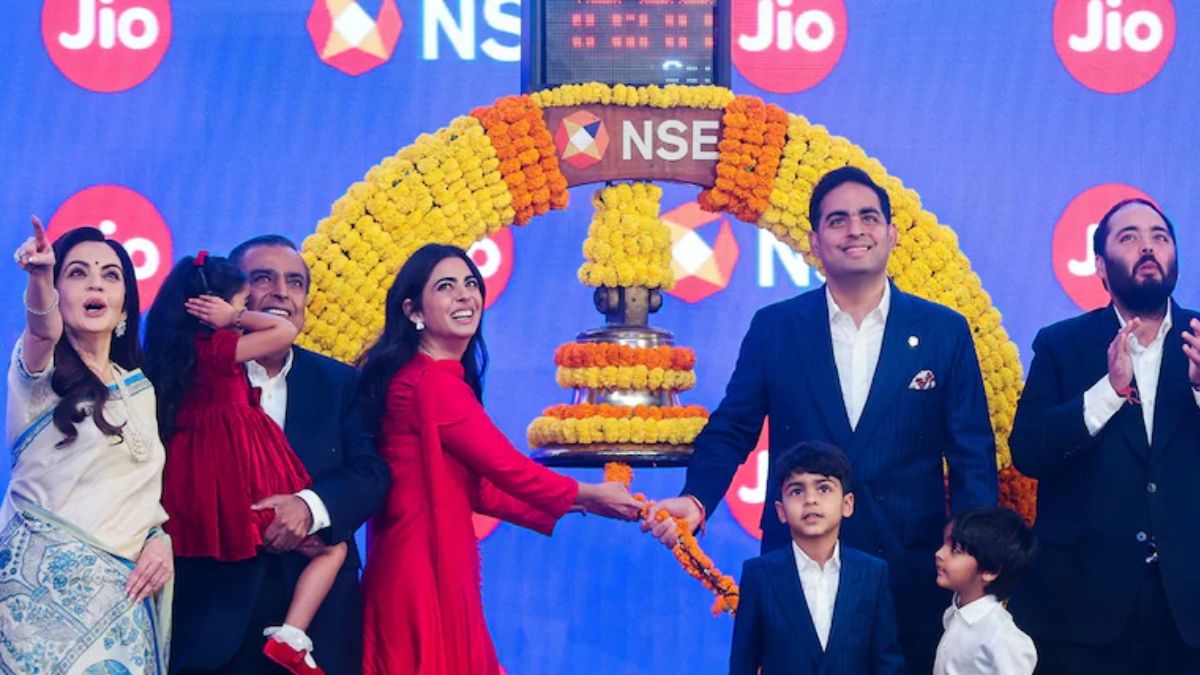
Jio Platforms has made a strong entry into the Indian stock market, with its shares listing at a premium of over 21% on October 28, 2026. The debut follows one of India’s largest-ever initial public offerings (IPOs), attracting significant interest from institutional and retail investors.
The company’s shares opened at ₹1,359 on the BSE and NSE, compared with the IPO issue price of ₹1,119 per share. This represents a gain of around ₹240 per share for investors who received an allotment at the issue price. The listing also placed Jio Platforms among India’s most valuable listed companies.
A Record-Breaking IPO
Jio Platforms raised approximately ₹30,213 crore through its IPO, making it the largest public issue in India to date, surpassing Hyundai Motor India’s ₹27,870 crore offering.
Investor demand was strong from the beginning. The issue was fully subscribed within around 100 minutes of opening and received an overall subscription of approximately 22.19 times by the end of the bidding period.
Institutional investors led the demand, with the portion reserved for qualified institutional buyers being subscribed more than 70 times. The retail investor category was subscribed around 2.72 times, reflecting interest across different investor groups.
What Is Driving Investor Interest?
Jio’s position in India’s telecom market is a key factor behind the interest in its shares. The company has built a subscriber base of more than 500 million users and carries a significant share of the country’s mobile data traffic.
However, its growth story extends beyond mobile connectivity. Home broadband, enterprise technology, cloud computing, digital services and artificial intelligence could provide additional opportunities to generate revenue.
Brokerages have also highlighted the possibility of higher telecom tariffs, which could increase the average revenue earned per user. Jio’s expanding broadband business and the potential to generate more cash as its heavy investment in 5G infrastructure eases are other factors supporting expectations of future growth.
What Are Brokerages Saying?
Several brokerages initiated coverage of Jio Platforms following its market debut, issuing Buy ratings and identifying potential growth opportunities.
Nomura set a target price of ₹1,340 per share, while Motilal Oswal assigned a target of ₹1,350. Elara Capital set its target at ₹1,367 per share.
Their outlooks point to factors such as subscriber growth, potential tariff increases, broadband expansion and the development of digital services as possible drivers of future earnings.
These targets reflect the brokerages’ estimates and assumptions, however, and should not be treated as guaranteed future share prices.
What Should Investors Keep in Mind?
A strong stock market debut can generate excitement, but it does not automatically mean a stock will continue to rise. Jio’s listing premium reflects investor demand and expectations about its future performance. Whether the company can meet those expectations will depend on its ability to grow revenue, improve profitability and turn its large customer base into sustainable earnings.
Investors should also consider the price they pay for a share, the company’s valuation, the risks involved and their own financial goals before making an investment decision. Buying a stock simply because it has attracted attention or listed at a premium can lead to decisions based on market excitement rather than research.
For investors who did not receive shares in the IPO, there is no need to rush into buying the stock immediately. Evaluating the company’s fundamentals and understanding its valuation may be more useful than focusing only on its first-day gains.
Jio’s market debut marks an important milestone, but the real test lies in its performance over time. A successful listing can create excitement; long-term value depends on business growth, earnings and the price investors are willing to pay.
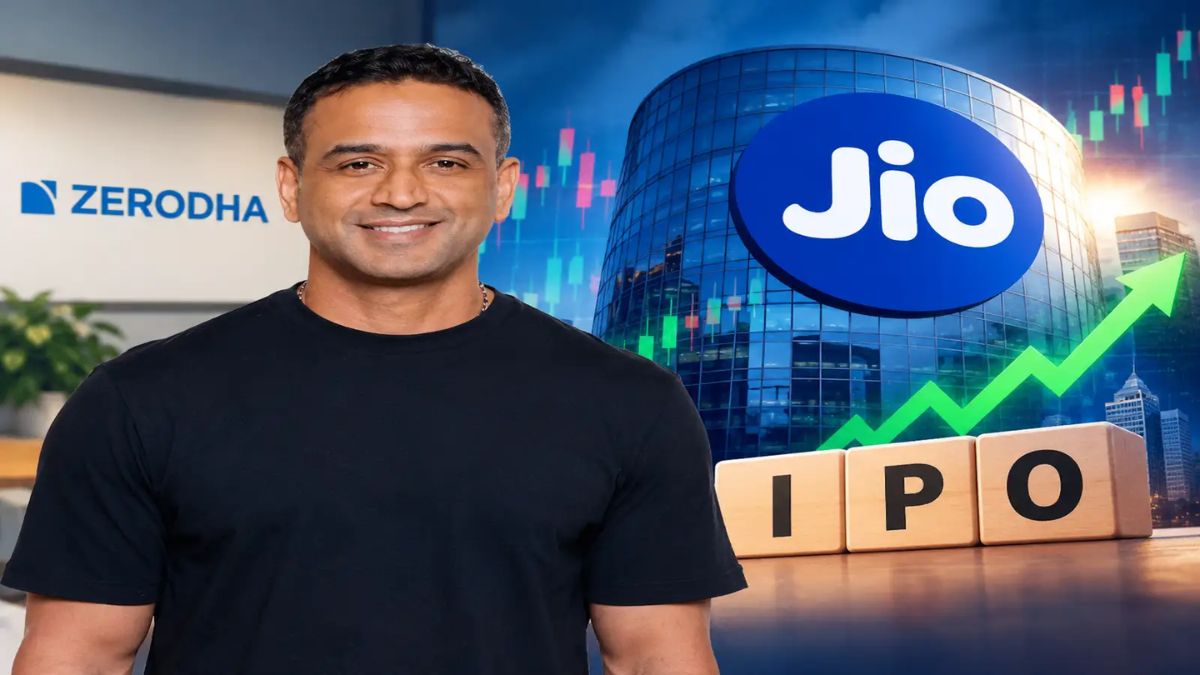
India’s stock market has come a long way in the last decade. And according to Zerodha co-founder Nithin Kamath, one of the biggest reasons behind this growth is something many of us use every day: affordable mobile internet.
As Reliance Jio Platforms prepares for its IPO, Kamath has highlighted how Jio, along with Bharti Airtel, helped transform India’s digital economy and made it easier for businesses like Zerodha to grow.
While Kamath has refrained from advising investors on whether they should apply for the Jio IPO, he believes the telecom industry has played an important role in expanding access to financial markets.
How Jio helped bring more Indians into the stock market
When Jio was preparing to launch in 2015, Kamath was building Zerodha, a discount stockbroker that had recently made delivery-based investing brokerage-free.
He recalled being featured alongside Mukesh Ambani in The Economic Times’ list of businessmen to watch in 2016. While Ambani topped the list, Kamath was ranked sixth.
Looking back, Kamath said the remarkable part of Jio’s journey was not just how large the company became, but how much it changed India and helped other businesses grow.
Affordable internet made it easier for millions of Indians to access online services, including investment platforms. Alongside this, Aadhaar and UPI helped build the digital infrastructure that businesses such as Zerodha depend on.
In other words, the growth of online investing was not driven by stockbroking platforms alone. It was also made possible by the technology and connectivity that brought more people online.
From 2 crore investors to over 13 crore
India’s investor base has expanded significantly over the years.
According to Kamath, India had around 2 crore unique investors in 2016. Today, that number has grown to more than 13 crore.
He believes Jio and Airtel’s affordable data services, combined with digital systems such as Aadhaar and UPI, helped lay the groundwork for the expansion of India’s capital markets, particularly after the Covid-19 pandemic.
For everyday investors, this shift means that accessing financial markets is no longer limited to people who live in major cities or have easy access to traditional financial services.
With a smartphone and an internet connection, more people can now explore investment platforms, learn about financial products and participate in the stock market.
Why digital infrastructure matters for businesses
Kamath also pointed out that businesses often benefit from infrastructure built by other companies.
For instance, Zerodha’s growth would have been much harder without widespread internet access and digital systems that simplify identity verification and payments.
The same applies to several online-first businesses. Affordable connectivity allows companies to reach customers across the country without needing a physical presence in every location.
This is an important reminder that a company’s success is not always the result of its own efforts alone. It can also depend on the wider ecosystem that makes its business model possible.
Jio and Airtel helped expand internet access, Aadhaar enabled digital identity verification, and UPI made digital payments easier. Together, these developments have helped create opportunities for businesses and consumers alike.
So, should you apply for the Jio IPO?
Kamath has made it clear that he cannot tell investors whether they should apply for the upcoming Jio Platforms IPO. His comments focus on the company’s broader impact on India’s digital economy rather than offering a recommendation on the stock.
For investors, this distinction matters.
A company can play a major role in transforming an industry and still require careful evaluation before investing in it. Its business growth, financial performance, valuation and future prospects all need to be considered before making an investment decision.
Jio’s contribution to India’s digital transformation is one part of its story. Whether its IPO is suitable for an individual investor is a separate question.
Connecting the Dots
India’s growing investor base is not just a story about more people buying stocks. It is also a story about better access to the internet, digital payments and financial services.
Jio and Airtel helped bring millions of Indians online, while Aadhaar and UPI made several digital services easier to access. Together, these developments helped create an environment in which businesses such as Zerodha could grow.
The bigger lesson? Financial participation becomes easier when the infrastructure around it improves. But when it comes to investing your own money, understanding a company’s business is only the first step. You must also evaluate the investment itself before deciding whether it fits your financial goals.
Unlike several major IPOs where existing investors sell their stakes, Jio Platforms’ upcoming public issue will raise fresh capital for the company, with most of the proceeds earmarked for debt repayment.
India’s IPO market is gearing up for a major milestone. Jio Platforms, the digital services arm of Reliance Industries, is preparing to launch a ₹30,213 crore initial public offering (IPO), which could become the country’s largest-ever public issue.
But the size of the offering is not the only thing setting it apart. The structure of Jio’s IPO makes it different from several large listings seen in India over the past few years.
A Fresh Issue, Not an Investor Exit
Jio Platforms’ IPO will consist entirely of newly issued shares, with no offer-for-sale (OFS) component. This means existing shareholders will not be selling their shares as part of the public issue.
In an OFS, existing investors or promoters sell some of their holdings to public investors. The money from that sale goes to the shareholders selling their stakes rather than to the company itself.
A fresh issue works differently. The company creates and issues new shares to raise capital, which it can then use for specified business purposes.
For Jio Platforms, this means the funds raised through the IPO will go to the company, rather than serving as an exit route for its existing investors, including Reliance Industries, Meta and Google.
Where Will the IPO Money Go?
A significant portion of the proceeds will be used to repay or prepay borrowings of Reliance Jio Infocomm, Jio Platforms’ telecom subsidiary.
The company has earmarked up to ₹27,500 crore of the net proceeds for this purpose, with the remaining funds intended for general corporate purposes. At the upper end of the IPO’s price band, the debt repayment allocation accounts for approximately 91% of the total issue size.
Reducing debt can help lower interest expenses and strengthen a company’s balance sheet. For Jio, the proposed repayment could support its financial position as it continues to expand its digital and telecom businesses.
When Is the IPO Opening?
Jio Platforms has fixed a price band of ₹1,065 to ₹1,119 per share. The public issue is scheduled to open on October 21 and close on October 23, 2026, with anchor investor bidding planned for October 19.
At the upper end of the price band, the company could raise ₹30,213 crore, surpassing Hyundai Motor India’s ₹27,859 crore IPO in 2024.
The offering values Jio Platforms at approximately ₹10.3 lakh crore, making it one of the most significant listings in India’s capital markets.
A Growing Business Heads to the Stock Market
The IPO comes as Jio Platforms continues to expand its presence across telecommunications and digital services. In FY26, the company reported revenue from operations of approximately ₹1.47 lakh crore, while its net profit rose to ₹30,049 crore.
Its subscriber base has also grown substantially since Reliance Jio entered the telecom market in 2016, disrupting the industry with affordable data and voice services.
The listing will give public-market investors an opportunity to invest directly in Jio Platforms and provide a market valuation for Reliance Industries’ digital business.
For investors, however, the size of an IPO alone does not determine whether it is a suitable investment. The company’s valuation, financial performance, future growth prospects and risks all matter when evaluating a public issue.
Source: Moneycontrol
-
 News1 month ago
SC Says No Stay On New UPI Charges Above ₹2,000
-
 Podcast1 year ago
Nitin Jain: From IIT to Investment Titan, Managing ₹60,000 Crore AUM
-
 News1 month ago
NSE Makes Long-Awaited Market Debut After ₹22,562-Crore IPO
-

 Explainer5 months ago
How Much SIP Do You Need to Build ₹1 Crore? The Power of Time and Compounding
-
 Podcast2 years ago
From ₹1 Lakh Lost to Managing ₹650 Crore: How Divam Sharma of Green Portfolio Built a Fundamental Investing Approach
-
 Podcast4 months ago
Can ₹200 SIPs Create India’s Next Investing Revolution? Ravi Kumar Jha’s Big Bet On Financial Inclusion
-
 Podcast1 year ago
From ₹1 Lakh Lost to Managing ₹650 Crore: How Divam Sharma of Green Portfolio Built a Fundamental Investing Approach
-
 News2 weeks ago
UPI Charges on Payments Above ₹2,000 Delayed Until After Diwali