
Podcast
Can ₹200 SIPs Create India’s Next Investing Revolution? Ravi Kumar Jha’s Big Bet On Financial Inclusion

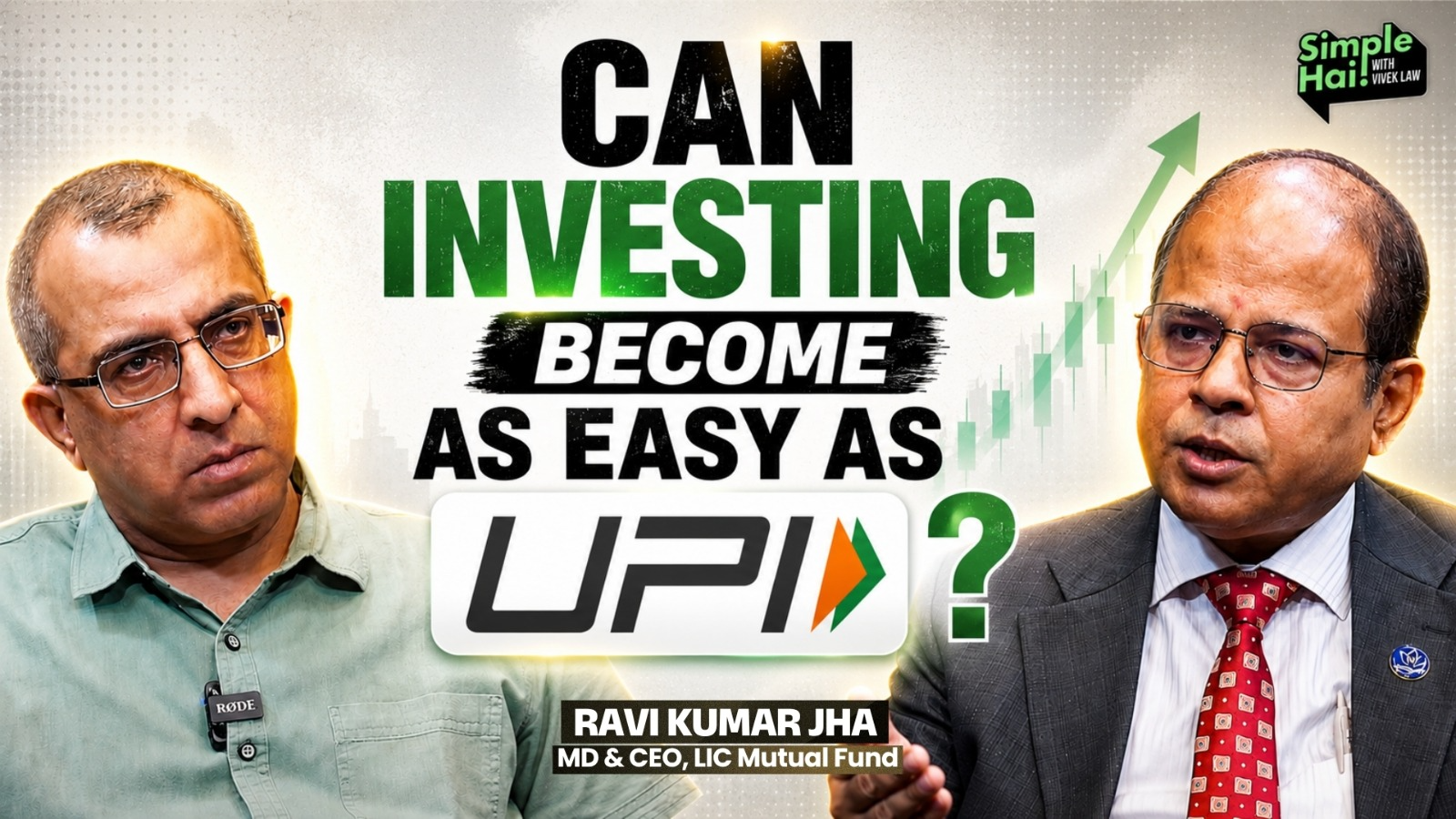
When most Indians hear the name LIC, they think of life insurance.
They think of policies bought by parents, agents visiting homes, and the reassurance that comes with one of India’s most trusted financial brands.
Mutual funds rarely enter that conversation.
For years, that was the challenge facing LIC Mutual Fund. Despite carrying one of the most recognisable names in Indian finance, the fund house remained a relatively small player in a rapidly growing industry.
But according to Ravi Kumar Jha, Managing Director and CEO of LIC Mutual Fund, that is beginning to change.
In a recent episode of Simple Hai!, Jha spoke about everything from mutual fund performance and distribution to women investors and financial literacy. Yet throughout the conversation, one idea kept resurfacing: investing should not be limited to India’s affluent classes.
If India is serious about building financial security for its citizens, investing must become accessible to everyone.
Even if that means starting with just ₹200 a month.
The Problem With Thinking Mutual Funds Are Only For The Rich
For Jha, the inspiration behind one of LIC Mutual Fund’s most talked-about initiatives came not from boardrooms or industry reports but from everyday conversations.
He recalls speaking to drivers, domestic workers and other people who worked hard every day but had never invested in a mutual fund.
Most of them shared similar aspirations.
A driver wanted his children to get a better education than he did.
A domestic worker wanted to ensure her daughters could study and build independent lives.
They understood the importance of saving. What they lacked was access and confidence.
Many believed mutual funds were products designed for wealthy people.
“People think mutual funds are for rich investors. They don’t think they belong there,” Jha observed.
That perception, he believes, remains one of the biggest barriers to financial inclusion in India.
The ₹200 SIP Experiment
To address that barrier, LIC Mutual Fund introduced what it calls Pocket SIPs.
The idea was simple: reduce the minimum investment amount to levels that virtually anyone could afford.
Today, investors can start with:
- ₹100 daily SIPs
- ₹150 weekly SIPs
- ₹200 monthly SIPs
The goal is not merely to collect small investments.
It is to help first-time investors experience the habit of investing and understand the power of compounding.
Jha shared an example from his own family. His daughter-in-law began with a small SIP to test the concept. Initially, she was impatient because she could not see meaningful growth.
But after staying invested, she began noticing the impact of compounding and eventually increased her investments significantly.
The lesson, according to Jha, is that investing often becomes easier once people see results for themselves.
More than two lakh Pocket SIP accounts have already been opened.
For a country where millions still keep savings in cash or low-yield accounts, that number could represent the beginning of a larger behavioural shift.
Why Financial Inclusion Is Personal
One of the most powerful moments in the conversation came when Jha spoke about families that faced sudden financial crises after losing the primary earning member.
He described relatives and acquaintances who passed away unexpectedly due to illness or accidents.
In some cases, there was no life insurance cover.
No meaningful savings.
No investment portfolio.
Just a family left trying to figure out how to pay for education, household expenses and everyday life.
Those experiences reinforced a belief that financial planning is not just about wealth creation.
It is about resilience.
A well-structured financial plan can mean the difference between stability and uncertainty when life takes an unexpected turn.
For Jha, that is why encouraging people to start investing—even in small amounts—is so important.
Why Women Could Drive The Next Wave Of Growth
Another area where Jha sees enormous potential is women investors.
He points out that women already account for nearly one-third of mutual fund assets and SIP investments in India.
Yet many women still remain underserved by the financial industry.
To address this, LIC Mutual Fund recently launched an all-women branch in Delhi staffed entirely by women employees.
The objective is straightforward: create an environment where women feel comfortable discussing money, financial goals and investment decisions.
Jha believes women often play the most important role in household finances, even if they are not always recognised for it.
They manage budgets.
They plan for children’s futures.
They often maintain emergency savings.
And increasingly, they are becoming investors in their own right.
The success of the Delhi initiative has encouraged LIC Mutual Fund to explore similar branches in other cities.
Why Branches Still Matter In A Digital World
At a time when financial companies are aggressively pushing digital platforms, Jha remains convinced that physical presence continues to matter.
When he took charge in 2023, LIC Mutual Fund operated around 35 branches across India.
Today that number has increased to 56, with plans to cross 100 branches in the coming years.
His reasoning is simple.
Trust remains a critical component of financial decision-making.
Many investors still want a place where they can walk in, ask questions and resolve concerns face-to-face.
This is particularly important in smaller cities and towns where financial literacy remains low and first-time investors often need guidance before taking their first step.
Digital tools may simplify transactions.
But trust, Jha argues, is still built through human interaction.
The Untapped Power Of LIC’s Distribution Network
Few financial institutions possess a distribution advantage as powerful as LIC.
The organisation’s insurance business is supported by nearly 15 lakh agents spread across the country.
India’s mutual fund industry, by comparison, has only a fraction of that distribution footprint.
Jha believes this network represents one of the biggest opportunities for expanding mutual fund penetration.
Consumers today increasingly understand the difference between insurance and investments.
Many LIC agents are also recognising that clients want broader financial solutions rather than a single product.
As a result, mutual funds are becoming an increasingly important part of those conversations.
For LIC Mutual Fund, this shift has already translated into stronger distributor-led growth.
Can Mutual Funds Have Their UPI Moment?
Perhaps Jha’s most interesting observation concerned onboarding.
India transformed digital payments through UPI by making transactions simple and accessible.
He believes mutual fund investing needs a similar breakthrough.
Today, many potential investors still struggle with documentation requirements, KYC processes and account-opening formalities.
The challenge is especially visible among women, rural investors and people with limited financial literacy.
“If onboarding becomes simpler, the entire industry can grow much faster,” he argued.
The vision is ambitious.
A system where every Indian can begin investing as easily as they send money through a mobile phone.
The Bigger Question
India’s mutual fund industry now manages more than ₹50 lakh crore in assets. Yet only a small percentage of the country’s population actively invests. That gap represents both a challenge and an opportunity. For Ravi Kumar Jha, success will not be measured solely by assets under management or industry rankings. It will be measured by how many first-time investors enter the financial system. How many families begin planning for their future. How many children benefit because their parents started investing early. The real revolution, he suggests, will not come from bigger portfolios. It will come from making wealth creation accessible to everyone.

The Chairperson of the Indian REITs Association explains how REITs offer income, liquidity and diversification, making commercial real estate more accessible to retail investors.
In a conversation on Simple Hai! with Vivek Law, Shirish Godbole, Chairperson of the Indian REITs Association and CEO of Knowledge Realty Trust, explained how Real Estate Investment Trusts (REITs) can help retail investors access commercial property. The discussion covered income potential, liquidity, mutual fund access and India’s office market, where demand from global capability centres (GCCs) continues to grow.
From Physical Property to Listed Investments
Real estate remains popular in India, but owning a property is not the only way to invest in it. Residential properties may offer rental income and appreciation, yet rental yields can be low. Maintenance, taxes and the time needed to sell can also affect returns.
REITs pool income-generating properties into professionally managed, exchange-listed investment vehicles. Investors can buy and sell units through a demat account, much like shares, without having to purchase or manage a building themselves.
Commercial properties, particularly offices, can earn rent from multiple tenants. After meeting operating expenses and other obligations, the trust distributes cash flows to unit holders. Investors may also benefit from changes in property valuations and portfolio growth through acquisitions, development or improvements.
Income, Liquidity and Distributions
Law asked how REIT distributions compare with rental income from residential property. Godbole said REITs offer exposure to commercial real estate without the responsibilities of managing tenants or maintaining buildings.
Under the regulatory framework discussed, REITs must distribute at least 90% of their net distributable cash flows to unit holders. Distributions are generally quarterly, though amounts and tax treatment can vary. Godbole cited yields of around 6% as a broad illustration, while stressing that investors should consider taxes, costs and the underlying investment. Returns are not guaranteed.
Listed REIT units can generally be traded on stock exchanges during market hours, unlike physical property, which may take time to sell. However, unit prices can fluctuate and investors may face capital losses.
A Small Investor Base and the Need for Awareness
Godbole said India has fewer than five lakh REIT investors, compared with around six crore mutual fund investors cited during the discussion. He sees this gap as a sign of limited awareness. Investors familiar with shares and mutual funds may not know how REITs work or how they can fit into a diversified portfolio.
REITs are not limited to high-net-worth individuals. Investors can buy listed units through a demat account or gain exposure through mutual funds. Godbole said investor education is a priority for the Indian REITs Association and the wider industry. Financial advisers and distributors need to explain both the potential benefits and risks.
Mutual Funds Could Expand Access
Godbole said the recognition of REITs as equity products in 2026 could widen access through equity mutual funds. Previously, mutual funds accessed REITs through certain other fund structures. Broader eligibility could help more investors gain indirect exposure through professionally managed portfolios.
He also highlighted cost transparency. Investors can buy listed REIT units directly without the traditional commission structure associated with some products, although brokerage, applicable taxes and other transaction costs still apply. Wider adoption will depend on making REITs easier to understand and helping advisers explain their role in a portfolio.
Geopolitical Uncertainty and India’s Property Market
Law raised concerns about geopolitical tensions and their effect on commercial property valuations, particularly after pressure in parts of West Asia. Godbole said India’s market differs from those that rely heavily on overseas capital flows. Domestic economic growth and rising consumption, he argued, provide a stronger foundation for the sector.
Higher crude oil prices can weigh on growth, but Godbole does not expect India’s property market to face a sharp correction similar to declines in some overseas markets. He remains positive about office real estate demand, while acknowledging that property values can rise or fall with market conditions.
GCCs Drive Demand for Offices
Global capability centres (GCCs) are an important source of demand for office space. Godbole said India’s skilled workforce, English-language capabilities and established technology services sector make it attractive to global companies. Demand spans technology, data management, cybersecurity, artificial intelligence and other specialised services. Remote and distributed working has also made it easier for international firms to build teams in India.
Bengaluru, Hyderabad, Pune and Gurugram benefit from large talent pools. Godbole noted that companies hiring thousands of skilled workers look for locations with established workforces and supporting infrastructure. Transport, schools, housing and entertainment also help attract and retain employees. He cited Hyderabad as an example of how investment in infrastructure and social amenities can support employment and commercial property growth.
The Next Phase of REIT Growth
Godbole sees opportunities beyond offices, including warehousing, logistics, data centres and student accommodation. During the interview, he put India’s REIT market capitalisation at roughly Rs 2 lakh crore, or around USD 20 billion. He hopes it will reach about USD 40 billion by 2030 and move towards USD 100 billion over the following decade.
The industry also wants to grow its investor base from around five lakh to 15–20 lakh over the next five to six years. Godbole said this will require sustained awareness and distribution efforts, alongside new investment products and the expansion of existing REITs.
Real Estate in a Diversified Portfolio
Godbole did not suggest that REITs should replace physical property ownership. Instead, he urged investors to consider the implications of tying up large amounts of capital in residential property solely for rental income.
REITs offer another way to access commercial real estate through distributions, potential capital appreciation and professional management. Their exchange listing provides greater flexibility than direct ownership, but does not remove investment risk. The industry’s challenge is to build public understanding and connect India’s expanding commercial property market with a broader base of investors.
Podcast
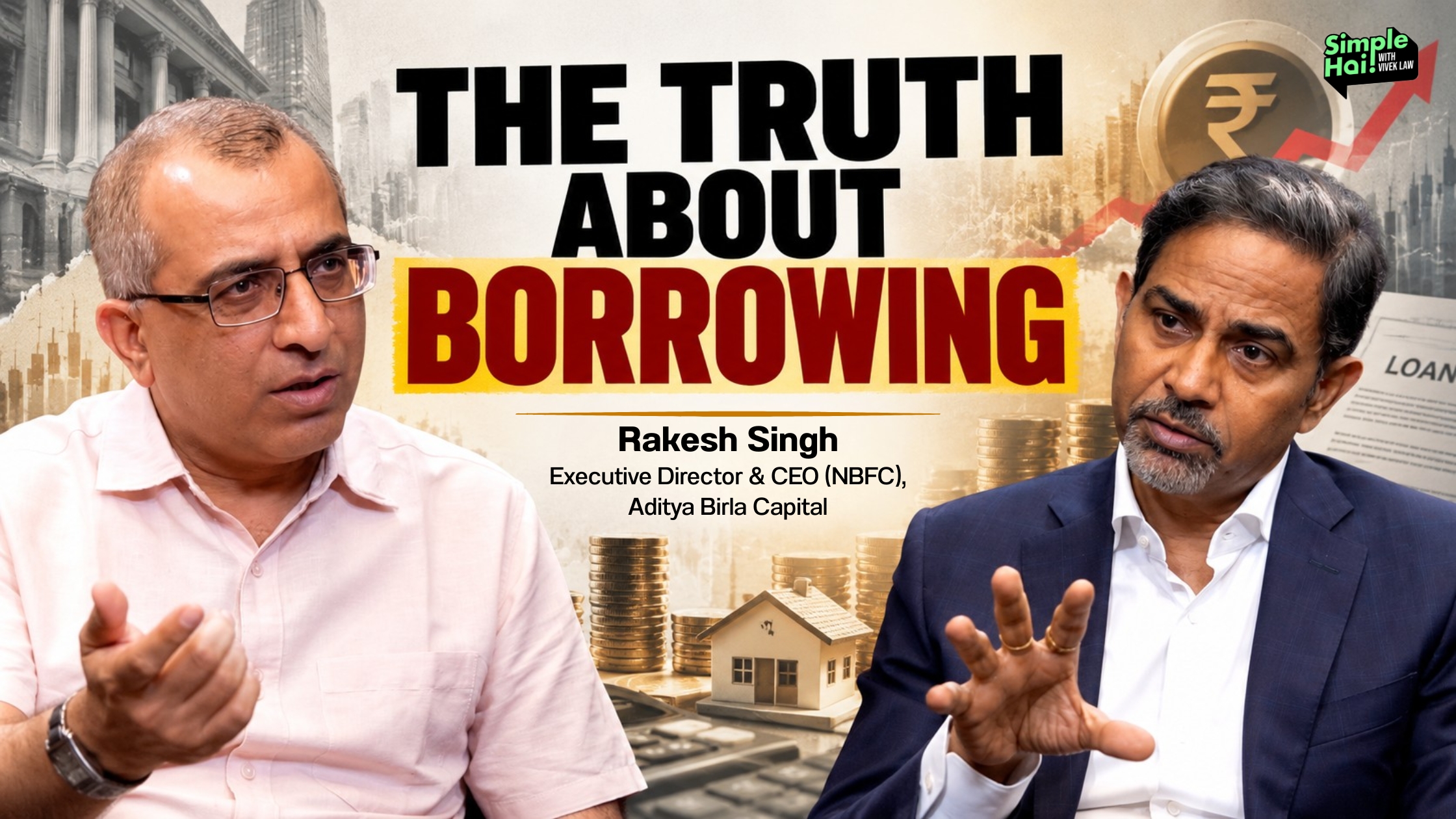
Gold Loans, MSME Credit and Digital Lending: Rakesh Singh on India’s Changing Borrowing Habits
India’s lending landscape is evolving as technology makes credit more accessible and businesses look for faster ways to raise funds. From households using gold as collateral to small businesses seeking formal credit, borrowing is becoming an important part of how individuals and enterprises manage their financial needs.
In a conversation with Vivek Law on The Simple Hai! Show, Rakesh Singh, Executive Director and CEO (NBFC) at Aditya Birla Capital, discussed the growth of gold loans, the credit gap faced by micro, small and medium enterprises (MSMEs), the role of digital platforms in lending, and why responsible borrowing must remain a priority.
Gold Loans: Putting Household Savings to Productive Use
Gold has traditionally been an important form of savings for Indian households. Singh noted that Indian families collectively hold an estimated $5 trillion worth of gold, presenting a significant opportunity for the gold loan market.
According to Singh, the gold loan industry has grown considerably over the past two to three years, partly because rising gold prices have increased the value of the collateral borrowers can offer. He cited an industry size of around ₹19 lakh crore, with NBFCs accounting for approximately ₹4 lakh crore and banks making up the remainder.
Gold loans can help people access funds without selling family jewellery. Singh explained that borrowers often use these loans to invest in their businesses or pay for their children’s education, making them a source of funds for specific financial needs rather than everyday consumption.
He also highlighted the potential in semi-urban and rural areas, as well as Tier 3 and Tier 4 markets, where access to such lending products can expand further.
Trust Is Key to the Gold Loan Business
Borrowing against gold involves more than a financial transaction. For many families, jewellery carries emotional and generational value, making trust an essential part of the process.
Singh said established brands can help customers feel more confident about pledging their gold. Transparency, responsible handling of jewellery and a customer-first approach are important to building that confidence.
He also pointed to a geographical shift in the market. While gold lending was previously concentrated in southern states, Singh said growth is increasingly visible in northern, eastern and central India, including markets such as Delhi-NCR, Uttar Pradesh and Rajasthan.
For Aditya Birla Capital, entering this segment is an opportunity to expand its lending presence across the country while focusing on customer trust and responsible growth.
MSMEs Continue to Face a Credit Gap
Access to formal credit remains a challenge for many small businesses. Singh observed that some MSMEs continue to borrow from friends, family or local sources, sometimes at significantly higher rates, because they cannot easily access suitable formal financing.
He said banks, NBFCs and fintech companies each have a role to play in addressing this gap. Rather than simply competing with one another, these institutions need to reach different customer segments and offer products suited to their requirements.
Speed is another important factor. For a small business, delays in accessing funds can affect day-to-day operations and growth plans. Lenders therefore need to combine appropriate credit assessment with efficient processes.
Singh also shared that approximately 57–58% of Aditya Birla Capital’s loan book, which he referred to as around ₹1.70 lakh crore during the discussion, was directed towards MSMEs.
How Digital Platforms Are Changing Lending
Digital infrastructure is making it easier for lenders to assess small businesses that may previously have had limited access to formal credit.
Singh highlighted the role of digital payments, Aadhaar-based verification, PAN linkages, GST records and credit bureau information in helping lenders understand customers and their financial activity. As more businesses use digital payment systems, lenders can gain a clearer picture of their transactions and banking behaviour.
Aditya Birla Capital developed its Udyog Plus digital platform to serve MSMEs. Singh said the platform had close to 2.4 million registered businesses at the time of the conversation.
Through digital processes, some smaller loans can be assessed, approved and disbursed within minutes. Larger or more complex applications may still require intervention from branches and credit managers.
Digital platforms can also help businesses access services beyond financing, including support related to accounting and human resources.
Digital Lending Must Be Matched With Responsible Borrowing
Technology has made it easier for customers to access credit, including through digital platforms and financing options offered during online purchases. However, Singh cautioned that easier access to loans also brings risks.
When customers take multiple loans from different lenders, their overall debt burden can rise. Singh stressed that lenders need to monitor a borrower’s leverage not just when approving a loan, but also after the money has been disbursed.
For borrowers, understanding repayment capacity is equally important. People should assess how much they can repay, when their income is likely to arrive and whether the repayment schedule suits their financial circumstances. This can be particularly important for those with irregular or seasonal earnings.
Singh also emphasised the importance of awareness around credit scores and repayment discipline. Delayed payments can affect a borrower’s credit record and future access to loans.
The Future of Lending Depends on Access and Awareness
India’s growing economy, expanding digital infrastructure and changing borrowing needs are creating opportunities for lenders. Gold loans can help households unlock funds against an existing asset, while better access to formal credit can support small businesses.
But greater access alone is not enough. As Singh explained, lenders must understand the customer segments they serve, manage risks carefully and ensure that credit reaches borrowers whose needs and repayment capacity align with the product.
For borrowers, the message is equally clear: a loan should serve a financial purpose, and taking one should always involve a clear understanding of its cost and repayment obligations.

From financial awareness to financial confidence, Simple Hai! marks 100 episodes with a celebration of conversations, learning and the people behind the journey. A hundred episodes is more than a number. For Simple Hai!, it represents years of conversations aimed at making money easier to understand. The milestone was celebrated with the Simple Hai! @ 100 event, bringing together the people who have shaped, supported and powered the show. The celebration reflected on the journey of building a financial education platform around one simple idea: finance does not have to feel complicated.
From Awareness To Confidence
Over its journey, Simple Hai! has explored subjects ranging from investing and wealth creation to retirement planning and everyday money decisions.
The show’s conversations have also reflected how India’s financial landscape has changed.
Mutual funds, investing and personal finance have become more accessible to younger audiences. Digital platforms have further changed how people learn about money.
The show has reached audiences beyond India’s major metros, with viewers across more than 15 countries.
It has also crossed 38 million impressions and nearly 5 million views, reflecting the growing demand for accessible financial education.
The People Behind Simple Hai!
The celebration also recognised the team working behind the camera.
Co-founders Aparna Joshi, Harish Patil and Deepak Karna joined Law during the event, highlighting the collaborative effort behind the platform.
The wider OneNative Studio team was also brought on stage as part of the celebration.
That moment reinforced an important part of the show’s journey.
A finance platform may have a host at the centre, but building 100 episodes requires researchers, producers, editors, designers and everyone working behind the scenes.
A Conversation With Ashishkumar Chauhan
Ashishkumar Chauhan, MD and CEO of the National Stock Exchange, also joined the celebrations through a conversation and message recognising the milestone.
He highlighted the role of financial media in making investment conversations more accessible.
The discussion also looked at how Indian investors have changed over the years.
Law recalled a time when mutual funds were far less familiar to ordinary investors. Today, financial products and investment information are significantly more accessible.
The challenge has consequently shifted from access to understanding.
The Philosophy Behind The Show
One recurring idea from the celebration was the importance of knowledge.
A story from India’s financial markets captured that philosophy particularly well.
Veteran brokers once suggested that while people may worship Lakshmi, the goddess of wealth, they should remember Saraswati, the goddess of knowledge, every day.
For Simple Hai!, that idea fits the journey.
Financial confidence cannot come only from having access to products. It also requires knowledge, discipline and the confidence to ask questions.
What’s Next For Simple Hai!?
Reaching 100 episodes is being treated as a milestone rather than a finish line.
The platform plans to explore artificial intelligence and other technologies to make financial education more accessible.
The newly launched Simple Hai! website will also bring together its podcasts and financial education content.
As the show enters its next phase, its central promise remains unchanged.
Make finance simpler. Make financial conversations more accessible. And help more Indians become confident with their money.
For Simple Hai!, 100 episodes are therefore less about looking back and more about asking what comes next.
-
 News4 weeks ago
SC Says No Stay On New UPI Charges Above ₹2,000
-
 Podcast1 year ago
Nitin Jain: From IIT to Investment Titan, Managing ₹60,000 Crore AUM
-
 News1 month ago
NSE Makes Long-Awaited Market Debut After ₹22,562-Crore IPO
-

 Explainer5 months ago
How Much SIP Do You Need to Build ₹1 Crore? The Power of Time and Compounding
-
 Podcast2 years ago
From ₹1 Lakh Lost to Managing ₹650 Crore: How Divam Sharma of Green Portfolio Built a Fundamental Investing Approach
-
 Podcast1 year ago
From ₹1 Lakh Lost to Managing ₹650 Crore: How Divam Sharma of Green Portfolio Built a Fundamental Investing Approach
-
 News2 weeks ago
UPI Charges on Payments Above ₹2,000 Delayed Until After Diwali
-
 IPO Watch2 weeks ago
Jio IPO 2026: How the ₹30,213 Crore Issue Will Use Its Funds