
IPO Watch
Milky Mist IPO: What Investors Need to Know


Milky Mist Dairy Food is set to make its stock market debut on August 18, following strong demand for its initial public offering (IPO). The company’s ₹1,553 crore IPO attracted significant interest from investors during the subscription period. The IPO was priced in the range of ₹133 to ₹140 per share, with the issue closing on August 13. Retail investors could apply for a minimum of 107 shares, requiring an investment of ₹14,980 at the upper end of the price band.
Strong demand for the IPO
The IPO received a strong response from investors. By the end of the subscription period, the issue was subscribed more than 56 times.
Institutional investors showed particularly strong interest, with the portion reserved for qualified institutional buyers subscribed over 155 times. The non-institutional investor category was subscribed nearly 35 times, while the retail portion was subscribed more than eight times.
The strong subscription indicates considerable investor interest in the company’s business and its plans for future growth.
What is the company raising money for?
The IPO consists of a fresh issue of around ₹1,428 crore and an offer for sale worth approximately ₹125 crore. The fresh funds will go towards strengthening the company’s balance sheet and supporting its expansion plans.
A significant portion of the proceeds is expected to be used to repay or reduce existing borrowings. The company also plans to spend money on expanding and modernising its manufacturing facility in Perundurai, Tamil Nadu.
What does Milky Mist do?
Milky Mist Dairy Food is a dairy and food products company with a portfolio that includes paneer, cheese, butter, curd, ghee, yoghurt and ice cream.
The company has built a strong presence in the organised dairy market, particularly in South India. It has also expanded its product range and distribution network over the years.
However, a large share of its business continues to come from South India, making geographical expansion an important part of its future growth strategy.
What does the GMP indicate?
Ahead of the listing, Milky Mist shares were trading at a premium in the grey market.
The Grey Market Premium (GMP) is an unofficial indicator of how the market expects an IPO to perform when it lists. A GMP of around ₹20 over the IPO’s upper price of ₹140 suggested a potential listing price of about ₹160 per share, or roughly a 14–15% premium.
However, GMP is not an official market price and can change quickly. It should not be treated as a guarantee of listing gains.
What happens next?
With the IPO subscription completed, shares are scheduled to list on both the NSE and BSE on August 18.
While the strong subscription and grey-market premium point towards positive investor sentiment, the actual listing price will depend on market conditions and demand on the day of listing.
For investors, the bigger question is not just how the stock performs on its first day, but whether Milky Mist can continue to grow its business, expand beyond its existing markets, manage its debt and improve profitability over the long term.
Source: NDTV Profit
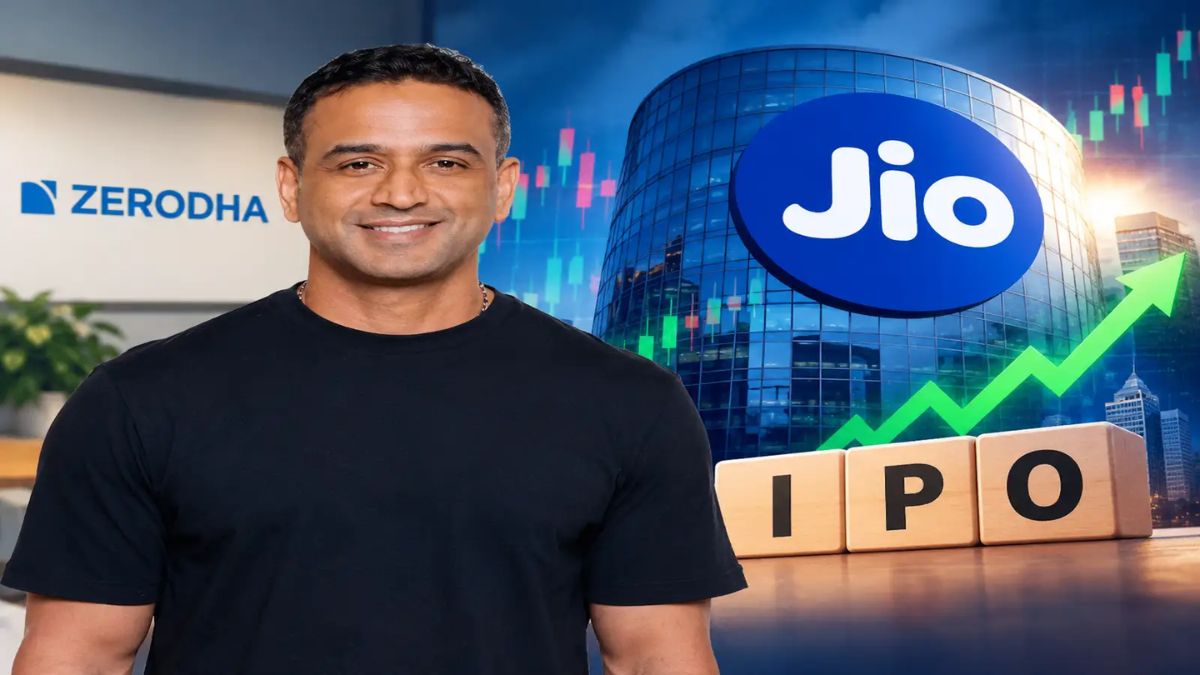
India’s stock market has come a long way in the last decade. And according to Zerodha co-founder Nithin Kamath, one of the biggest reasons behind this growth is something many of us use every day: affordable mobile internet.
As Reliance Jio Platforms prepares for its IPO, Kamath has highlighted how Jio, along with Bharti Airtel, helped transform India’s digital economy and made it easier for businesses like Zerodha to grow.
While Kamath has refrained from advising investors on whether they should apply for the Jio IPO, he believes the telecom industry has played an important role in expanding access to financial markets.
How Jio helped bring more Indians into the stock market
When Jio was preparing to launch in 2015, Kamath was building Zerodha, a discount stockbroker that had recently made delivery-based investing brokerage-free.
He recalled being featured alongside Mukesh Ambani in The Economic Times’ list of businessmen to watch in 2016. While Ambani topped the list, Kamath was ranked sixth.
Looking back, Kamath said the remarkable part of Jio’s journey was not just how large the company became, but how much it changed India and helped other businesses grow.
Affordable internet made it easier for millions of Indians to access online services, including investment platforms. Alongside this, Aadhaar and UPI helped build the digital infrastructure that businesses such as Zerodha depend on.
In other words, the growth of online investing was not driven by stockbroking platforms alone. It was also made possible by the technology and connectivity that brought more people online.
From 2 crore investors to over 13 crore
India’s investor base has expanded significantly over the years.
According to Kamath, India had around 2 crore unique investors in 2016. Today, that number has grown to more than 13 crore.
He believes Jio and Airtel’s affordable data services, combined with digital systems such as Aadhaar and UPI, helped lay the groundwork for the expansion of India’s capital markets, particularly after the Covid-19 pandemic.
For everyday investors, this shift means that accessing financial markets is no longer limited to people who live in major cities or have easy access to traditional financial services.
With a smartphone and an internet connection, more people can now explore investment platforms, learn about financial products and participate in the stock market.
Why digital infrastructure matters for businesses
Kamath also pointed out that businesses often benefit from infrastructure built by other companies.
For instance, Zerodha’s growth would have been much harder without widespread internet access and digital systems that simplify identity verification and payments.
The same applies to several online-first businesses. Affordable connectivity allows companies to reach customers across the country without needing a physical presence in every location.
This is an important reminder that a company’s success is not always the result of its own efforts alone. It can also depend on the wider ecosystem that makes its business model possible.
Jio and Airtel helped expand internet access, Aadhaar enabled digital identity verification, and UPI made digital payments easier. Together, these developments have helped create opportunities for businesses and consumers alike.
So, should you apply for the Jio IPO?
Kamath has made it clear that he cannot tell investors whether they should apply for the upcoming Jio Platforms IPO. His comments focus on the company’s broader impact on India’s digital economy rather than offering a recommendation on the stock.
For investors, this distinction matters.
A company can play a major role in transforming an industry and still require careful evaluation before investing in it. Its business growth, financial performance, valuation and future prospects all need to be considered before making an investment decision.
Jio’s contribution to India’s digital transformation is one part of its story. Whether its IPO is suitable for an individual investor is a separate question.
Connecting the Dots
India’s growing investor base is not just a story about more people buying stocks. It is also a story about better access to the internet, digital payments and financial services.
Jio and Airtel helped bring millions of Indians online, while Aadhaar and UPI made several digital services easier to access. Together, these developments helped create an environment in which businesses such as Zerodha could grow.
The bigger lesson? Financial participation becomes easier when the infrastructure around it improves. But when it comes to investing your own money, understanding a company’s business is only the first step. You must also evaluate the investment itself before deciding whether it fits your financial goals.
Unlike several major IPOs where existing investors sell their stakes, Jio Platforms’ upcoming public issue will raise fresh capital for the company, with most of the proceeds earmarked for debt repayment.
India’s IPO market is gearing up for a major milestone. Jio Platforms, the digital services arm of Reliance Industries, is preparing to launch a ₹30,213 crore initial public offering (IPO), which could become the country’s largest-ever public issue.
But the size of the offering is not the only thing setting it apart. The structure of Jio’s IPO makes it different from several large listings seen in India over the past few years.
A Fresh Issue, Not an Investor Exit
Jio Platforms’ IPO will consist entirely of newly issued shares, with no offer-for-sale (OFS) component. This means existing shareholders will not be selling their shares as part of the public issue.
In an OFS, existing investors or promoters sell some of their holdings to public investors. The money from that sale goes to the shareholders selling their stakes rather than to the company itself.
A fresh issue works differently. The company creates and issues new shares to raise capital, which it can then use for specified business purposes.
For Jio Platforms, this means the funds raised through the IPO will go to the company, rather than serving as an exit route for its existing investors, including Reliance Industries, Meta and Google.
Where Will the IPO Money Go?
A significant portion of the proceeds will be used to repay or prepay borrowings of Reliance Jio Infocomm, Jio Platforms’ telecom subsidiary.
The company has earmarked up to ₹27,500 crore of the net proceeds for this purpose, with the remaining funds intended for general corporate purposes. At the upper end of the IPO’s price band, the debt repayment allocation accounts for approximately 91% of the total issue size.
Reducing debt can help lower interest expenses and strengthen a company’s balance sheet. For Jio, the proposed repayment could support its financial position as it continues to expand its digital and telecom businesses.
When Is the IPO Opening?
Jio Platforms has fixed a price band of ₹1,065 to ₹1,119 per share. The public issue is scheduled to open on October 21 and close on October 23, 2026, with anchor investor bidding planned for October 19.
At the upper end of the price band, the company could raise ₹30,213 crore, surpassing Hyundai Motor India’s ₹27,859 crore IPO in 2024.
The offering values Jio Platforms at approximately ₹10.3 lakh crore, making it one of the most significant listings in India’s capital markets.
A Growing Business Heads to the Stock Market
The IPO comes as Jio Platforms continues to expand its presence across telecommunications and digital services. In FY26, the company reported revenue from operations of approximately ₹1.47 lakh crore, while its net profit rose to ₹30,049 crore.
Its subscriber base has also grown substantially since Reliance Jio entered the telecom market in 2016, disrupting the industry with affordable data and voice services.
The listing will give public-market investors an opportunity to invest directly in Jio Platforms and provide a market valuation for Reliance Industries’ digital business.
For investors, however, the size of an IPO alone does not determine whether it is a suitable investment. The company’s valuation, financial performance, future growth prospects and risks all matter when evaluating a public issue.
Source: Moneycontrol

India’s IPO market is set for a busy week, with 20 public issues scheduled to open and 14 companies, including the National Stock Exchange, lined up for listing. India’s primary market is gearing up for another busy week, with 20 initial public offerings (IPOs) scheduled to open for subscription from September 21, 2026. At the same time, 14 companies are expected to make their stock market debut, including the National Stock Exchange of India (NSE). The fundraising from 19 of the companies is expected to exceed Rs 4,200 crore, including Rs 3,825 crore from the mainboard segment. Moneyview has been excluded from this tally as its price band is due to be announced separately. Its IPO is scheduled to open on September 24.
Mainboard IPOs to Watch
Varmora Granito will be the first mainboard company to open its IPO next week. The Gujarat-based ceramic and vitrified tiles manufacturer plans to raise Rs 708 crore through an issue comprising a fresh issue worth Rs 320 crore and an offer for sale (OFS) of shares worth around Rs 388 crore. The price band is set at Rs 140–148 per share, and the issue opens on September 22.
Four more mainboard IPOs—Elevate Campuses, ArMee Infotech, Swastika Infra and Adroit Industries India—are scheduled to open on September 23.
Singapore-based student accommodation operator Elevate Campuses is planning to raise up to Rs 2,100 crore, making it the largest issue among the upcoming offerings. Its price band is Rs 343–362 per share, and the issue consists entirely of a fresh share issuance.
ArMee Infotech, a Gujarat-based IT infrastructure and services provider, plans to raise up to Rs 300 crore through a fresh issue, with a price band of Rs 350–375 per share.
Swastika Infra, an engineering, procurement and construction company focused on power transmission and distribution infrastructure, plans to raise Rs 161.37 crore. The issue includes a fresh issuance of Rs 129 crore and an OFS worth Rs 32.37 crore at the upper end of the price band.
Adroit Industries India, an auto components manufacturer headquartered in Madhya Pradesh, intends to raise Rs 150.7 crore. Its IPO comprises a fresh issue of 98.97 lakh shares and an OFS of 13.5 lakh shares. The price band is Rs 126–134 per share.
Bengaluru-based steel producer A-One Steels India will open its Rs 405-crore IPO on September 24. The issue includes a fresh issue of Rs 355 crore and an OFS of Rs 50 crore, with a price band of Rs 385–405 per share.
SME Segment Sees 13 IPOs
The SME segment is also expected to remain active, with 13 companies scheduled to open their IPOs next week. Their combined fundraising is expected to exceed Rs 400 crore.
FX Multitech, Vivekanand Cotspin and Robokidz Eduventures are scheduled to open their issues on September 21, seeking to raise more than Rs 45 crore, Rs 31 crore and Rs 22 crore, respectively.
Himalaya Nutravedics India and Anand Seamless are expected to open their IPOs on September 22, with planned fundraising of Rs 26.5 crore and Rs 25.5 crore.
Six SME IPOs are lined up for September 23: Pooja Logistics, Liqvd Digital India, Unitec Fibres, SK Offset, Coreintegra Consulting Services and Sai Urja Indo Ventures. Their proposed fundraising amounts are Rs 44 crore, Rs 39 crore, Rs 34.5 crore, Rs 29 crore, Rs 22 crore and Rs 25 crore, respectively.
Peshwa Wheat and Bench Mark Infotech Services are scheduled to open on September 24 and 25, respectively. Together, they are expected to raise around Rs 100 crore.
IPOs Closing Soon
The NSE and textile company Sonaselection India are scheduled to close their maiden public issues on September 21. At the time of the report, the NSE IPO had been subscribed 1.16 times, while Sonaselection India had received subscriptions equivalent to 90% of the shares on offer.
In the SME segment, SpectraA Technology Solutions and Kheria Autocomp are also due to close their IPOs on September 21. They had attracted subscriptions of 18.43 times and 45%, respectively. Axiom Gas Engineering’s issue is scheduled to close on September 22 and had been subscribed 58% at the time of reporting.
14 Companies Set to List
A total of 14 companies are expected to begin trading next week, six of them on the mainboard.
Manika Plastech is scheduled to list on September 21. Hero Motors, SS Retail and Jindal Supreme (India) are expected to debut on September 23, followed by Sonaselection India and NSE on September 24.
Eight SME companies are also lined up for listing. Century Business Media and Injecto Polymers are scheduled to debut on the BSE SME platform on September 21, followed by Vama Wovenfab and Quanto Agroworld on September 22.
SpectraA Technology Solutions and Kheria Autocomp are expected to begin trading on the NSE Emerge platform on September 24, while Axiom Gas Engineering is scheduled to list on September 25.
According to market observers cited in the report, SS Retail, SpectraA Technology Solutions and Jindal Supreme shares were trading at a premium of more than 30% in the grey market. Other companies, including NSE, had seen a more subdued grey-market response.
What Investors Should Keep in Mind
The crowded IPO calendar offers investors several issues to examine, but the number of offerings or the grey-market premium alone does not establish whether an IPO is suitable for an individual investor.
Investors should review the company’s business, financial performance, use of proceeds, valuation and risk disclosures before making a decision. Subscription figures and listing schedules may also change, so investors should check the latest information from the exchanges and official offer documents.
Disclaimer: The Simple Hai! does not hold any responsibility for investment decisions made based on the information presented in this content. This content is for informational and educational purposes only and should not be considered investment advice. Viewers are advised to conduct their own research and consult a SEBI-registered investment adviser before making any investment decisions.
-
 News4 weeks ago
SC Says No Stay On New UPI Charges Above ₹2,000
-
 Podcast1 year ago
Nitin Jain: From IIT to Investment Titan, Managing ₹60,000 Crore AUM
-
 News1 month ago
NSE Makes Long-Awaited Market Debut After ₹22,562-Crore IPO
-

 Explainer5 months ago
How Much SIP Do You Need to Build ₹1 Crore? The Power of Time and Compounding
-
 Podcast2 years ago
From ₹1 Lakh Lost to Managing ₹650 Crore: How Divam Sharma of Green Portfolio Built a Fundamental Investing Approach
-
 Podcast4 months ago
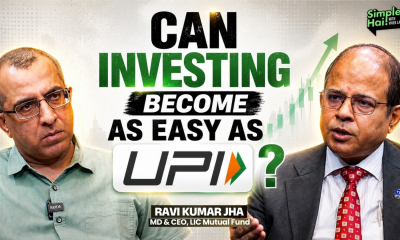
Can ₹200 SIPs Create India’s Next Investing Revolution? Ravi Kumar Jha’s Big Bet On Financial Inclusion
-
 Podcast1 year ago
From ₹1 Lakh Lost to Managing ₹650 Crore: How Divam Sharma of Green Portfolio Built a Fundamental Investing Approach
-
 News2 weeks ago
UPI Charges on Payments Above ₹2,000 Delayed Until After Diwali