
News
E10 Petrol May Return? BPCL Clarifies Its Stand Amid E20 Debate


The debate around E10 petrol is back in the spotlight after BPCL Chairman and Managing Director Sanjay Khanna said the company was looking into the possibility of offering a lower-ethanol fuel option. However, the remarks were later clarified, with BPCL maintaining that there is no proposal to replace the existing E20 petrol with E10.
What Did BPCL Initially Say?
BPCL had indicated that it was examining whether E10 petrol could be made available, particularly as an option for older vehicles. The company said various aspects, including the feasibility and logistics of introducing a lower-ethanol blend, were being looked into, but nothing had been finalised.
Then Came the Clarification
A few hours later, BPCL clarified that its comments had been misinterpreted. The company stressed that there is no plan to replace E20 with E10. According to BPCL, the discussion was around whether owners of older vehicles could potentially be offered a lower-ethanol fuel option – not about rolling back the country’s existing E20 fuel programme.
So, Is E10 Petrol Coming Back?
For now, there is no final decision. A petroleum ministry official also said the government has no plans to introduce E10 fuel and remains focused on the current E20 programme. While the possibility of a lower-ethanol option for older vehicles has sparked discussion, consumers will have to wait for any official policy decision. Until then, E20 remains the standard petrol blend in focus.

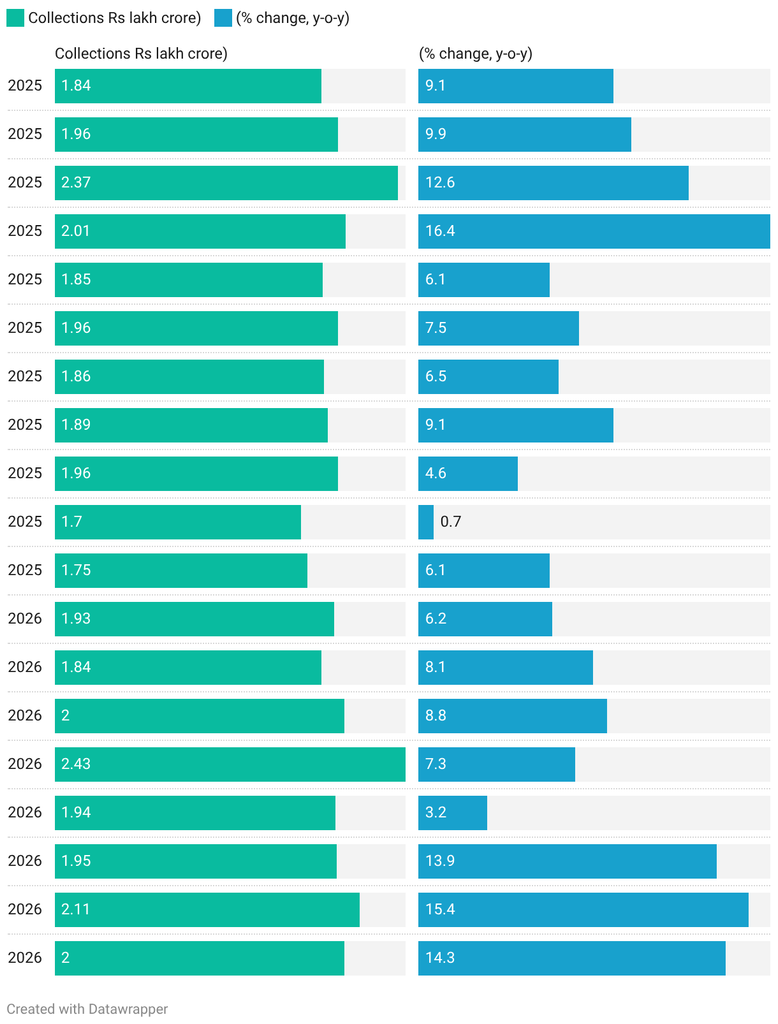
India’s gross Goods and Services Tax (GST) collections rose 15% year-on-year (YoY) to nearly Rs 2 lakh crore in August, extending a period of strong revenue growth, according to government data released on September 1. Gross GST collections stood at Rs 1.998 lakh crore in August, compared with Rs 1.74 lakh crore in the same month last year. The latest increase follows 15.4% growth in July and 13.9% in June, marking the third consecutive month of double-digit growth.
Import Revenues Drive Growth
The rise in August collections was led largely by GST revenue from imports.
Import-related gross GST revenue increased 29% to Rs 62,604 crore in August from Rs 48,546 crore a year earlier. In comparison, domestic GST revenue grew 9.3% to Rs 1.37 lakh crore from Rs 1.26 lakh crore.
The stronger growth in import-related collections provided a significant boost to the overall GST revenue figure during the month.
Higher Refunds Moderate Net Collections
While gross collections remained strong, net GST revenue grew at a slower pace because of a sharp increase in refunds.
Total refunds rose 67.9% to Rs 31,795 crore in August from Rs 18,935 crore a year earlier. Domestic refunds increased 72.6%, while export GST refunds processed through ICEGATE rose 61.8%.
After accounting for refunds, net GST collections increased 8.3% to Rs 1.68 lakh crore, compared with Rs 1.55 lakh crore in August 2025.
Net domestic GST revenue grew 3.4% to Rs 1.19 lakh crore, while net customs GST collections rose 22.3% to Rs 49,299 crore.
GST Collections Rise 11% in FY27 So Far
For the April-August period of FY27, gross GST collections increased 11% to Rs 10.43 lakh crore, compared with Rs 9.40 lakh crore during the corresponding period last year.
Domestic gross GST revenue grew 5.3% during the first five months of the financial year, while revenue from imports increased 27.3%.
Net GST collections rose 9% to Rs 8.90 lakh crore during April-August. Cumulative refunds during the period increased 23.8% to Rs 1.53 lakh crore.
State-Level Performance Varies
GST collection growth remained uneven across major states in August.
Uttar Pradesh recorded 19% growth in domestic GST collections, followed by Telangana at 16% and Gujarat at 15%. Karnataka and Kerala recorded 13% growth each, while Haryana and Punjab reported 12% growth.
Maharashtra, the country’s largest contributor, recorded an 8% increase in collections to Rs 28,779 crore.
Some states reported declines. Tamil Nadu’s collections fell 1%, while Odisha and Andhra Pradesh recorded 7% declines each. Rajasthan and Goa saw collections fall 2%.
Assam recorded a sharp 162% increase in GST collections during the month.
What the Numbers Show
The August data points to continued strength in India’s overall tax revenue, but the composition of growth is important. Import-related GST collections grew much faster than domestic revenues, while the sharp increase in refunds moderated the rise in net collections.
The sustained growth in gross GST revenue through the first five months of FY27 provides a positive signal for government tax receipts. However, the relatively slower growth in net collections highlights the impact of rising refunds on the revenue available after adjustments.
Source: Moneycontrol

The food industry is stepping up its focus on hygiene and food safety as regulatory scrutiny and consumer expectations grow. Restaurants, food delivery platforms and their suppliers are tightening checks across kitchens, ingredients and food-handling processes to ensure that safety standards are followed.
Restaurants Tighten Kitchen Checks
Large restaurant chains are increasingly asking suppliers to meet stricter quality standards and are carrying out more frequent inspections at their outlets. Checks are focusing on ingredients such as meat, buns, ketchup and fresh produce, along with kitchen cleanliness, food segregation and staff hygiene. Restaurants are also investing in employee training and regular hygiene audits to reduce the risk of food safety violations.
Delivery Platforms Face Greater Responsibility
Food delivery platforms are also becoming an important part of the food safety chain. Since customers cannot see how their food is prepared when ordering online, platforms are under growing pressure to ensure that restaurants listed on their apps follow basic hygiene and safety requirements. This has led to greater attention towards restaurant audits, documentation and compliance.
Focus on Ingredients and Transparency
Another major concern is the use of unauthorised ingredients or substitutes that may not be clearly disclosed to customers. Restaurants and food businesses are being encouraged to ensure that the ingredients they use match what is mentioned on their menus and product information. Greater transparency can help businesses avoid regulatory issues while also building consumer trust.
Regulators Push for Stronger Compliance
Food safety authorities are increasing their focus on inspections and compliance across the food supply chain. The aim is to ensure that food safety standards are followed not just by restaurants, but also by suppliers, manufacturers and other businesses involved in getting food to consumers. Better record-keeping, traceability and accountability are becoming increasingly important.
Technology Joins the Food Safety Push
Technology could also play a bigger role in improving food safety. Digital systems can help businesses track suppliers, monitor ingredients, maintain quality records and identify gaps in compliance. For large restaurant chains and delivery platforms, such systems can make it easier to monitor standards across multiple outlets and partners.
What It Means for Consumers
For consumers, the tightening of hygiene checks could mean safer food and greater transparency. As food delivery becomes a regular part of everyday life, customers increasingly expect the same safety standards from delivered food as they do from restaurants they visit in person.
The larger shift is clear: food safety is no longer just about passing an inspection. For restaurants, suppliers and delivery platforms, maintaining consistent hygiene and quality standards is becoming essential to protecting both consumer trust and the business itself.
Source: The Economic Times

Adfactors PR and Vikas Khemani, Founder and CIO of Carnelian Asset Management & Advisors, have acquired a stake in creator-led marketing company WLDD. The financial terms and size of the stake have not been disclosed. As part of the transaction, Adfactors PR CEO Nijay N Nair, who also oversees the consultancy’s mergers and acquisitions and global initiatives, will join WLDD’s board. Khemani has made the investment in his personal capacity.
WLDD Expands Beyond Influencer Marketing
The investment comes as WLDD broadens its business beyond meme and influencer marketing into creator platforms, content, distribution, production and brand solutions.
Founded in 2018 by Arihant Jain, Jaidev Kesti and Vivekanand Kilari, WLDD initially operated as a meme-marketing company before expanding its portfolio to address a wider range of digital and creator-led marketing requirements.
The company said it has recorded a 55% compound annual growth rate (CAGR) over the past three years and currently employs more than 350 people across Bengaluru, Mumbai and Delhi.
Its businesses include Solo, a creator platform; Meme’d, a short-form content unit; Crunch Studios, its production arm; and Imagined Studio, which focuses on brand and product design.
WLDD has worked with brands including Amazon, Coca-Cola, OpenAI, Spotify, Netflix, Tata Motors, Philips, Rapido, Tinder and Audible.
Investment Follows 2023 Seed Funding
The transaction follows WLDD’s $1.25 million seed funding round in 2023, which was led by Negen Capital.
In 2025, the company also acquired select intellectual property of ScoopWhoop from The Good Glamm Group. The transaction was valued at around Rs 20 crore, according to reports.
The latest investment brings a communications consultancy and an investment professional into WLDD’s shareholder base as the company seeks to expand its presence across the broader creator and digital marketing ecosystem.
Strategic Interest in the Creator Economy
For Adfactors PR, the investment provides an opportunity to strengthen its capabilities around creator-led marketing, digital culture and online communities.
The communications industry has increasingly expanded beyond traditional media relations as brands seek to reach audiences through creators, social platforms and digital communities. WLDD’s existing operations give Adfactors PR exposure to these segments while potentially creating opportunities for collaboration between communications and creator-led marketing.
Madan Bahal, Co-founder and Managing Director of Adfactors PR, said digital culture, creator communities and the speed at which narratives travel are reshaping reputation and influence.
He added that communications consultancies need to invest in capabilities spanning media, markets, technology and earned influence.
Khemani Bets on WLDD’s Growth
For Vikas Khemani, the investment represents a personal bet on WLDD’s founders and the company’s position in the evolving attention economy.
Khemani said India’s attention economy is reaching an inflexion point, with spending shifting from traditional media towards creator-led distribution.
The investment also reflects the growing interest in businesses that operate at the intersection of creators, content, brands and digital distribution.
WLDD Co-founder and CEO Arihant Jain said the company was founded on the view that memes, creators and internet communities were becoming an important form of communication and attention.
The company now aims to build a broader platform for brands seeking capabilities across cultural understanding, content creation, distribution and creator-led engagement.
What the Investment Means for WLDD
The investment gives WLDD strategic backing from both a major communications consultancy and an investment professional, while the board appointment adds senior corporate and M&A experience to its leadership structure.
With its expansion into creator platforms, production, content and brand solutions, WLDD is positioning itself beyond a traditional influencer-marketing agency.
The company’s ability to sustain its reported growth rate and convert its expanded portfolio into larger and recurring client relationships will be key factors in determining the next phase of its growth.
The investment comes as WLDD expands beyond meme and influencer marketing into creator platforms, content, production and brand solutions.
-
 Podcast4 months ago
Why NOT Investing Is the Biggest Risk Today | Vetri Subramaniam | Simple Hai!
-
 News2 days ago
ITR Filing Deadline Today: Common Mistakes to Avoid & What Happens If You Miss It
-
 Explainer2 months ago
New EPF Scheme 2026: What Has Actually Changed for Your PF?
-

 Podcast10 months ago
Making Money Requires Conviction, Not Borrowing: Lessons from Vikas Khemani
-

 Podcast4 weeks ago
Digital Gold Can Unlock India’s $5 Trillion Opportunity, Mahendra Luniya
-
 News6 days ago
India, China Discuss New Framework to Boost Investments
-

 IPO Watch2 months ago
SBI Funds Management IPO: What You Need to Know
-

 Explainer3 weeks ago
What Does Financial Freedom Really Mean? A Simple Guide to Building Wealth