
Podcast
When Data Met Distribution: Inside Jio BlackRock’s Systematic Bet on India’s Next Investors

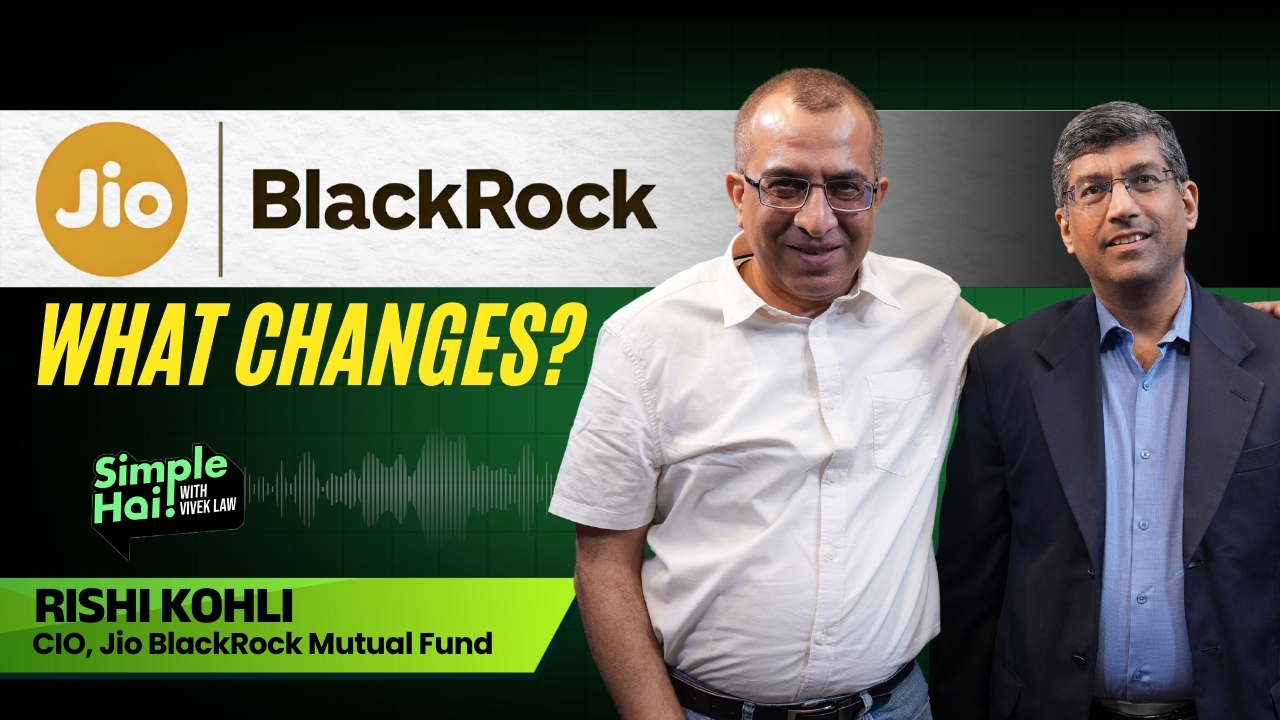
When a telecom giant with 450 million users teams up with the world’s largest asset manager, the question isn’t “what will they launch?”, it’s “how far can they change how India invests?” In the latest episode of the Simple Hai! Show, veteran finance journalist Vivek Law spoke with Rishi Kohli, Chief Investment Officer of Jio BlackRock, to unpack that bet: scale, data, risk, and the long road from selling mutual funds to actually building financial inclusion.
The episode opened with Law setting the context. The entry of Jio BlackRock into India’s mutual fund industry had created a stir. Law described it as an elephant walking into the market, combining the digital power of Jio with the global investment engine of BlackRock.
Kohli acknowledged that there was curiosity and pressure surrounding what the joint venture between the two behemoths would do differently. For the moment, he said, the excitement of building and the clarity of planning were absorbing that pressure. The real testing phase, with more experimentation, was expected to begin in the next six to nine months as the firm moved beyond its foundation stage.
Scale, Reach and First-Time Investors
Law then turned the conversation to scale. Kohli revealed that Jio BlackRock had already crossed 10 lakh retail investors across its schemes within months of launch. What stood out was that 18 percent of these investors were first-timers, many from rural pin codes who had never participated in market-linked investments earlier.
During the launch of the Flexi Cap fund, investments had come in from 93 to 94 percent of India’s pin codes. Kohli explained that this reach was possible because the mutual fund operated as an app within an app, integrated into the MyJio and JioFinance platforms. The aim, he stressed, was financial inclusion, not just asset gathering.
Why Jio and BlackRock Came Together
Law asked why this partnership had made sense. Kohli explained that both partners had identified a clear gap in India. While global markets had long adopted systematic and data-driven investment processes, India still relied heavily on discretionary decision-making.
Jio contributed to the nationwide digital distribution built through the telecom revolution. BlackRock, managing over 14 trillion dollars globally, brought technology-led, data-intensive investing. Together, the goal was to marry product and distribution in a way that reached investors who had never invested before.
Building Products the Way Investors Learned
The discussion then moved to product strategy. Kohli explained that Jio BlackRock had launched 12 funds in roughly eight months, following the natural learning curve of a first-time investor.
They began with Liquid and Money Market funds, offering safer alternatives to fixed deposits while also testing operational systems. This was followed by Index funds such as Nifty Next 50, Mid Cap, Small Cap, and an eight-to-13-year government securities index, giving investors low-cost market exposure.
Only after this did active equity come into play, starting with the Flexi Cap fund. Most recently, in late January, the firm launched a Sector Rotation Fund, designed to capture sector-level opportunities rather than focusing only on individual stocks.
Three Sources of Alpha, Not One
Law pressed Kohli on how the firm thought about returns. Kohli outlined three distinct sources of alpha that every portfolio should have to reduce correlation and improve stability.
The first was stock-specific alpha, the traditional Indian approach. The second was sector-level alpha, where choosing the right sector mattered more than picking individual stocks. The third factor or style alpha, such as momentum, value, growth, or low volatility, was still evolving in India.
Jio BlackRock, he said, aimed to combine all three through a systematic framework.
Data, Signals, and the Role of AI
The conversation then deepened into a process. Kohli explained that Jio BlackRock did not rely on gut-driven fund management. In the Flexi Cap fund, about 15 to 20 percent of decisions were driven by alternative data such as online transactions, job postings, and message board activity.
Globally, BlackRock used up to 50 percent alternative data, and Kohli believed India could reach similar levels in the next ten to fifteen years. The system tracked around 400 signals for India, with 30 to 40 active signals at any given time, covering valuation, quality, and sentiment.
Analyst estimates and target prices from hundreds of brokers were updated automatically, faster than any human process. Rebalancing was also systematic. The Flexi Cap rebalanced weekly, leading to roughly 150 percent annual turnover, while the Sector Rotation fund rebalanced monthly.
Risk, Cost and the Aladdin Engine
Law highlighted that returns often received all the attention, while risk was ignored. Kohli agreed, saying risk and impact cost were under-researched in India.
Jio BlackRock uses an India-specific risk model adapted from BlackRock’s global systems. By drawing on trading data from BlackRock’s 50 to 100 billion dollars of passive exposure in India, the firm can estimate how much a trade would move market prices.
These inputs flow into the Aladdin system, BlackRock’s integrated investment technology platform, which optimises portfolios by balancing alpha scores, risk scores, and liquidity costs. Human fund managers still intervene during unusual events such as wars or major policy shocks by tightening risk limits.
Market View: Mid-Caps and FPI Behaviour
On the market outlook, Kohli reminded listeners that he had warned of a tough phase starting in August 2024. He now believed the time and price correction was largely complete.
Looking ahead to FY26, his models showed a slight preference for mid-caps, driven by better earnings visibility compared to small-caps. On foreign portfolio investors, Kohli explained that FPIs had been selling because earnings growth had slowed, and global capital was chasing opportunities like the AI trade or markets such as China and Korea. Importantly, FPI flows usually lagged markets and returned only after momentum became visible.

From financial awareness to financial confidence, Simple Hai! marks 100 episodes with a celebration of conversations, learning and the people behind the journey. A hundred episodes is more than a number. For Simple Hai!, it represents years of conversations aimed at making money easier to understand. The milestone was celebrated with the Simple Hai! @ 100 event, bringing together the people who have shaped, supported and powered the show. The celebration reflected on the journey of building a financial education platform around one simple idea: finance does not have to feel complicated.
From Awareness To Confidence
Over its journey, Simple Hai! has explored subjects ranging from investing and wealth creation to retirement planning and everyday money decisions.
The show’s conversations have also reflected how India’s financial landscape has changed.
Mutual funds, investing and personal finance have become more accessible to younger audiences. Digital platforms have further changed how people learn about money.
The show has reached audiences beyond India’s major metros, with viewers across more than 15 countries.
It has also crossed 38 million impressions and nearly 5 million views, reflecting the growing demand for accessible financial education.
The People Behind Simple Hai!
The celebration also recognised the team working behind the camera.
Co-founders Aparna Joshi, Harish Patil and Deepak Karna joined Law during the event, highlighting the collaborative effort behind the platform.
The wider OneNative Studio team was also brought on stage as part of the celebration.
That moment reinforced an important part of the show’s journey.
A finance platform may have a host at the centre, but building 100 episodes requires researchers, producers, editors, designers and everyone working behind the scenes.
A Conversation With Ashishkumar Chauhan
Ashishkumar Chauhan, MD and CEO of the National Stock Exchange, also joined the celebrations through a conversation and message recognising the milestone.
He highlighted the role of financial media in making investment conversations more accessible.
The discussion also looked at how Indian investors have changed over the years.
Law recalled a time when mutual funds were far less familiar to ordinary investors. Today, financial products and investment information are significantly more accessible.
The challenge has consequently shifted from access to understanding.
The Philosophy Behind The Show
One recurring idea from the celebration was the importance of knowledge.
A story from India’s financial markets captured that philosophy particularly well.
Veteran brokers once suggested that while people may worship Lakshmi, the goddess of wealth, they should remember Saraswati, the goddess of knowledge, every day.
For Simple Hai!, that idea fits the journey.
Financial confidence cannot come only from having access to products. It also requires knowledge, discipline and the confidence to ask questions.
What’s Next For Simple Hai!?
Reaching 100 episodes is being treated as a milestone rather than a finish line.
The platform plans to explore artificial intelligence and other technologies to make financial education more accessible.
The newly launched Simple Hai! website will also bring together its podcasts and financial education content.
As the show enters its next phase, its central promise remains unchanged.
Make finance simpler. Make financial conversations more accessible. And help more Indians become confident with their money.
For Simple Hai!, 100 episodes are therefore less about looking back and more about asking what comes next.

Gold has long been India’s preferred store of wealth. It is bought during festivals, gifted at weddings and passed down through generations. But while Indian households continue to accumulate the precious metal, much of it remains locked away in lockers, generating little economic value.
According to Mahendra Luniya, Founder Chairman, Vighnaharta Gold Ltd., this vast stockpile of household gold represents one of India’s biggest untapped economic opportunities. Speaking on the Simple Hai! podcast hosted by veteran business journalist Vivek Law, Luniya argued that digitising gold ownership and bringing idle gold into the formal financial system could unlock liquidity, reduce import dependence and reshape how Indians invest in the precious metal.
Gold Goes Digital
Luniya compared the evolution of gold ownership to the transformation witnessed in equity markets and payments over the last two decades.
“Shares moved from paper certificates to demat accounts. Cash moved from wallets to UPI. Gold is now following the same path,” he said.
With prices touching around ₹1.5 lakh per 10 grams, purchasing physical gold has become increasingly expensive for many households. Digital platforms, however, allow investors to start with significantly smaller amounts.
“You can now buy gold for as little as ₹150,” Luniya said, adding that digital ownership makes regular investing possible, much like a systematic investment plan (SIP). Instead of waiting to accumulate enough money to buy jewellery or coins, investors can gradually build their gold holdings over time.
From Investment to Jewellery
While digital gold is often viewed as a substitute for physical ownership, Luniya believes it actually complements traditional buying habits.
He explained that investors can accumulate gold digitally over several years and eventually convert those holdings into jewellery whenever required, particularly for weddings or family occasions.
A key innovation enabling this transition is the Electronic Gold Receipt (EGR), an exchange-traded instrument backed by physical gold stored in regulated vaults. According to Luniya, EGRs could eventually allow investors to transfer gold directly from their demat account to a jeweller, paying only the making charges or any additional quantity required.
“This makes gold accumulation far more efficient while still allowing families to eventually own physical jewellery,” he said.
Trust Through Standardisation
Luniya also highlighted the impact of mandatory hallmarking in improving consumer confidence.
Earlier, buyers often had little certainty about the purity of jewellery, with many discovering years later that ornaments sold as 22-carat gold were of lower quality. Today, BIS hallmarking and digital verification have standardised quality, making transactions significantly more transparent.
He believes this increased trust provides the foundation for wider adoption of digital gold ownership.
Unlocking a Sleeping Asset
According to Luniya, India’s privately held gold is effectively a “sleeping asset.”
While households continue buying gold every year, the country also imports hundreds of tonnes annually, placing pressure on foreign exchange reserves.
“If even a small portion of the gold already lying in Indian homes becomes financially productive, it can release enormous liquidity into the economy,” he said.
That liquidity, he argued, could support businesses, improve access to credit and reduce dependence on fresh imports.
Rather than encouraging people to stop buying gold, Luniya advocates changing how it is accumulated and utilised.
Lessons From History
During the discussion, Luniya referred to historical examples to underline gold’s strategic importance.
He cited the United States’ gold policies during the Great Depression and India’s decision to pledge gold reserves during the 1991 balance-of-payments crisis as examples of how gold has served as a critical financial asset during periods of economic stress.
His broader point was that gold should not merely remain locked away but should be capable of supporting economic activity whenever required.
Why Gold Remains Relevant
The conversation also touched upon the resurgence of gold globally.
Luniya noted that central banks across the world have increased their gold purchases amid geopolitical tensions, rising sovereign debt and efforts to diversify reserves beyond the US dollar.
Against this backdrop, he believes India’s own household gold reserves can play a far greater role in strengthening the country’s financial resilience.
Among the various investment avenues available today—including Gold ETFs, digital gold and other market-linked products—he identified Electronic Gold Receipts as one of the most promising developments because they combine the security of physical gold with the convenience of electronic ownership.
The Road Ahead
Luniya believes younger investors are already leading the shift towards digital assets.
Unlike previous generations, who primarily associated gold with jewellery, today’s investors are increasingly comfortable owning financial assets electronically while retaining the flexibility to convert them into physical form whenever required.
For him, the future of gold lies not in replacing tradition but in modernising it.
Families will continue buying jewellery for emotional and cultural reasons, but the process of saving and investing in gold is likely to become increasingly digital. If that transition gathers pace, Luniya believes India’s vast household gold reserves could evolve from being a passive store of wealth into a productive financial asset—one that benefits not only individual investors but the broader economy as well.
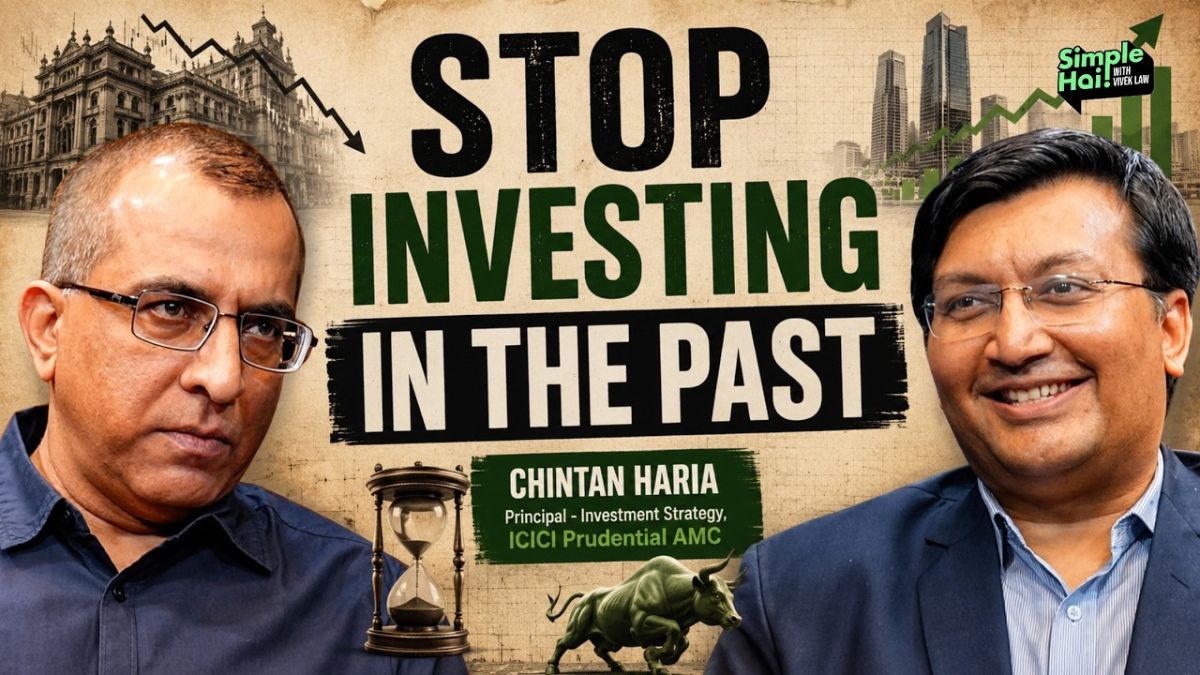
Markets have spent much of the past year moving sideways. Global conflicts, tariff uncertainties and geopolitical tensions have kept investors on edge, while many first-time participants who entered during the post-pandemic rally are questioning whether equities remain the right place to build wealth.
For many, a prolonged phase of muted returns feels uncomfortable. But according to Chintan Haria, Principal – Investment Strategy at ICICI Prudential AMC, these are often the very phases that lay the foundation for future wealth creation.
Speaking to Vivek Law on Simple Hai!, Haria argued that investors should view market corrections not as reasons to abandon equities, but as opportunities to strengthen their portfolios. While recent market performance may have tested patience, he believes India’s long-term growth story remains firmly intact.
Don’t Mistake Consolidation for Weakness
Indian equities delivered extraordinary returns between 2020 and 2024, fuelled by strong corporate earnings, robust domestic participation and improving economic fundamentals. After such a sharp rally, a period of consolidation was almost inevitable.
According to Haria, investors should not confuse a consolidation phase with a deterioration in market fundamentals. Instead, corrections often help bring valuations back to more reasonable levels.
He points out that large-cap companies, particularly in sectors such as banking, financial services, information technology and energy, have become far more attractive than they were at the market’s peak. For long-term investors, such phases often provide better entry opportunities than periods of market euphoria.
Haria also cautions against comparing India’s short-term performance with markets such as the United States, Taiwan or South Korea. Every economy goes through different business cycles, and leadership among global markets changes over time. Judging investments based on a few months of performance can distract investors from the bigger picture.
SIPs Continue to Anchor Indian Markets
One of the biggest concerns during the recent slowdown has been the increase in SIP stoppages. However, Haria does not believe this signals a structural shift in investor behaviour.
He argues that India’s rising financial awareness and growing household savings continue to support long-term investing through mutual funds. More importantly, SIPs have evolved beyond being just a convenient investment method, they have become one of the key stabilising forces in Indian equity markets.
Regular monthly inflows from retail investors have helped cushion the impact of foreign institutional investor (FII) selling during periods of volatility. This steady domestic participation has made Indian markets more resilient than in previous decades.
His advice to investors is straightforward: if markets are correcting, that is precisely when SIP discipline becomes even more valuable. Stopping investments during periods of uncertainty may mean missing the opportunity to accumulate units at lower prices.
Active and Passive Investing Can Coexist
As passive investing gains popularity, many investors wonder whether they shoruld abandon actively managed funds altogether.
Haria believes this is the wrong way to look at the debate.
Active and passive strategies serve different purposes and can complement each other within the same portfolio. Active funds allow experienced fund managers to identify companies and sectors they believe can outperform the broader market, while passive funds offer low-cost exposure to indices or specific investment themes.
He suggests that investors should not focus solely on expense ratios when choosing passive products. Selecting the right benchmark, understanding the composition of the index and evaluating tracking efficiency are equally important.
A low-cost investment that tracks an unsuitable index may ultimately be less rewarding than paying a slightly higher fee for a product that better aligns with an investor’s financial objectives.
Asset Allocation Matters More Than Market Timing
Another recurring theme during the conversation was the importance of asset allocation.
Many investors become overly optimistic after markets rally and overly pessimistic during corrections. This emotional cycle often leads to buying high and selling low.
Haria believes asset allocation strategies such as balanced advantage funds and multi-asset funds can help address this behavioural challenge. These products automatically adjust equity exposure based on market conditions, reducing equity allocations when valuations become expensive and increasing them when markets correct.
Such an approach helps remove emotions from investment decisions and encourages disciplined wealth creation over the long term.
Simplicity Is Often the Best Starting Point
With hundreds of mutual fund schemes available today, first-time investors often struggle to decide where to begin.
Rather than trying to identify the next top-performing fund, Haria recommends starting with a simple SIP in diversified categories such as flexi-cap funds, large-cap index funds or balanced advantage funds.
As investors gain confidence and experience market cycles firsthand, they can gradually diversify into mid-cap, small-cap or thematic funds.
He warns against one of the most common investing mistakes, choosing funds solely because they delivered the highest returns over the previous year.
Using a memorable analogy, Haria says investing based only on past returns is like trying to drive a car by looking only at the rear-view mirror. Past performance provides useful context but should never be the sole basis for future investment decisions.
Domestic Investors Are Reshaping Indian Markets
One of the most significant structural changes in recent years has been the rise of domestic investors.
For decades, Indian equity markets were heavily influenced by foreign institutional investors. Today, consistent inflows from domestic mutual funds and retail investors have emerged as an effective counterbalance.
Even when FIIs have reduced their exposure because of global uncertainties or shifting valuations, domestic investors have continued investing through SIPs and mutual funds, helping stabilise market sentiment.
According to Haria, this reflects the increasing maturity of Indian investors and the country’s evolving investment culture.
Patience Remains the Greatest Investment Advantage
Towards the end of the discussion, the conversation shifted beyond markets to personal finance.
Drawing from his own experiences, Haria emphasised the importance of living within one’s means and resisting lifestyle inflation, especially during the early years of a career. Instead of immediately increasing spending with every salary hike, he encourages young professionals to prioritise investing and allow compounding to work over decades.
Luxury purchases can always come later. The habit of disciplined investing, however, is most powerful when cultivated early.
Ultimately, Haria believes the principles of successful investing have remained remarkably consistent despite changing market conditions.
Invest regularly. Diversify sensibly. Avoid chasing yesterday’s winners. Ignore short-term noise.
-
 Podcast4 months ago
Why NOT Investing Is the Biggest Risk Today | Vetri Subramaniam | Simple Hai!
-
 News2 days ago
ITR Filing Deadline Today: Common Mistakes to Avoid & What Happens If You Miss It
-
 Explainer2 months ago
New EPF Scheme 2026: What Has Actually Changed for Your PF?
-

 Podcast4 weeks ago
Digital Gold Can Unlock India’s $5 Trillion Opportunity, Mahendra Luniya
-
 News6 days ago
India, China Discuss New Framework to Boost Investments
-

 Podcast10 months ago
Making Money Requires Conviction, Not Borrowing: Lessons from Vikas Khemani
-

 IPO Watch2 months ago
SBI Funds Management IPO: What You Need to Know
-
 News1 week ago
Onion Prices Surge Nearly 50%: Government Launches ‘Kanda Express’ to Boost Supply