Markets
India’s Next-Gen Defence Push: 3 Stocks to Watch


India’s defence ambitions are increasingly moving beyond conventional military hardware. The focus is now shifting towards next-generation technologies such as hypersonic weapons, advanced drones, counter-drone systems, electronic warfare, artificial intelligence and secure communication networks. The growing emphasis on these technologies could create long-term opportunities for domestic defence companies as India works to strengthen indigenous capabilities and reduce its dependence on foreign suppliers. Companies operating across areas such as missiles, radars, defence electronics, electronic warfare and battlefield communications could benefit from this shift.
Here are three defence stocks worth watching as this technology-driven transformation gathers pace.
1. Bharat Electronics: A Play on Defence Electronics
Bharat Electronics Ltd (BEL) is one of the key companies positioned across India’s expanding defence technology ecosystem. Modern warfare increasingly depends on advanced sensors, radar systems, electronic warfare equipment, communication networks and command-and-control capabilities — areas in which BEL already has a significant presence.
The company is involved in several critical segments, including air-defence radars, electronic warfare systems, seekers, avionics, counter-drone solutions and network systems. This gives it exposure to multiple areas of future military development rather than relying on a single defence programme.
BEL has also continued to report growth in its business. Its revenue rose from ₹20,268.2 crore in FY24 to ₹27,610.1 crore in FY26, while net profit increased from ₹3,943.1 crore to ₹6,023.5 crore during the same period.
In the first quarter of FY27, revenue from operations grew by over 25% year-on-year to ₹5,533 crore. As of July 1, 2026, the company had an order book of ₹72,258 crore, highlighting the scale of its ongoing and expected projects.
BEL could also play an important role in future programmes involving air defence and advanced missile systems. However, the actual benefits will depend on order conversion, execution and the pace at which these projects move from development to large-scale procurement.
2. Bharat Dynamics: Riding India’s Missile Ambitions
Bharat Dynamics Ltd (BDL) is another company closely linked to India’s push for advanced military capabilities. The company specialises in guided missile systems and produces a range of weapons, including Akash, MRSAM, QRSAM, Astra and NAG missile systems.
As India increases its focus on indigenous missile programmes, air-defence systems and advanced guided weapons, BDL could remain an important part of the domestic defence ecosystem. The company is also building capabilities in areas such as seeker and warhead manufacturing, potentially expanding its role in the missile value chain.
The company’s financial performance has reflected the potential of this opportunity, although defence contracts can lead to fluctuations between years. After sales declined in FY23 and FY24, revenue grew sharply by more than 41% in FY25.
For FY26, BDL reported revenue of ₹2,442 crore and a net profit of ₹420 crore. Its order book stood at ₹26,176 crore as of March 31, 2026, providing visibility into future execution.
The bigger opportunity for BDL lies in India’s expanding missile and air-defence requirements. However, investors will need to closely track how efficiently the company executes its large order pipeline, as execution remains a key factor in converting opportunities into revenue and earnings.
3. Avantel: Focused on Secure Military Communications
Avantel may not manufacture missiles or fighter aircraft, but its role could become increasingly relevant as warfare becomes more connected and technology-driven.
The company operates in areas such as secure communications, software-defined radios, satellite communications and network-centric defence systems. These capabilities are important for modern military platforms that require secure, reliable and real-time exchange of information.
Advanced drones, surveillance platforms, electronic warfare systems and other next-generation military technologies all depend on robust communication infrastructure. Avantel’s software-defined radio and SATCOM capabilities could therefore give it an opportunity to participate in the broader growth of India’s defence technology ecosystem.
The company had an order book of around ₹720 crore, scheduled for execution across FY27 and FY28, apart from additional orders expected in its pipeline. In the first quarter of FY27, its revenue rose to ₹70.4 crore from ₹51.9 crore a year earlier, while net profit increased to ₹5.4 crore from ₹3.2 crore.
However, Avantel’s FY26 performance also shows that growth may not always be linear. Its annual revenue declined by 15.1% during the year, while net profit fell significantly. This makes future order execution and sustained profitability important factors to watch.
The Bigger Defence Opportunity
India’s push towards hypersonics, drones, counter-drone systems, advanced electronics and secure military communications points towards a much broader transformation in the defence sector. The opportunity is not limited to companies making weapons; it extends across the ecosystem, including sensors, electronics, communication systems, guidance technologies and precision manufacturing.
BEL, Bharat Dynamics and Avantel offer exposure to different parts of this evolving theme — defence electronics, missiles and secure communications, respectively.
However, the defence story is still a long-term one. Many next-generation technologies are at different stages of development, testing and procurement, meaning large-scale commercial benefits could take time to materialise. Investors should also remember that strong expectations may already be reflected in the valuations of several defence stocks.
The opportunity may be significant, but technology capabilities alone will not determine success. Order inflows, execution, profitability, valuations and corporate fundamentals will all remain crucial.
Disclaimer: This article is for informational purposes only and should not be considered investment advice or a recommendation to buy or sell any stock. Simple Hai! does not assume any responsibility for investment decisions made based on the information provided.
Source: MoneyControl


Shares of the National Stock Exchange (NSE) have fallen below their initial public offering (IPO) price less than two weeks after making their stock market debut. The decline has erased all the gains made on listing day and reduced the exchange’s market value by nearly Rs 41,000 crore from its peak, according to the source.
NSE shares fall below IPO price
NSE shares were listed on the BSE on September 24 at Rs 1,800 per share, compared with the IPO price of Rs 1,785.
The stock initially attracted strong buying interest. It rose more than 5% during the first hour of trading and touched an intraday high of Rs 1,878.
At that level, NSE’s market capitalisation reached around Rs 4.64 lakh crore.
However, the initial momentum did not last.
The stock subsequently came under selling pressure and fell to Rs 1,712, its lowest level since listing. This was around 9% below its listing-day high and about 4% below its IPO price.
NSE slips out of India’s top 10 most valuable companies
The fall in the share price has also affected NSE’s position among India’s most valuable listed companies.
Its market capitalisation dropped to around Rs 4.27 lakh crore, pushing the exchange out of the top 10 and down to the 12th position.
NSE now trails several major listed companies, including Reliance Industries, Bharti Airtel, HDFC Bank, ICICI Bank, State Bank of India, TCS, Bajaj Finance, Larsen & Toubro, LIC, Hindustan Unilever and Sun Pharma.
NSE stock recovers slightly
The stock recovered some ground on Tuesday, rising 1.53%, or Rs 26.35, to Rs 1,749.85.
The recovery came as India’s broader equity markets also moved higher.
The Sensex gained 685.34 points, or 0.95%, to close at 73,067.81, while the Nifty rose 220.35 points, or 0.98%, to settle at 22,776.10.
Investors bought shares in sectors including pharmaceuticals, private banks and oil and gas ahead of the outcome of the Reserve Bank of India’s policy meeting.
What does the fall mean for NSE investors?
The NSE’s movement shows how quickly a newly listed stock can move after its debut.
The exchange initially gained nearly 5% from its IPO price to reach Rs 1,878 before falling below the Rs 1,785 issue price.
For investors who bought the stock after listing, the current price therefore represents a decline from both the listing-day high and the IPO price.
However, the share price can continue to change with market conditions, investor sentiment and company-specific factors.
The Simple Hai! does not hold any responsibility for investment decisions or financial losses based on this article. This content is for informational and educational purposes only and should not be considered investment advice. Investors should conduct their own research and consult a SEBI-registered investment adviser before making any investment decisions.
The Securities and Exchange Board of India (SEBI) is examining position limits for non-agricultural commodity contracts as it looks to improve liquidity and market depth without weakening risk controls.
SEBI Chairman Tuhin Kanta Pandey said the regulator is also working on several other issues that could make India’s commodity derivatives market more efficient.
What are position limits?
Position limits restrict how large a position a market participant can hold in a particular commodity contract. Such limits are designed to prevent excessive concentration and reduce the risk of market manipulation. However, limits that are too restrictive can also make it harder for contracts to attract enough participants and trading activity.
SEBI is therefore examining whether the existing limits for non-agricultural contracts can be adjusted to help these markets gain greater depth. Pandey said the objective is to allow contracts to grow while maintaining appropriate risk controls.
SEBI looks at physical settlement rules
SEBI is also examining how commodity contracts are settled.
Pandey said that in some agricultural commodities, requiring physical settlement from the beginning can make it harder for a contract to develop.
A phased approach could allow contracts to mature before physical settlement becomes mandatory, he said.
SEBI has completed consultations on the issue and guidelines are expected to follow.
GST issues also under discussion
The regulator is engaging with stakeholders on GST-related issues affecting participants who give or receive commodities through exchange platforms.
The aim is to reduce structural friction that can make participation in commodity markets more difficult.
SEBI’s broader focus is on creating markets that can attract producers, commercial users, processors, farmers and other participants while maintaining market integrity.
Why does commodity-market liquidity matter?
A deeper market generally means more buyers and sellers are available to trade.
For businesses that use commodities as part of their operations, a liquid derivatives market can help them manage price risks. This includes physical hedgers who use contracts to protect themselves against changes in commodity prices.
Pandey said technology can improve access and efficiency, but technology used in commodity markets must reflect the needs of producers, farmers, processors, commercial users and physical hedgers.
SEBI wants more investor awareness
SEBI also plans to strengthen investor awareness through Project Jagrook.
The initiative will focus on educating farmers, farmer producer organisations (FPOs), MSMEs, hedgers and other users about commodity derivatives.
Pandey stressed that greater access to financial markets is not enough if participants do not understand how the products work.
For smaller businesses and farmers, this is particularly important because commodity derivatives can help manage price risk but also carry risks that participants need to understand.
More participation in cash and derivatives markets
SEBI is also working towards deeper and more liquid cash markets.
According to Pandey, wider participation, stronger securities borrowing and lending and more efficient hedging and arbitrage could improve price discovery.
Better interaction between cash and derivatives markets could also help market participants manage risks more efficiently.
However, SEBI has stressed that simpler regulation should not mean weaker compliance.
Controls around client funds, margins, reporting and supervision will remain important, with market trust and integrity continuing to be key priorities.
Foreign investors get a role in commodity derivatives.
The developments follow a recent SEBI board decision to allow foreign portfolio investors (FPIs) to participate in physically settled, non-agricultural commodity derivative contracts, subject to safeguards.
The move could bring wider participation to India’s commodity derivatives market.
For the common investor and businesses, SEBI’s latest approach is aimed at balancing two objectives: making commodity markets deeper and easier to use while ensuring that stronger participation does not come at the cost of market safety and investor protection.
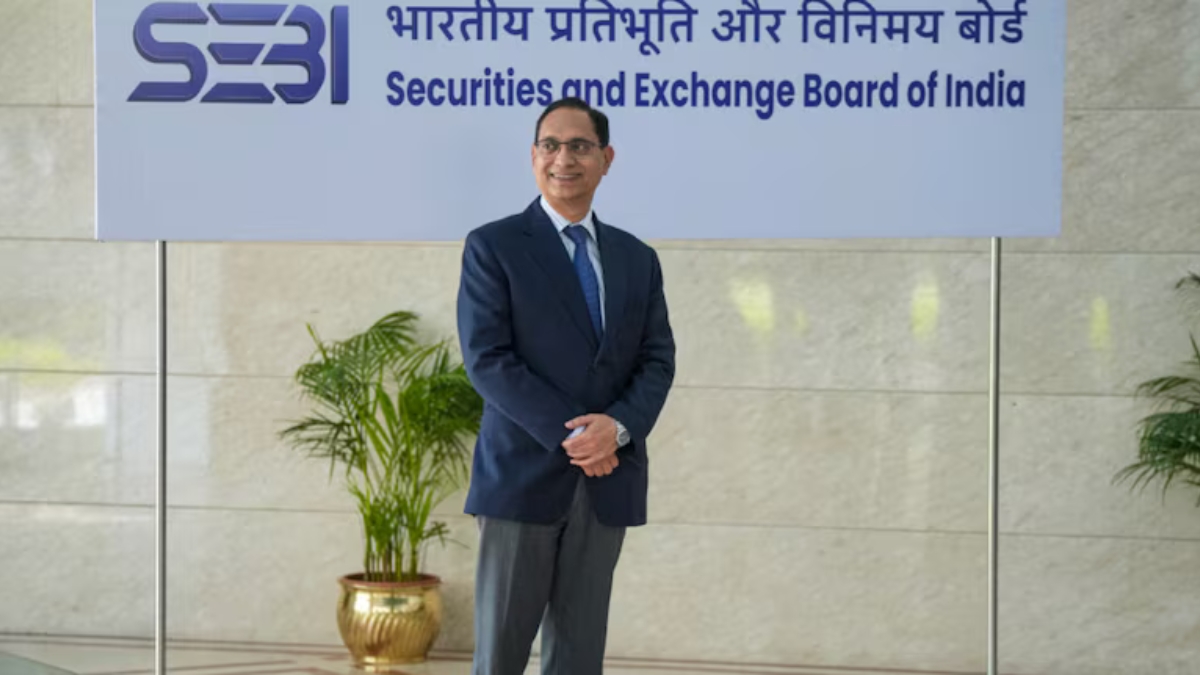
The question of how much Indian money can move overseas is a matter for the Reserve Bank of India (RBI), not the Securities and Exchange Board of India (SEBI), SEBI Chairman Tuhin Kanta Pandey said on Wednesday. His comments came days after SEBI’s board approved new regulations allowing portfolio managers to invest client funds in specified overseas securities. Speaking at the annual conference of the Association of Portfolio Managers in India (APMI), Pandey was asked whether the new permission could result in more Indian money moving abroad. He said the amount that can move overseas and the route through which it can be sent must follow the Liberalised Remittance Scheme (LRS) and the Foreign Exchange Management Act (FEMA) rules.
What has SEBI changed?
SEBI’s board approved the SEBI (Portfolio Managers) Regulations, 2026 on September 24.
The new regulations allow discretionary and non-discretionary portfolio managers to invest in specified overseas securities.
These include:
- – Listed equity and debt
- – Real Estate Investment Trusts (REITs)
- – Overseas mutual funds
- – Exchange-traded funds (ETFs)
- – Index funds
- – Foreign government debt
However, the permission remains subject to FEMA and RBI’s LRS framework.
This distinction is important. SEBI’s permission allows portfolio managers to make certain overseas investments, but it does not independently determine how much money can leave India.
Pandey did not specify how the limits would apply to overseas allocations by PMS clients and referred that question to the RBI.
Why does this matter to Indian investors?
For investors using portfolio management services (PMS), the regulatory change could provide access to a wider range of overseas investments.
But the ability to invest abroad does not mean investors can freely transfer unlimited amounts of money overseas.
The applicable limits and foreign exchange rules continue to matter. The Moneycontrol report notes that overseas investments under the new PMS framework remain subject to the RBI’s LRS and FEMA requirements.
For an ordinary investor, the key point is that SEBI regulates the investment product and intermediary, while RBI’s foreign exchange framework determines the applicable limits for money moving overseas.
SEBI and RBI working on faster FPI registration
Pandey also said SEBI and the RBI are working to make registration for Foreign Portfolio Investors (FPIs) faster and more digital.
The RBI is looking at allowing FPI registration documents to be uploaded through SWIFT, according to Pandey.
SEBI has already introduced several measures aimed at simplifying the process, including:
- A revamped NSDL front end
- India Market Access portal
- A common application portal with tracking
- Digital signatures instead of physical signatures
- E-power of attorney
Pandey said these measures can reduce the need for processes such as notarisation, apostille and consularisation.
What about India’s market performance?
Pandey was also asked about the recent decline in the Indian market compared with markets in Japan and South Korea.
He said decisions about where investors should put their money are for investors to make and that it would not be appropriate for regulators to comment on such investment choices.
He instead pointed to the regulators’ focus on making FPI registration easier.
SEBI also flags issue of inactive listed companies
Pandey also addressed concerns about listed companies that have little or no visible business activity.
He said stock exchanges have a continuing responsibility to monitor companies after listing. Where a company is not physically present or carrying out economic activity, delisting provisions are available.
He also said physical verification by exchanges is feasible and stressed that the process should be followed properly so investors can have confidence that listed companies are genuine.
The common investor takeaway
The latest change does not mean SEBI has opened an unrestricted route for Indian money to move overseas.
SEBI has allowed portfolio managers to invest in specified foreign securities, but those investments remain subject to the RBI’s foreign exchange framework and FEMA rules.
So, for investors, the important distinction is simple: SEBI decides what regulated portfolio managers can invest in, while the RBI’s rules govern the broader framework for moving money abroad.
Source: Moneycontrol
-
 News4 weeks ago
SC Says No Stay On New UPI Charges Above ₹2,000
-
 Podcast1 year ago
Nitin Jain: From IIT to Investment Titan, Managing ₹60,000 Crore AUM
-
 News1 month ago
NSE Makes Long-Awaited Market Debut After ₹22,562-Crore IPO
-

 Explainer5 months ago
How Much SIP Do You Need to Build ₹1 Crore? The Power of Time and Compounding
-
 Podcast2 years ago
From ₹1 Lakh Lost to Managing ₹650 Crore: How Divam Sharma of Green Portfolio Built a Fundamental Investing Approach
-
 Podcast4 months ago
Can ₹200 SIPs Create India’s Next Investing Revolution? Ravi Kumar Jha’s Big Bet On Financial Inclusion
-
 Podcast1 year ago
From ₹1 Lakh Lost to Managing ₹650 Crore: How Divam Sharma of Green Portfolio Built a Fundamental Investing Approach
-
 News2 weeks ago
UPI Charges on Payments Above ₹2,000 Delayed Until After Diwali