
Podcast
Beyond Dalal Street: Why Indian Investors Are Looking at Global Markets

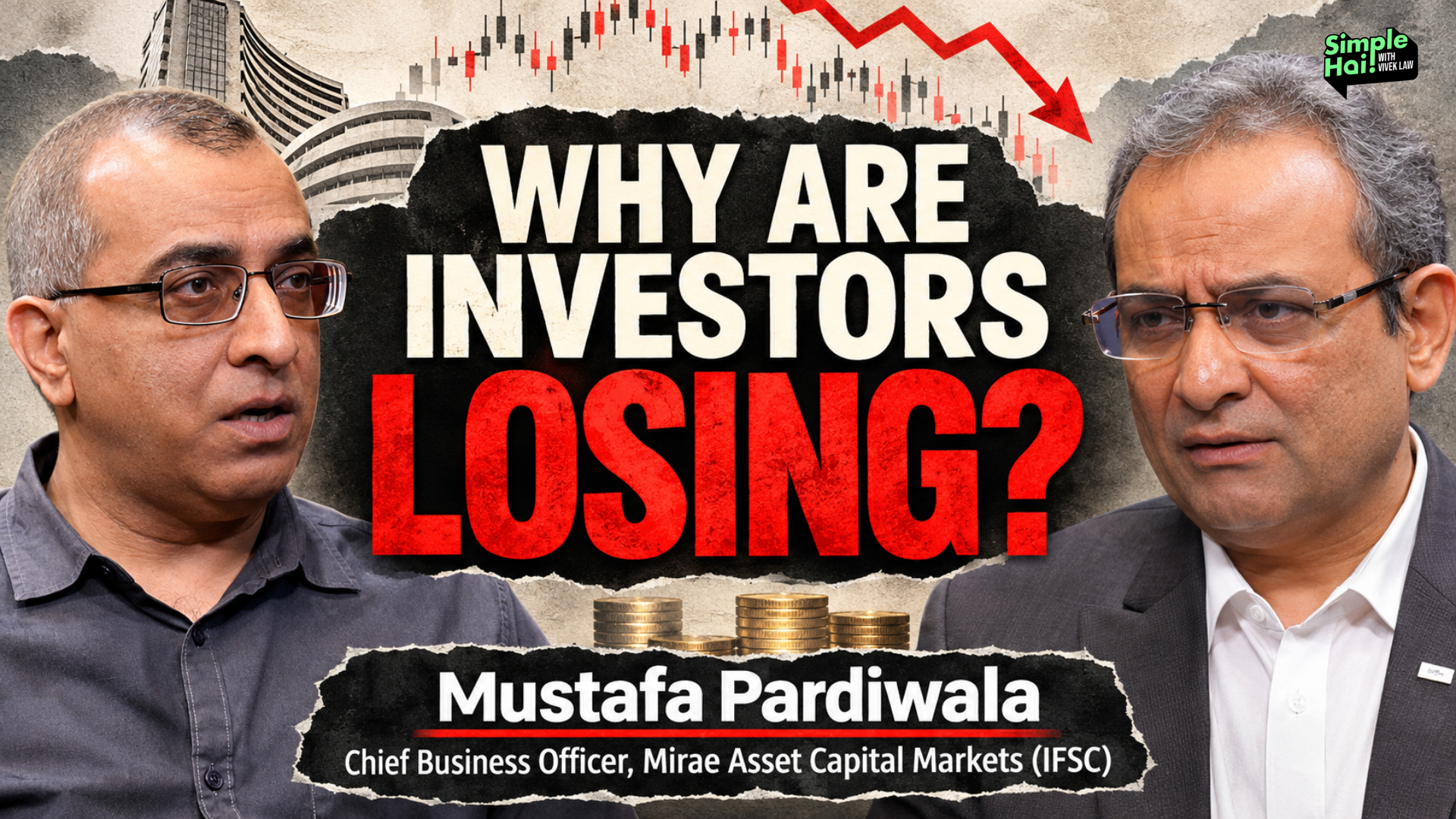
From US stocks and GIFT City to currency risks and changing investor behaviour, global investing is opening up new possibilities for Indians.
For decades, the Indian investor’s portfolio largely revolved around domestic stocks, mutual funds, fixed deposits and gold. While these continue to be important investment avenues, the investment landscape is changing. Technology and new financial platforms are making it easier for Indians to explore opportunities beyond domestic markets.
From investing in global technology companies to accessing international exchange traded funds (ETFs), investors today have more choices than ever before. The growth of GIFT City as an international financial services hub is adding another dimension to this shift.
But does having access to global markets automatically make an investor’s portfolio better diversified? Not necessarily.
Speaking on the Simple Hai! podcast with Vivek Law, Mustafa Pardiwala, Chief Business Officer, Mirae Asset Capital Markets (IFSC), discussed how global investing, technology and changing investor behaviour are reshaping the financial landscape.
Why should Indian investors look beyond domestic markets?
India offers significant investment opportunities, but it represents only a fraction of the global equity market. This means investors who restrict their portfolios to domestic markets may miss opportunities in businesses and industries that have a stronger presence overseas.
Consider sectors such as semiconductors, artificial intelligence, robotics, cybersecurity and data centres. Several companies leading developments in these areas are listed in international markets, particularly in the US.
Global investing gives Indian investors an opportunity to participate in the growth of such businesses. It can also help diversify portfolios across geographies, industries and currencies.
However, investing in an international company simply because it is popular or has delivered strong returns is not a sound strategy. Investors need to evaluate the company’s fundamentals, valuation, business model and long-term prospects just as they would with a domestic investment.
Is GIFT City making global investing easier?
GIFT City, Gujarat, is emerging as an important centre for international financial services. Its International Financial Services Centre (IFSC) operates under the regulatory framework of the International Financial Services Centres Authority (IFSCA).
For eligible resident Indians, overseas investments can be made through permitted routes under the Reserve Bank of India’s Liberalised Remittance Scheme (LRS). The scheme allows individuals to remit up to $250,000 in a financial year, subject to applicable conditions and regulations.
Depending on the platform and investment structure, investors can access international stocks, ETFs and other permitted financial products.
Another development is fractional investing. Instead of purchasing an entire share of an expensive company, investors may be able to buy a fraction of it. This can lower the initial investment required to access certain global stocks.
However, a lower entry amount does not mean lower risk. Investors must understand the product structure, transaction costs, currency conversion charges, taxation and applicable regulatory requirements before investing.
The currency risk investors should understand
Global investing also introduces an important factor that domestic investors may not always consider: currency risk.
When an Indian investor purchases a dollar denominated asset, the eventual return in rupees depends on two factors: how the investment performs and how the rupee moves against the dollar.
A weakening rupee can increase the rupee value of an overseas investment when converted back into Indian currency. However, currency movements can also work against investors. Even if an international investment performs well in its local currency, unfavourable exchange rate movements can reduce the final return in rupee terms.
Therefore, currency exposure should be considered while deciding how much of a portfolio should be allocated to international investments.
Investors have more information, but are they making better decisions?
While investment opportunities have expanded, investor behaviour remains a concern.
Pardiwala highlighted how the constant flow of financial information, social media commentary and stock market tips can influence investment decisions. Investors today have access to more information than ever before, but distinguishing useful insights from market noise has become increasingly difficult.
This can lead to impulsive decisions, frequent portfolio changes and an excessive focus on short-term returns.
The problem is particularly relevant in derivatives trading, where leverage and market volatility can magnify losses. Investors who enter these products without understanding their mechanics and risks may expose themselves to substantial financial setbacks.
The same lack of patience can affect long-term investments. Stopping systematic investment plans (SIPs) during market corrections or frequently switching funds based on short-term performance can disrupt the discipline required for wealth creation.
More investment choices, greater responsibility
The expansion of global investing is an important development for Indian investors. It offers access to businesses, sectors and markets that may not be adequately represented in domestic portfolios.
But global investing should not become another trend that investors follow without understanding.
Before investing overseas, individuals should assess their financial goals, investment horizon, risk appetite and existing asset allocation. They should also understand the costs, tax implications, regulatory framework and currency exposure associated with the investment.
The future of investing may be increasingly global, but the fundamentals of building wealth remain unchanged. Investors need to make informed decisions, diversify sensibly and stay disciplined through market cycles.
Having the world at your fingertips is an opportunity. Knowing how to invest in it is what matters.


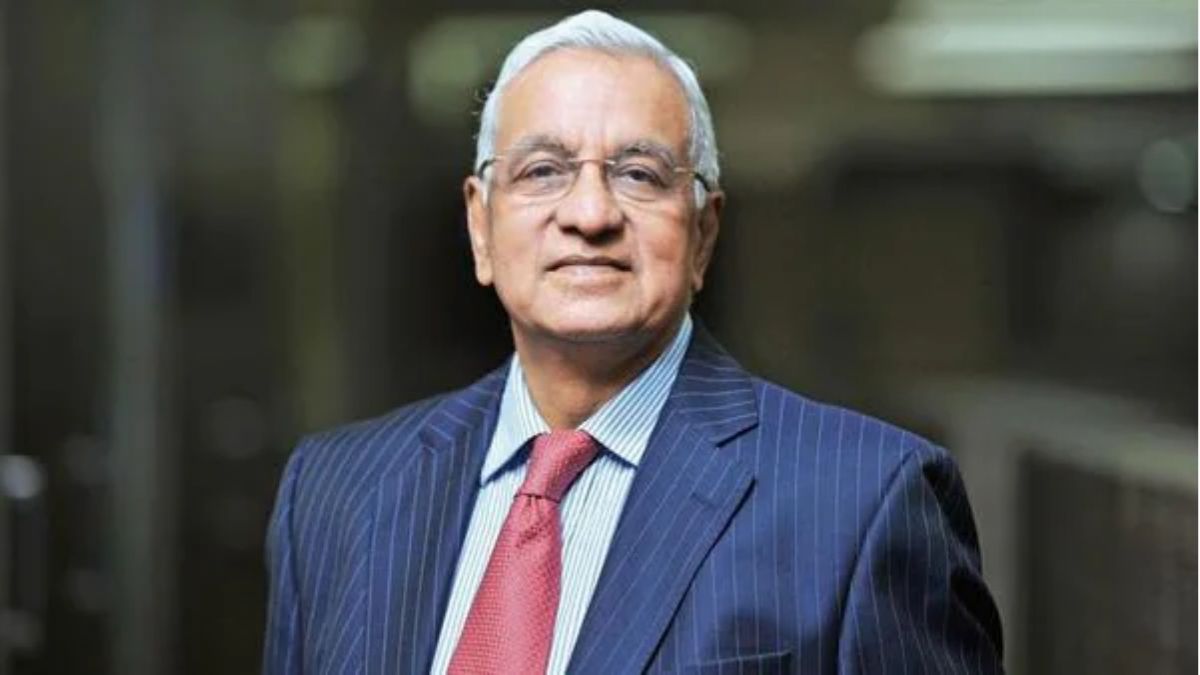



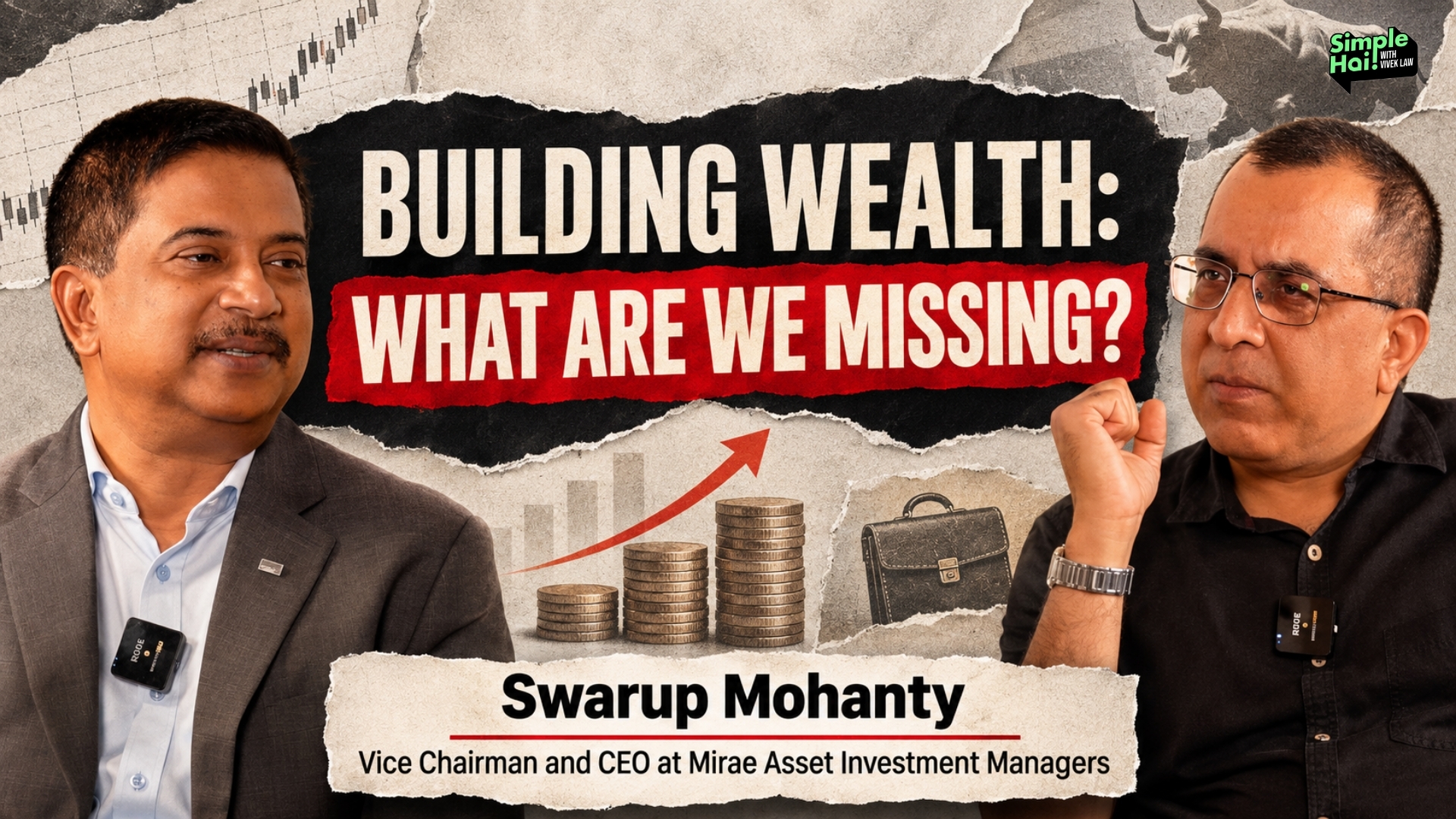
In an engaging episode of Simple Hai!, hosted by veteran finance journalist Vivek Law, mutual fund industry stalwart Swarup Mohanty shared deep personal and professional insights that transcended the world of finance. Currently Vice Chairman and CEO at Mirae Asset Investment Managers, Mohanty’s story is one of quiet grit, consistency, and values.
A Humble Beginning Rooted in OdishaSwarup Mohanty’s journey began in Odisha, a state once often unfairly associated with poverty and underdevelopment. His upbringing was steeped in discipline and education ” both his parents were professors, with his mother eventually becoming the principal of the college he attended.
Growing up in such an environment meant expectations were high. Everyone from the lab assistant to professors knew me, he recalled, underlining the pressure to uphold the family’s academic standards. Yet, Mohanty chose a different path, shifting from Science to Commerce when he realized it aligned better with his strengths and ambitions.
Choosing Commerce, Backed by CourageAt a time when conventional careers like engineering and civil services were considered the gold standard in Odisha, Swarup made the bold decision to pursue Commerce. It was better than failing in Science, he admitted candidly.
His decision was met with silence at home, but it marked the beginning of a successful, non-traditional career path in finance. Over time, his forward-thinking approach was shaped by not just formal education, but by the early liberalization of the Indian economy in the mid-1980s, which opened his eyes to alternative careers.
Family as the FoundationMohanty credits much of his moral compass to his wife and parents. With humility, he referred to himself as the odd one out in a family of PhD holders. His wife, a top academic, always reminded him to stay on the side of truth, a principle he says defines his work today. It is a fiduciary responsibility, he said. People entrust us with their hard-earned money. Even as his visibility grew, his parents remained cautious advisors in the background, always reminding him to act responsibly. They still say, don’t do anything wrong’, he shared with a smile.
A Career Built on Hard Work, Not ShortcutsHaving spent nearly three decades in the mutual fund industry, Mohanty remains refreshingly self-aware. There are people far more skilled than me. But hard work ” is the only thing I can control. He recounted his early career jitters ” his nervousness walking into five-star hotels or comparing himself to more polished city professionals ” and how learning from others, adapting, and showing up every day made all the difference.
The Power of Staying InvestedA major theme of the episode was the power of compounding and the importance of staying invested in the market. Mohanty is passionate about financial literacy and believes that even small, consistent investments can change lives. If I had started investing 500 a month when I was younger, I would be financially free today, he said, adding that he now ensures his own son doesn’t make the same mistake.
His key message was clear: There’s a risk to investing. But there’s a bigger risk to not investing in India right now. Why the Next Generation Will Lead the Financial RevolutionAccording to Mohanty, the next generation is financially smarter and more purposeful. They don’t chase returns blindly; they invest with goals and meaning. But while they have information at their fingertips, they still need guidance.
He encourages young investors to start with simple tools like index funds and core large-cap mutual funds. But first, ask yourself why you’re investing, he advised. The why’ defines the how’. The Importance of Financial AdvisorsDespite the rise of DIY investing, Mohanty remains an advocate for financial advisors. Just like you have a doctor, you should have a financial advisor, he said. He acknowledged that India lacks enough qualified advisors but expressed hope that the ecosystem is evolving.
The real challenge, he emphasized, is not entering the market but staying in it through its highs and lows. Markets are like good music ” sometimes high, sometimes low ” but you have to listen to the full song. Leadership, Trust, and Building a LegacyMohanty’s professional achievements are notable. Under his leadership, his company has grown to manage nearly 2 lakh crore in assets. But for him, success is rooted in people, values, and processes.
He proudly highlighted that many of his fund managers and employees have been with the company since its inception ” a rarity in the financial services industry. You can’t build something special without consistency, he said.Even in international boardrooms, India remains central to his vision. In a room full of 200 Koreans, I heard my name and India mentioned as the future. I still get goosebumps, he recalled.Music, Therapy, and the Power of PositivityAway from numbers and markets, Mohanty finds solace in music.
An analog music enthusiast, he believes music is his therapy. During the pandemic, he would tweet songs from his vinyl collection daily ” a small act that brought cheer in dark times.His favorite? Chala Jata Hoon Kisi Ki Dhun Pe ” a song, he says, that defines his life’s rhythm.
Final Word: Invest in India, Stay the CourseMohanty ended the episode with a powerful call to action: India is going to double its economy in the next 10 years. The best way to own this story is through the capital markets. If you miss this opportunity, the mistake is yours. His message to all investors ” new or seasoned ” is simple: Stay invested. Ask questions. And never underestimate the magic of compounding.
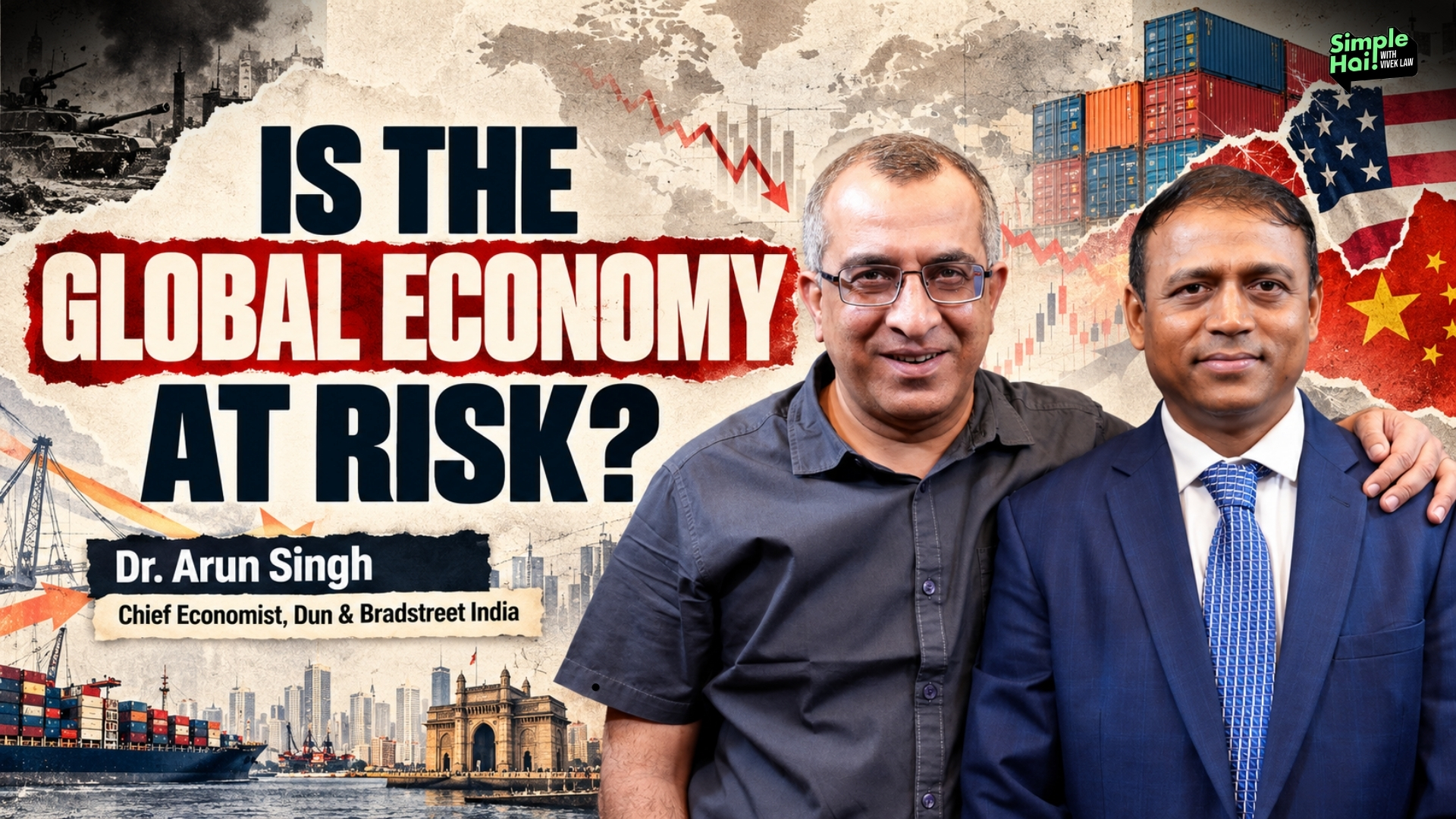
In a conversation with Vivek Law on Simple Hai! Dr. Arun Singh, Chief Economist at Dun & Bradstreet India, discussed how geopolitical tensions, trade realignments, artificial intelligence (AI) and climate-related disruptions are reshaping the global economy. He said India has important structural advantages, including its demographic dividend, rising investment and export diversification and India could grow at 6.5% to 7% over the next two to three years, but sustaining that momentum will require stronger private investment, better employment opportunities and faster technology adoption. However, he cautioned that the country must address persistent employment challenges and improve productivity to sustain long-term growth.
A New Normal of Economic Disruption
Singh said economic cycles have always shaped growth, with periods of expansion followed by slowdowns. Past shocks, including the 1971 oil crisis and the 2008 financial crisis, demonstrate how global events can affect economies over time.
Today, geopolitical tensions, the Russia-Ukraine war, tariff disputes and technological change have made disruptions more frequent. Faster information flows also mean that economic developments can influence businesses, markets and households almost immediately.
However, this speed has a downside. Information overload can fuel market hype and anxiety, affecting business decisions and economic activity.
Singh described the current environment as a “hyper-disrupted world”, where governments, businesses and individuals must continually adapt to avoid falling behind.
India’s Growth Outlook Depends on Investment
Despite global uncertainty, Singh expects India’s GDP to grow between 6.5% and 7% over the next two to three years. He said temporary pressures, such as geopolitical tensions and oil price volatility, must be distinguished from longer-term economic strengths.
India’s demographic dividend, export diversification, improving investment rates and household savings provide a foundation for future growth. Singh also highlighted an increase in gross fixed capital formation from around 7% to 12%, as discussed during the interview.
However, growth above 7% will require stronger private investment and a reduction in temporary economic pressures.
Singh stressed that investment matters beyond headline GDP figures. New investment expands productive capacity, creates jobs and raises household incomes. These gains can then support consumption and generate further economic activity.
Inflation Leaves Limited Room for Interest Rate Changes
Singh said policymakers face a difficult balance between controlling inflation and supporting economic growth.
He distinguished cost-push inflation, driven by higher input costs such as oil, from demand-pull inflation, which occurs when demand outpaces supply. He argued that India’s current inflationary pressures are largely cost-driven, making interest rate increases less effective.
Food inflation above 6%, as cited in the discussion, particularly affects rural households. Meanwhile, producers face higher input costs but cannot always pass the full increase on to consumers, putting pressure on profit margins.
Higher interest rates could further increase borrowing costs and slow the recovery in private investment.
Singh therefore favoured a cautious “wait and watch” approach to monetary policy, alongside government efforts to strengthen supply chains and sustain demand.
Rupee Volatility and Foreign Capital Flows
Law also raised concerns about the rupee’s weakness and foreign capital outflows.
Singh attributed the pressure partly to India’s dependence on imported oil, which he said accounts for around 85% of consumption, and to global capital flows responding to differences in interest rates.
He argued that India does not face a fundamental internal balance of payments crisis, but its import-heavy trade deficit and changing capital flows create challenges.
Sharp currency movements can also affect business confidence and complicate foreign currency funding for Indian companies.
Singh called for faster reforms to attract long-term global capital. Improvements in infrastructure, ease of doing business and workforce skills, he said, will be important as countries compete for investment.
AI and Innovation Need Better Commercialisation
India has considerable potential in technology and innovation, but Singh believes it must do more to turn ideas into commercially successful products.
He noted that India ranks sixth globally in patents, as cited during the conversation, but faces gaps in commercialisation, testing, prototyping and scaling new technologies.
These weaknesses could limit India’s ability to compete in strategic industries such as semiconductors, where countries including China and Taiwan have developed strong capabilities.
Singh called for greater investment in skills and technology adoption, with businesses taking a long-term view of returns. He warned that failing to adapt to AI and the fourth industrial revolution could leave India behind during a major period of technological change.
Employment and Women’s Participation Remain Concerns
Employment emerged as one of the biggest challenges in India’s growth story.
Singh put India’s labour force participation rate at around 55%, meaning a substantial share of working-age people do not participate in the labour market. He highlighted a sharp gender gap: male participation stands at around 75%, while female participation is approximately 33%.
He described this imbalance as effectively running the economy on “one engine”.
Youth unemployment, which Singh cited at around 9.9%, also reflects difficulties in moving from education to employment. He called for targeted training that helps young people develop skills relevant to available jobs.
Singh said governments, businesses and individuals all have a role in addressing these challenges. Private investment and infrastructure development must create sustainable employment, while individuals need opportunities to enter and progress in the labour market.
He also called for workers to move from lower-productivity agriculture towards manufacturing and construction. Agriculture employs around 40% of workers but grows at approximately 3.6%, while manufacturing growth was cited at around 9% to 12%.
Increasing women’s participation in paid work could further raise household incomes and consumption, strengthening the broader economy.
India Must Adapt to a Changing Global Order
Discussing US-China tensions and shifting global trade relationships, Singh said countries are competing to position themselves within emerging growth centres as mature economies face slower growth.
India must expand trade partnerships, diversify exports, reduce import dependence and continue modernising infrastructure. Singh also emphasised the need to prepare industries and workers for AI-driven technological change.
He cautioned against copying older growth models without adapting them to current geopolitical and technological realities.
Without deeper structural reforms, India risks settling into a low-growth trajectory of around 6.5% to 7%, limiting improvements in per capita income. Sustained progress will require balancing domestic reforms with changing global supply chains and deglobalisation pressures.
Sustaining Growth Beyond the Headline Numbers
Singh’s outlook combines confidence in India’s long-term potential with caution about the challenges ahead. Demographics, investment and export diversification offer important advantages, but their benefits depend on creating productive jobs, improving skills and helping businesses adopt new technologies.
For India, the task is not simply to maintain a strong GDP growth rate. It is to translate economic expansion into higher household incomes, wider employment opportunities and more inclusive prosperity.
As Singh explained during the conversation, economic change affects everyone. How governments, companies and individuals respond to a hyper-disrupted world will help determine India’s growth trajectory in the years ahead.
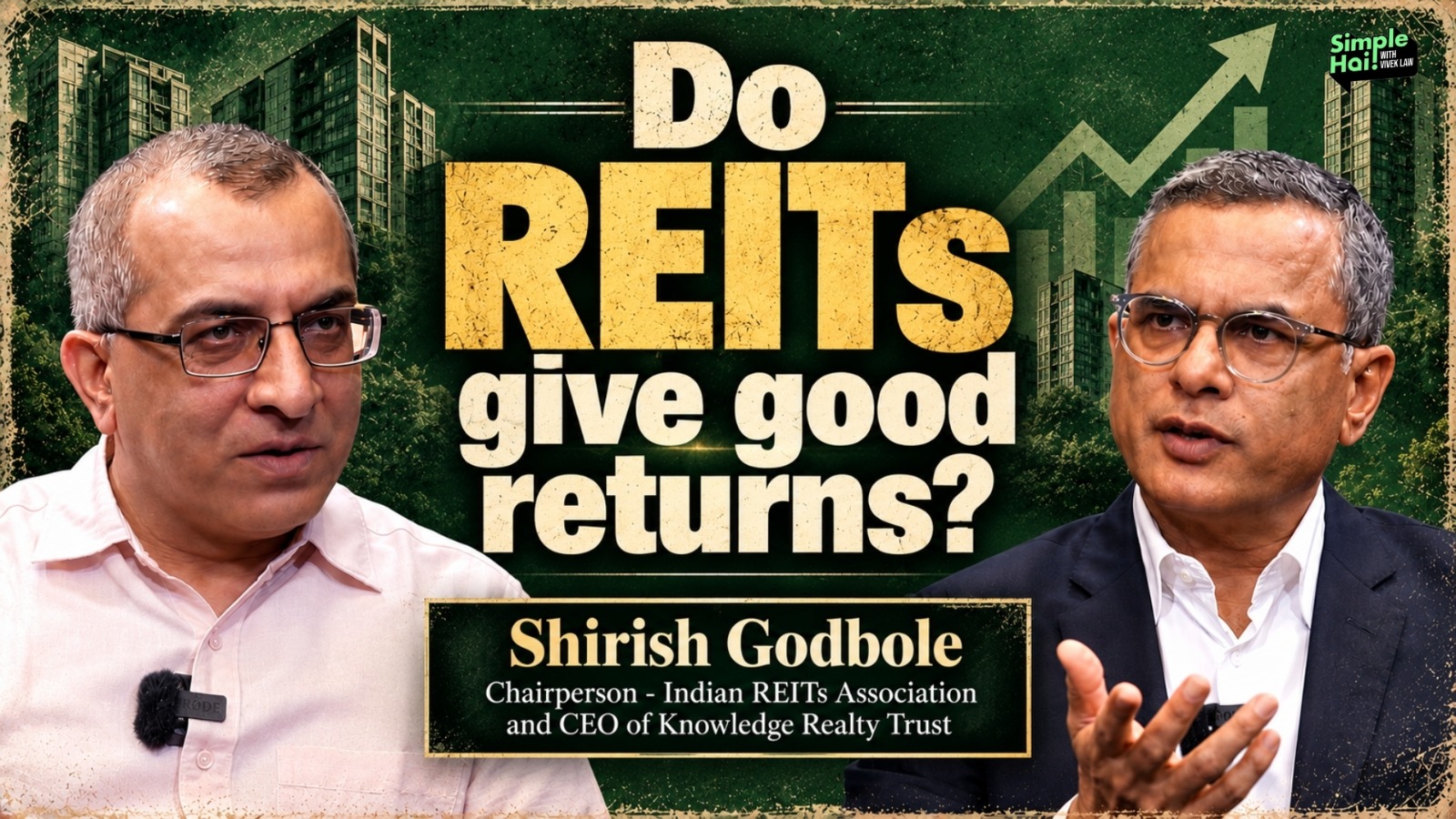
The Chairperson of the Indian REITs Association explains how REITs offer income, liquidity and diversification, making commercial real estate more accessible to retail investors.
In a conversation on Simple Hai! with Vivek Law, Shirish Godbole, Chairperson of the Indian REITs Association and CEO of Knowledge Realty Trust, explained how Real Estate Investment Trusts (REITs) can help retail investors access commercial property. The discussion covered income potential, liquidity, mutual fund access and India’s office market, where demand from global capability centres (GCCs) continues to grow.
From Physical Property to Listed Investments
Real estate remains popular in India, but owning a property is not the only way to invest in it. Residential properties may offer rental income and appreciation, yet rental yields can be low. Maintenance, taxes and the time needed to sell can also affect returns.
REITs pool income-generating properties into professionally managed, exchange-listed investment vehicles. Investors can buy and sell units through a demat account, much like shares, without having to purchase or manage a building themselves.
Commercial properties, particularly offices, can earn rent from multiple tenants. After meeting operating expenses and other obligations, the trust distributes cash flows to unit holders. Investors may also benefit from changes in property valuations and portfolio growth through acquisitions, development or improvements.
Income, Liquidity and Distributions
Law asked how REIT distributions compare with rental income from residential property. Godbole said REITs offer exposure to commercial real estate without the responsibilities of managing tenants or maintaining buildings.
Under the regulatory framework discussed, REITs must distribute at least 90% of their net distributable cash flows to unit holders. Distributions are generally quarterly, though amounts and tax treatment can vary. Godbole cited yields of around 6% as a broad illustration, while stressing that investors should consider taxes, costs and the underlying investment. Returns are not guaranteed.
Listed REIT units can generally be traded on stock exchanges during market hours, unlike physical property, which may take time to sell. However, unit prices can fluctuate and investors may face capital losses.
A Small Investor Base and the Need for Awareness
Godbole said India has fewer than five lakh REIT investors, compared with around six crore mutual fund investors cited during the discussion. He sees this gap as a sign of limited awareness. Investors familiar with shares and mutual funds may not know how REITs work or how they can fit into a diversified portfolio.
REITs are not limited to high-net-worth individuals. Investors can buy listed units through a demat account or gain exposure through mutual funds. Godbole said investor education is a priority for the Indian REITs Association and the wider industry. Financial advisers and distributors need to explain both the potential benefits and risks.
Mutual Funds Could Expand Access
Godbole said the recognition of REITs as equity products in 2026 could widen access through equity mutual funds. Previously, mutual funds accessed REITs through certain other fund structures. Broader eligibility could help more investors gain indirect exposure through professionally managed portfolios.
He also highlighted cost transparency. Investors can buy listed REIT units directly without the traditional commission structure associated with some products, although brokerage, applicable taxes and other transaction costs still apply. Wider adoption will depend on making REITs easier to understand and helping advisers explain their role in a portfolio.
Geopolitical Uncertainty and India’s Property Market
Law raised concerns about geopolitical tensions and their effect on commercial property valuations, particularly after pressure in parts of West Asia. Godbole said India’s market differs from those that rely heavily on overseas capital flows. Domestic economic growth and rising consumption, he argued, provide a stronger foundation for the sector.
Higher crude oil prices can weigh on growth, but Godbole does not expect India’s property market to face a sharp correction similar to declines in some overseas markets. He remains positive about office real estate demand, while acknowledging that property values can rise or fall with market conditions.
GCCs Drive Demand for Offices
Global capability centres (GCCs) are an important source of demand for office space. Godbole said India’s skilled workforce, English-language capabilities and established technology services sector make it attractive to global companies. Demand spans technology, data management, cybersecurity, artificial intelligence and other specialised services. Remote and distributed working has also made it easier for international firms to build teams in India.
Bengaluru, Hyderabad, Pune and Gurugram benefit from large talent pools. Godbole noted that companies hiring thousands of skilled workers look for locations with established workforces and supporting infrastructure. Transport, schools, housing and entertainment also help attract and retain employees. He cited Hyderabad as an example of how investment in infrastructure and social amenities can support employment and commercial property growth.
The Next Phase of REIT Growth
Godbole sees opportunities beyond offices, including warehousing, logistics, data centres and student accommodation. During the interview, he put India’s REIT market capitalisation at roughly Rs 2 lakh crore, or around USD 20 billion. He hopes it will reach about USD 40 billion by 2030 and move towards USD 100 billion over the following decade.
The industry also wants to grow its investor base from around five lakh to 15–20 lakh over the next five to six years. Godbole said this will require sustained awareness and distribution efforts, alongside new investment products and the expansion of existing REITs.
Real Estate in a Diversified Portfolio
Godbole did not suggest that REITs should replace physical property ownership. Instead, he urged investors to consider the implications of tying up large amounts of capital in residential property solely for rental income.
REITs offer another way to access commercial real estate through distributions, potential capital appreciation and professional management. Their exchange listing provides greater flexibility than direct ownership, but does not remove investment risk. The industry’s challenge is to build public understanding and connect India’s expanding commercial property market with a broader base of investors.
-
 News2 months ago
SC Says No Stay On New UPI Charges Above ₹2,000
-
 Podcast1 year ago
Nitin Jain: From IIT to Investment Titan, Managing ₹60,000 Crore AUM
-
 News2 months ago
NSE Makes Long-Awaited Market Debut After ₹22,562-Crore IPO
-

 Explainer6 months ago
How Much SIP Do You Need to Build ₹1 Crore? The Power of Time and Compounding
-
 Podcast2 years ago
From ₹1 Lakh Lost to Managing ₹650 Crore: How Divam Sharma of Green Portfolio Built a Fundamental Investing Approach
-
 Podcast5 months ago
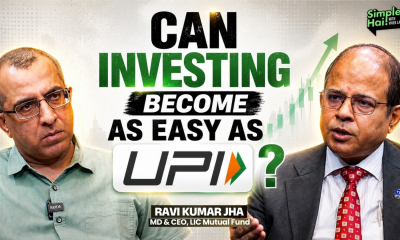
Can ₹200 SIPs Create India’s Next Investing Revolution? Ravi Kumar Jha’s Big Bet On Financial Inclusion
-
 News1 month ago
UPI Charges on Payments Above ₹2,000 Delayed Until After Diwali
-
 IPO Watch1 month ago
Jio IPO 2026: How the ₹30,213 Crore Issue Will Use Its Funds