
Explainer
The Business of Family Wealth: Why Succession Needs More Than a Handshake


A family business can take generations to build. But without clear documentation, deciding who owns what can become a challenge of its own.
India’s business families are increasingly bringing an important question into focus: when wealth is built across generations, how do you ensure it is divided fairly?
The latest developments within the TVS family offer an interesting perspective.
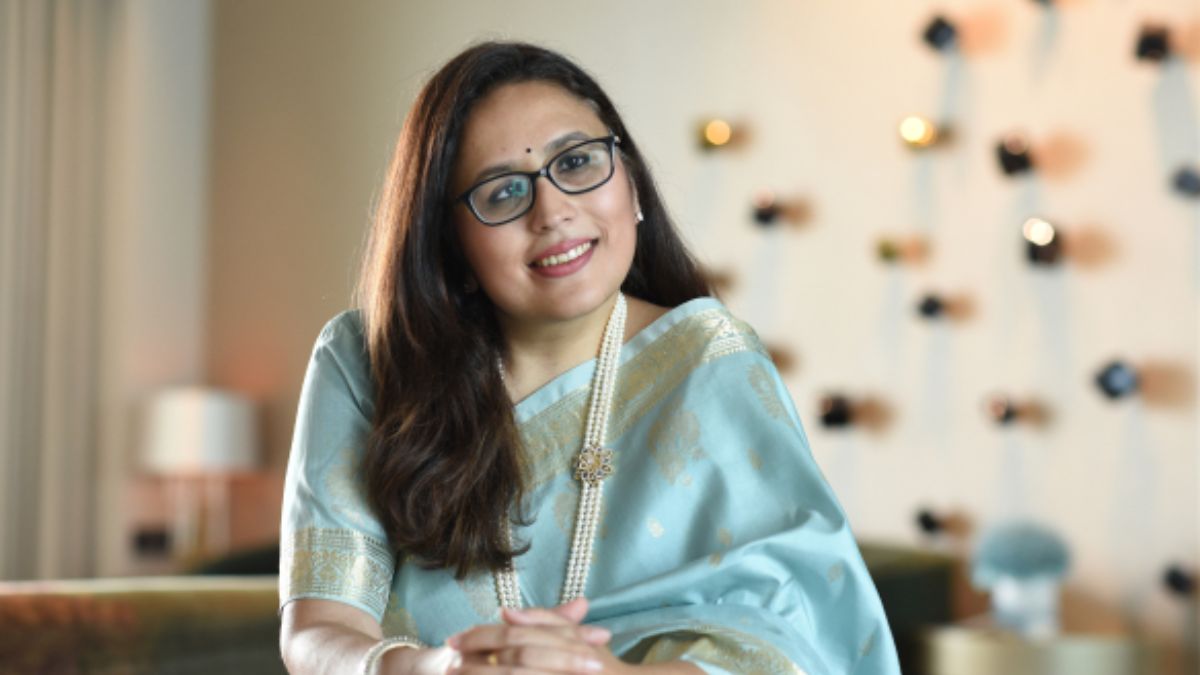
Lakshmi Venu, daughter of TVS Motor chairman emeritus Venu Srinivasan, has formally sought the partition of joint family assets held within her father’s branch of the family. In a notice to her father, she has sought a fair and lawful division, asserting her rights under the Hindu Succession Act, 1956, as amended in 2005.
The assets in question include family interests held through the VS Trust and other holding structures, covering interests in TVS Holdings, TVS Motor Company, TVS Credit Services and Sundaram-Clayton.
At the centre of the issue is a distinction between the larger TVS family arrangement of 2020 and the subsequent arrangements within the Venu Srinivasan family. While the broader family restructuring was implemented, Lakshmi maintains that the economic interests within her immediate family were never formally partitioned. Venu Srinivasan and his son Sudarshan, on the other hand, have maintained that the 2024 family arrangement constitutes a settlement.
The matter highlights an important aspect of succession planning: dividing responsibilities is not necessarily the same as dividing ownership.
Why documentation matters
In family-run businesses, decisions about ownership, management and inheritance can often overlap. One family member may manage a company, another may hold shares, while other assets may sit within trusts or separate holding entities.
Without clear documentation, these arrangements can become difficult to interpret, particularly when the next generation begins taking on larger responsibilities.
A well-documented family settlement can help establish who owns which assets, how shares are distributed, who has management responsibilities and what happens when ownership changes. It can also help distinguish personal wealth from business assets and clarify the role of trusts, holding companies and other structures.
The importance of getting the paperwork right
India’s Hindu Succession Act, particularly Section 6 following the 2005 amendment, recognises daughters as coparceners by birth in Hindu joint families governed by Mitakshara law, giving them the same rights and responsibilities as sons in qualifying coparcenary property.
This makes it important for families to understand the nature of their assets and document their arrangements accordingly. Not every family asset automatically falls under the same inheritance rules. Self-acquired property, ancestral property, company shares and assets held through trusts can involve different legal considerations.
For business families, succession planning is therefore not just about choosing the next leader. It is also about creating clarity around ownership, rights and responsibilities.
Because building an empire may take decades, but ensuring the next generation inherits it without confusion requires planning much earlier.


Explainer
From Borrowing ₹5 Lakh to Building a ₹5,000 Crore Business: The Story of Angel One’s Dinesh Thakkar

One newspaper headline, a ₹4 lakh loss and a decision to never give up. Dinesh Thakkar’s journey from an unfamiliar stock market to building one of India’s leading stockbroking companies is a story of risk, resilience and spotting opportunities where others didn’t.
Sometimes, a business journey begins with a plan. Sometimes, all it takes is one newspaper headline.
For Dinesh Thakkar, Chairman and Managing Director of Angel One, it was a headline that read, “Become a millionaire in the stock exchange.”
There was just one problem. He didn’t even know what a stock exchange was!
Growing up in Mulund, Mumbai, in a family involved in the textile business, Dinesh had always wanted to build something of his own. The headline caught his attention, and he turned to his cousin to understand what the stock market was all about.
When he learnt that it involved investing in companies and making money through their growth, he saw an opportunity. Perhaps, he thought, the stock market could help him earn enough to start his own business.
And so, in 1988, he borrowed around ₹5 lakh from friends and relatives and entered the market.
A Costly First Lesson in the Stock Market
His initial trades were profitable, but success came with a little too much confidence. A sudden market crash wiped out nearly ₹4 lakh of the borrowed money.
Afraid of telling his family, Dinesh kept the loss to himself. But instead of walking away, he decided to earn the money back from the same market.
This time, he started studying the market more seriously. As he spent more time understanding how it worked, he noticed a gap in the industry.
Retail investors were not getting the kind of attention and service they needed from traditional brokers.
For Dinesh, this was more than just a problem. It was a business opportunity.
From a Small Dalal Street Office to 300 Clients
He rented a small office on Dalal Street, brought in two partners and started working as a sub-broker.
Getting clients wasn’t easy. He would wait around paan shops where brokers gathered after market hours, hoping to build connections and find business.
But he also understood that attracting customers required something more than just offering brokerage services.
He introduced the use of walkie-talkies to provide customers with quick confirmation of their trades. At a time when technology was not easily accessible, this simple idea made a difference.
His focus on customer service paid off. Within just three months, he had built a client base of around 300 people.
However, another major challenge was waiting around the corner.
The Harshad Mehta Scam: A ₹1.5 Crore Test of Integrity
In 1992, the Harshad Mehta securities scam shook India’s stock market. The crisis affected investors and brokers across the industry, and Dinesh’s clients suffered heavy losses.
Many refused to pay him what they owed. Larger brokers simply declared themselves defaulters and walked away from their commitments.
Dinesh had a choice: do the same or take responsibility.
He chose the latter.
He borrowed nearly ₹1.5 crore to honour his commitments and keep his business running. It was a massive financial burden, but he was determined to rebuild what he had started.
Slowly, he worked his way back.
In 1996, he took another big step and established his own company, Angel. The name reflected the idea that customers should always feel the company was there to support them.
When a Failed Technology Bet Became an Opportunity
Building a business also meant learning to adapt.
Dinesh once invested heavily in an online trading platform, expecting it to transform his business. But the plan did not work out, leaving him with expensive equipment and a failed investment.
Instead of letting the equipment go to waste, he found another use for it. He offered brokers in other cities access to the technology, allowing them to trade at a much lower cost.
It was another example of how a setback could turn into an opportunity.
As India’s financial markets evolved and technology changed the way people invested, Angel also transformed. What started as a small brokerage business gradually grew into a digital-first stockbroking platform.
The company went public in 2020 and rebranded as Angel One in 2021.
From One Newspaper Headline to Millions of Investors
Today, Angel One has grown into one of India’s leading stockbroking companies, serving nearly 4 crore clients and reporting annual revenue of over ₹5,000 crore in the previous financial year, according to the figures shared in the original account.
Think about where it all began.
A young man who didn’t know what a stock exchange was borrowed ₹5 lakh to try his luck in the market. He lost money, took on massive debt, faced failed business bets and still found ways to keep moving forward.
But perhaps the biggest lesson from Dinesh Thakkar’s journey is not just about taking risks.
It is about understanding the market, recognising what customers need, taking responsibility when things go wrong and knowing when to turn a setback into a new opportunity.
Source: Based on the story of Dinesh Thakkar shared via Humans of Bombay.
In the Ramayana, when Hanuman was unsure of his abilities, it was Jambavan who reminded him of the strength he already possessed. Sometimes, all it takes is a reminder to recognise what has been there all along.
Something similar could be happening in India’s stock market.
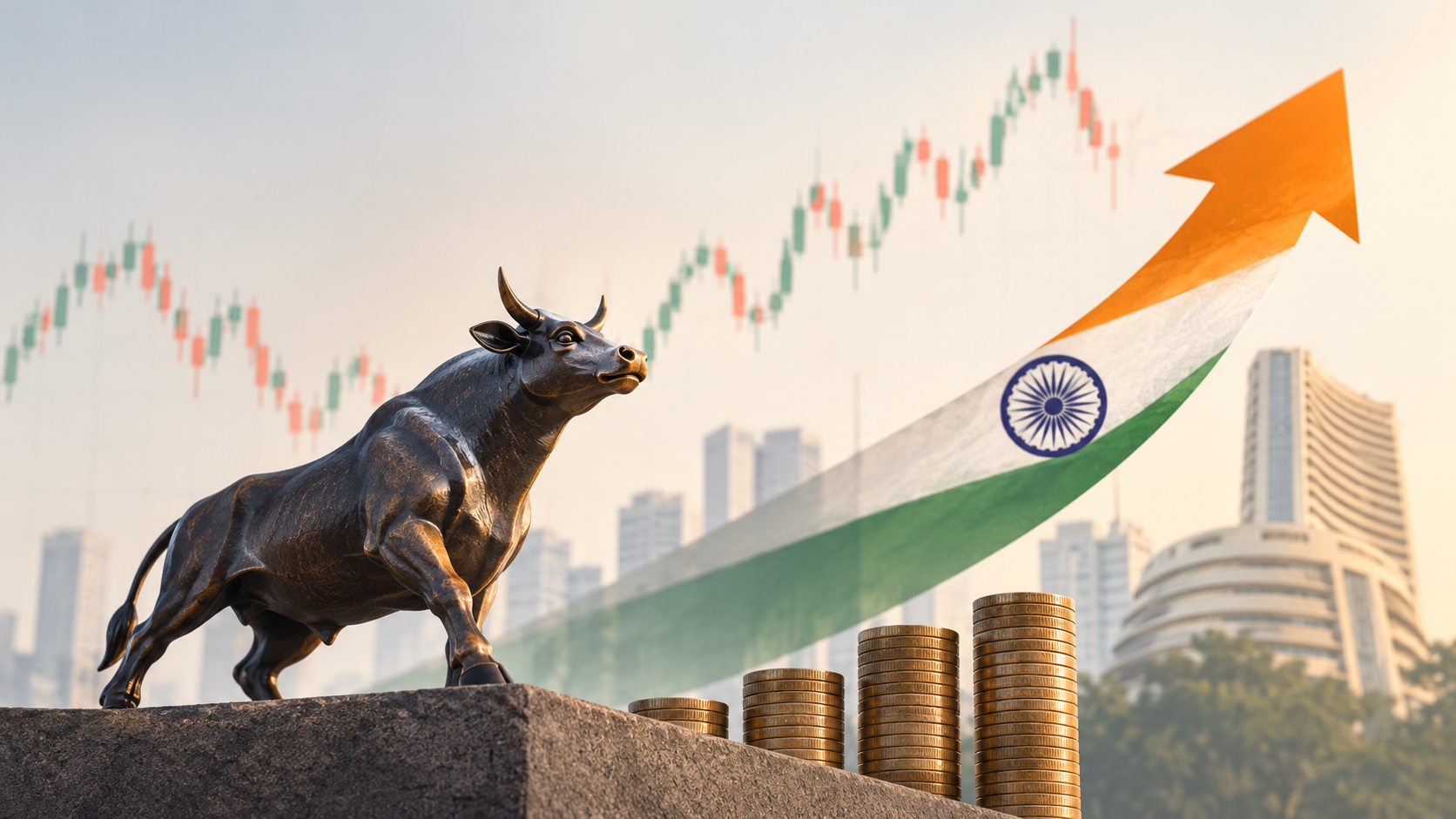
Indian equities have been dealing with a difficult phase. Global conflicts, foreign investor exits, expensive crude oil and uncertainty around global interest rates have weighed on market sentiment. With so much happening around the world, investors have had plenty of reasons to be cautious.
But here’s an interesting question: while the markets are busy reacting to global developments, are they overlooking India’s own economic strengths?
In its investor letter titled State of Indian Markets: Jambavan Moment, Carnelian Capital draws on this mythological reference to explain why India’s underlying growth story may deserve more attention than the current market mood suggests.
When Market Sentiment Forgets the Bigger Picture
Samvat 2082 was not particularly rewarding for Indian equity investors. The Nifty ended the period down approximately 2.6%, reflecting the pressure from several domestic and international developments.
The conflict in West Asia, uncertainty around US trade policies, rising crude oil prices and higher US bond yields created an uncomfortable environment for investors.
There was also a shift in global investment preferences. With technology and artificial intelligence-related opportunities attracting attention in markets such as South Korea and Taiwan, India saw some foreign capital move elsewhere. Its weight in the MSCI Emerging Markets Index also declined.
All of this added to the selling pressure.
However, it is important to separate what is happening in global markets from what is happening within India’s economy. A fall in investor confidence does not necessarily mean that the country’s economic fundamentals have weakened.
And this is where the Jambavan analogy becomes interesting.
India’s Growth Story Has Not Disappeared
While stock market sentiment remained subdued, several indicators suggested that India’s domestic economy was continuing to move forward.
Credit growth averaged approximately 16% during Samvat 2082, compared with around 10% in the previous year. This points towards increased borrowing activity by households and businesses, supporting consumption and investment.
Consumption also received a boost following the introduction of GST 2.0 in September 2025. Lower tax rates across several product categories helped improve affordability, while vehicle sales and festive demand showed encouraging momentum.
The broader economic numbers were equally interesting. India’s GDP grew by approximately 7.6–7.8% in FY26, while growth in the first quarter of FY27 stood at 7.8%, as cited in Carnelian’s analysis.
Corporate performance also offered reasons to remain optimistic. Among 392 Nifty 500 companies that had announced their results, revenue reportedly increased by 24%, while profits grew by 21% year-on-year.
These numbers suggest that the economy and corporate India may be doing better than what the market’s mood currently indicates.
Foreign Investors Are Leaving, But Who Is Holding the Fort?
One of the biggest pressures on Indian equities has been foreign investor selling.
Foreign Institutional Investors (FIIs) reportedly sold close to ₹4 lakh crore worth of Indian equities during Samvat 2082. Higher global interest rates, attractive investment opportunities elsewhere and changing global preferences contributed to this outflow.
But there was another side to the story.
Domestic Institutional Investors (DIIs) invested approximately ₹7.1 lakh crore in Indian equities during the same period. Their investments were almost twice the amount sold by foreign investors.
This reflects how domestic investors and institutions are becoming an increasingly important part of India’s market ecosystem.
In other words, while foreign money may be moving out, domestic participation is helping provide support to the market.
Have We Seen This Story Before?
Market uncertainty is not new, and Carnelian draws attention to the events of 2022 as a useful comparison.
The Russia-Ukraine war, rising oil prices and foreign investor withdrawals created significant pressure on Indian equities. At one point, the Nifty had fallen nearly 17% from its peak.
Yet, the market eventually found its footing. Domestic institutions helped absorb the selling pressure, and the Nifty went on to deliver returns of approximately 19% in 2023 and 9% in 2024.
While history does not guarantee that markets will follow the same path again, it does show that difficult market phases do not always signal a broken economic story.
Sometimes, markets take time to catch up with the underlying reality.
What Lies Ahead for Indian Investors?
Carnelian believes India’s longer-term growth prospects remain encouraging over the next two to three years.
A combination of stronger consumption, healthy credit growth, improving private investment and better corporate earnings could support the next phase of India’s economic expansion.
Valuations have also become relatively more comfortable. The Nifty 50’s one-year forward price-to-earnings (P/E) ratio has reportedly moved down from around 24 times to 19 times. Similarly, the Nifty 500’s valuation has declined from approximately 26 times to 21 times.
Of course, this does not mean that the road ahead will be smooth. Geopolitical tensions, oil prices, global supply-chain disruptions and interest rate movements could continue to influence markets.
But for long-term investors, there is an important distinction between temporary market uncertainty and a change in the country’s growth fundamentals.
Sometimes, All It Takes Is a Reminder
Remember Hanuman’s journey in the Ramayana? His strength was always there, but he needed Jambavan to remind him of what he was capable of.
Carnelian’s Jambavan Moment draws on a similar idea for Indian markets. The country’s economic strengths, domestic consumption, growing credit demand and corporate opportunities have not suddenly disappeared because stock prices are under pressure.
For investors, the lesson is not to ignore market risks or assume that every dip is a buying opportunity. It is to look beyond daily market movements, understand the fundamentals and avoid making long-term decisions based entirely on short-term sentiment.
After all, markets can sometimes lose sight of the bigger picture. And perhaps, like Hanuman, they just need a little reminder of the strength they already have.
Source: Carnelian Capital – State of Indian Markets: Jambavan Moment.

You spend years building wealth, buying property, investing and creating financial security for your family. But have you decided what happens to it when you are no longer around?
It is a question many people postpone. Making a Will is often associated with old age or enormous fortunes. But estate planning is not just for billionaires. Anyone who owns assets, investments or property can benefit from having one.
And the stories of some of India’s biggest business families show why.
When an empire has no clear instructions
Take the example of Dhirubhai Ambani, the founder of Reliance Industries.
When he passed away in July 2002, he did not leave a Will. His estate was subsequently dealt with through a Deed of Release signed by his wife Kokilaben, sons Mukesh and Anil, and daughters Nina and Dipti. The document recorded that Dhirubhai had died intestate, meaning without leaving a Will.
In the years that followed, differences between Mukesh and Anil over control of the Reliance business became a major corporate story. The family eventually reached a business division in 2005, with Kokilaben playing a key role in the settlement.
While the absence of a Will was not the sole reason for the brothers’ differences, the episode highlighted how complicated wealth distribution and business succession can become without clear arrangements.
Ratan Tata: A Will that reflected personal choices
A very different example emerged after Ratan Tata’s death in October 2024.
His Will attracted considerable attention because of the way he chose to distribute his personal wealth. Reports indicated that a significant portion of his estate was earmarked for charitable causes through the Ratan Tata Endowment Foundation and Trust.
His Will also made provisions for family members, close associates and people who had been part of his personal life. Even his beloved German Shepherd, Tito, was remembered through arrangements for his care.
The Will demonstrated that estate planning is not simply about dividing wealth among immediate family members. It allows individuals to decide which causes, people and responsibilities they want their wealth to support.
It is also important to distinguish between personal inheritance and corporate succession. A Will can distribute assets owned by an individual, but it does not automatically decide who will run an entire business group.
So, what exactly does a Will do?
A Will is a legal document that records how a person wants their assets distributed after their death. It can cover property, bank deposits, investments, shares and other assets owned by the individual.
It allows a person to:
- Decide who inherits what: Specify beneficiaries and the assets they should receive.
- Reduce confusion: Give family members a clear record of the person’s wishes.
- Appoint an executor: Identify someone responsible for carrying out the instructions in the Will.
- Make provisions beyond family: Leave assets to charities, friends or other individuals.
- Plan for dependants: Include arrangements for minor children and other dependants.
What happens if you don’t have a Will?
If someone dies without a valid Will, they are said to have died intestate. Their estate is then distributed according to the succession laws applicable to them.
For example, the Hindu Succession Act governs intestate succession for Hindus, Buddhists, Jains and Sikhs, while other communities may be governed by different personal laws.
This means the distribution may not necessarily reflect what the individual would have wanted.
A little planning today can prevent a lot of confusion tomorrow
Making a Will does not mean you are expecting the worst. It means you are taking responsibility for the wealth you have built and the people who may depend on it.
It is also important to review your Will as your financial circumstances change, keep asset records updated and ensure that the document is properly executed and witnessed under applicable law.
-
 News2 months ago
SC Says No Stay On New UPI Charges Above ₹2,000
-
 Podcast1 year ago
Nitin Jain: From IIT to Investment Titan, Managing ₹60,000 Crore AUM
-
 News2 months ago
NSE Makes Long-Awaited Market Debut After ₹22,562-Crore IPO
-

 Explainer6 months ago
How Much SIP Do You Need to Build ₹1 Crore? The Power of Time and Compounding
-
 Podcast2 years ago
From ₹1 Lakh Lost to Managing ₹650 Crore: How Divam Sharma of Green Portfolio Built a Fundamental Investing Approach
-
 Podcast5 months ago
Can ₹200 SIPs Create India’s Next Investing Revolution? Ravi Kumar Jha’s Big Bet On Financial Inclusion
-
 News1 month ago
UPI Charges on Payments Above ₹2,000 Delayed Until After Diwali
-
 IPO Watch1 month ago
Jio IPO 2026: How the ₹30,213 Crore Issue Will Use Its Funds