
Explainer
What If You Outlive Your Retirement Savings?


Living longer is good news. But are our finances prepared to keep up? Retirement planning is no longer just about building a corpus. It is about making sure your money lasts as long as you do.
Most people spend their working years planning for the big milestones in life. Buying a house, paying for their children’s education, taking family vacations and building a comfortable lifestyle. Retirement usually finds a place somewhere on that list, but often as a distant goal.
The assumption is simple: work for 30–35 years, save enough money, retire and spend the rest of your life enjoying what you have built.
But there is a question we don’t ask often enough: What happens if we live longer than our savings can support us?
With people living longer, retirement is no longer just a phase that lasts a few years. It could mean funding two or even three decades of life without a regular salary. And that changes the way we need to think about financial planning.
The Cost of Living Longer
Living longer is undoubtedly a good thing. It means more time with family, more experiences and more opportunities to enjoy life. But longevity also comes with a financial responsibility that is easy to underestimate.
Your expenses don’t necessarily stop when your salary does. Healthcare costs can rise, everyday expenses continue, and the need for financial support may increase with age.
This creates an interesting challenge: having enough money to retire is one thing; having enough money to stay financially independent throughout retirement is another.
A useful way to understand this is through two concepts: healthspan and wealthspan.
Healthspan refers to the number of years a person lives in good health, while wealthspan is the number of years their financial resources can support their lifestyle and needs.
Ideally, the two should go hand in hand. But what happens when your savings run out while you still have years of life ahead?
You could be forced to compromise on healthcare, lifestyle choices or even depend on family members for financial support. In other words, living longer could become financially stressful if we haven’t planned for it.
The Inheritance We Don’t Talk About
Traditionally, financial success has often been associated with what we leave behind for the next generation. A house, investments, savings or other assets that can be passed on to our children.
But perhaps the definition of inheritance is changing.
The Manulife Asia Care Survey 2026 found that 82% of respondents across nine Asian markets considered independence and self-reliance the most meaningful legacy they could leave their families.
The survey also found that 66% of respondents defined freedom as not being a financial burden on others.
This brings up an interesting thought: what if the greatest gift parents can leave their children isn’t necessarily wealth, but the freedom to build their own lives without having to worry about their parents’ financial security?
This becomes particularly relevant for what is known as the ‘sandwich generation’ – people who are simultaneously supporting their ageing parents and their own children.
According to the survey, 74% of people in this group feel that family responsibilities affect their ability to achieve financial independence.
Between school fees, household expenses, medical bills and supporting parents, saving for their own future can easily take a back seat.
The irony is that while people are working hard to secure their family’s future, they may unintentionally be putting their own financial independence at risk.
Retirement Is Not a Finish Line
One of the biggest mistakes we make is treating retirement as a date rather than a financial journey.
We often think of retirement planning as something to take seriously in our 40s or 50s. But the earlier we start, the more time our money has to grow.
Compounding can make a significant difference over long periods, allowing even relatively small, consistent investments to build into a meaningful retirement corpus.
However, starting early is only one part of the equation. Financial planning also needs to account for changing responsibilities, healthcare expenses, inflation and the possibility of living longer than expected.
This means balancing present-day responsibilities with long-term goals. Building an emergency fund, maintaining adequate health protection, saving consistently and investing with a long-term horizon all become important pieces of the puzzle.
It also means reviewing your financial plan as life changes, rather than assuming that the plan you made at 30 will still work at 60.
Perhaps It’s Time to Change the Conversation
Retirement is often treated as a personal financial goal, but it is also a family conversation.
How do we want to live when we stop working? What kind of healthcare might we need? Will our savings be enough? How much financial support can we realistically expect from our children?
These aren’t always comfortable questions, but avoiding them doesn’t make the financial responsibilities disappear.
The Manulife Asia Care Survey 2026 found that nearly 70% of respondents believed open and honest family conversations about ageing and retirement improved well-being. Yet, only 58% said they actually had these conversations.
That gap says a lot.
We spend years discussing investments, careers, property purchases and financial goals, but rarely talk about the financial realities of growing older.
Perhaps retirement planning needs to start with a different mindset. Not just asking how much money we need to stop working, but how much money we need to continue living on our own terms.
Because the goal of retirement shouldn’t simply be to stop earning. It should be to reach a stage in life where our choices aren’t limited by the money we have left.
After all, the real measure of a well-planned retirement isn’t how much wealth you accumulate before you stop working. It’s whether that wealth gives you the freedom to live independently for as long as you need it.


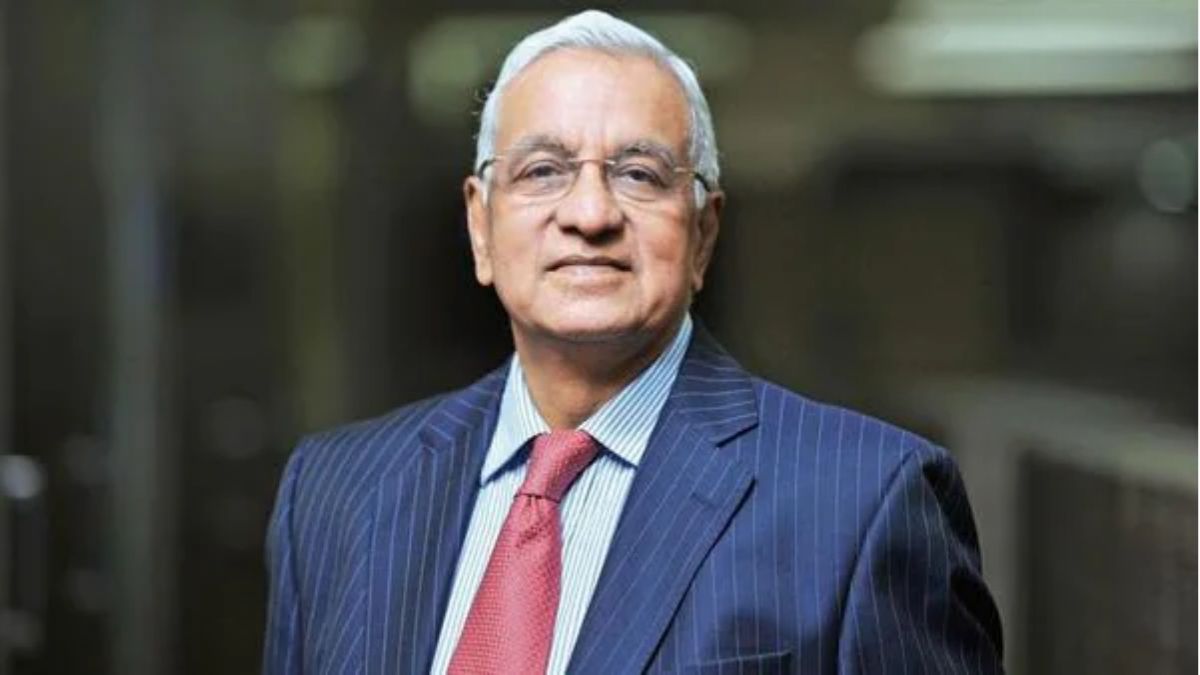

India’s agricultural supply chain has a missing link. Zerodha co-founder Nikhil Kamath believes fixing it could unlock the country’s next big business opportunity.
When you spend ₹100 on tomatoes, how much of that money actually reaches the farmer who grew them?
Just ₹33.
Compare that with milk, where dairy farmers receive approximately ₹70 for every ₹100 spent by consumers. This difference highlights a larger problem in India’s agricultural economy: while the country is one of the world’s largest producers of agricultural commodities, the infrastructure connecting farms to markets continues to face significant gaps.
Speaking to CNBC-TV18, Zerodha co-founder Nikhil Kamath highlighted this disparity and pointed towards an opportunity that could reshape India’s consumer and agricultural businesses.
The ₹100 Difference: Milk vs Tomatoes
India’s dairy industry has built a relatively organised system of procurement, processing and distribution. Fruits and vegetables, however, often travel through multiple intermediaries before reaching consumers.
The difference is reflected in the numbers:
- Milk: Farmers receive approximately ₹70 out of every ₹100 spent.
- Potatoes: Farmers receive approximately ₹37.
- Tomatoes: Farmers receive approximately ₹33.
This means tomato farmers receive only about one-third of the final consumer spending, while the remaining amount is distributed across different stages of the supply chain.
The challenge is not simply how much India produces. It is how efficiently that produce moves from farms to consumers.
The Missing Link: What Happens After Harvest?
Unlike milk, which moves through established collection and distribution networks, fruits and vegetables require careful handling soon after harvesting.
Tomatoes, for instance, have a limited shelf life. Without proper sorting, packaging, cooling and transportation, a significant portion of the produce can lose its quality or go to waste before reaching the market.
The infrastructure gap is considerable:
- India needs approximately 70,000 pack-houses, but has only around 1,300.
- The country has approximately 19,000 refrigerated trucks, against an estimated requirement of 62,000.
- Around ₹57,000 crore worth of fruits and vegetables is lost every year.
Pack-houses are facilities where agricultural produce is sorted, graded, cleaned, packed and pre-cooled before being transported to markets.
Without adequate facilities, farmers often struggle to preserve their produce and access better-paying markets.
What Can India’s Dairy Industry Teach Us?
India’s dairy industry offers an interesting example of how an organised supply chain can transform an entire sector.
Organisations such as Amul have demonstrated how a cooperative model can connect farmers with collection centres, processing facilities and distribution networks.
This gives dairy farmers a more organised route to sell their produce while helping ensure a steady supply for consumers.
A similar approach for fruits and vegetables could help farmers connect with reliable buyers, reduce dependence on multiple intermediaries and improve the efficiency of agricultural distribution.
From Last-Mile Delivery to First-Mile Businesses
India has seen significant investment in quick commerce, with businesses competing to deliver groceries and everyday essentials within minutes.
But while companies have focused on improving the last mile, getting products from stores to consumers, there is another part of the supply chain that needs attention.
The first mile.
This involves everything that happens between the farm and the marketplace, including procurement, storage, sorting, transportation and connecting farmers with buyers.
Building businesses around these gaps could create opportunities across agritech, cold-chain infrastructure, food processing, logistics and organised agricultural retail.
The Bigger Business Opportunity
India has already demonstrated what an organised supply chain can achieve in the dairy sector. Applying similar thinking to fruits and vegetables could open up an entirely new market for businesses and entrepreneurs.
For farmers, better infrastructure could mean improved market access and a larger share of the money consumers spend. For businesses, it presents an opportunity to solve a problem that affects an essential part of everyday consumption.
And for consumers, a more efficient supply chain could help reduce wastage and improve the consistency of supply.
The next big consumer business may not necessarily be about delivering something in 10 minutes. It could be about ensuring that the product reaches the market efficiently in the first place.
Because sometimes, the biggest business opportunity isn’t in selling more. It’s in fixing everything that happens before the sale.
Source: CNBC TV18

From budgeting pocket money to understanding taxes, savings and mutual funds, financial literacy is slowly becoming part of what Indian students learn in school.
Managing money is a life skill, but for many people, understanding how to save, budget or make informed financial decisions comes much later in life. That could begin to change as financial education finds a place in India’s school curriculum.
The revised NCERT Class IX Social Science textbook, Understanding Society: India and Beyond – Part 2, introduces students to concepts of personal finance, taxation and entrepreneurship. The idea is to familiarise young learners with money management at an early age, rather than leaving them to figure it out as adults.
From Pocket Money to Personal Finance
The new lessons introduce students to several everyday financial concepts, including budgeting, planning expenses, setting savings goals and distinguishing between needs and wants.
Students are also introduced to financial products and concepts such as fixed deposits, mutual funds, Equated Monthly Instalments (EMIs), taxes, investment risks and returns. For the first time, they also get an introduction to personal income tax, including tax slabs under the new tax regime.
These lessons are already translating into small changes in how some students approach money.
At Delhi Public School in Varanasi, for instance, Class IX students have started tracking their daily expenses and identifying the difference between essential and non-essential purchases.
Some are consciously setting aside a portion of their pocket money as savings, while others are cutting down on unnecessary canteen visits. One student even managed to save enough towards buying a gaming console by reducing everyday spending.
Beyond Saving: Understanding How Businesses Work
The financial education lessons go beyond personal money management. The revised curriculum also introduces students to entrepreneurship and the basics of running a business.
Concepts such as profit and loss, accounting, business planning, innovation and risk-taking help students understand how businesses operate and how financial decisions influence them.
This is particularly relevant in a world where children are increasingly exposed to conversations around startups, businesses, investing and the economy.
Why Financial Education Needs to Start Early
Introducing financial concepts during the school years can help children build a stronger foundation for managing money independently.
Understanding the difference between saving and spending, knowing how taxes work and recognising the risks associated with financial decisions are skills that become increasingly important as individuals grow older.
Financial literacy is not just about knowing where to invest money. It is also about developing discipline, planning ahead and making responsible financial choices.
By bringing these subjects into classrooms, schools can give students an opportunity to connect what they learn in textbooks with decisions they will eventually make in real life.
After all, understanding money should not begin with your first salary. It can begin with your first pocket-money budget.
Source : Times of India

Gold has long been considered a safe-haven investment, especially during periods of economic uncertainty. But even gold isn’t immune to market corrections.
After hitting record highs in January 2026, gold prices have witnessed a sharp reversal. On November 20, spot gold fell to $3,585.92 per ounce, nearly 36% below its January peak of $5,594.82.
The decline has brought gold prices to their lowest levels since September 2025 and raised an important question for investors: Is this the right time to buy gold, or could prices fall further?
Interestingly, despite the correction, Goldman Sachs continues to maintain a positive long-term outlook, forecasting gold prices to reach $4,650 per ounce by the end of 2027.
Let’s understand what’s driving the fall and what investors should make of it.
Why Are Gold Prices Falling?
Gold’s recent decline can be linked to a combination of global economic factors, particularly expectations around US interest rates and the strength of the dollar.
1. Higher US interest rates
Gold does not generate regular income like bonds or fixed deposits. When interest rates rise, interest-bearing investments become more attractive, reducing the appeal of holding gold.
Markets have been anticipating further interest rate hikes by the US Federal Reserve, putting pressure on gold prices.
2. A Stronger US Dollar
Gold is internationally traded in US dollars. When the dollar strengthens, gold becomes more expensive for buyers using other currencies, which can affect global demand.
3. Investors Selling Gold to Raise Cash
The recent sell-off in technology and AI-related stocks has also contributed to gold’s weakness. Some investors have reportedly sold their gold holdings to raise cash and cover losses in other investments.
Together, these factors have weighed on gold, reversing much of the rally seen earlier this year.
Goldman Sachs Still Sees Gold at $4,650 by 2027
Despite the sharp correction, Goldman Sachs remains optimistic about gold’s longer-term prospects.
The investment bank has revised its end-2027 gold price forecast to $4,650 per ounce, from its earlier estimate of $4,800.
One of the key reasons behind this outlook is continued buying by central banks.
Goldman expects central banks, including China’s central bank, to remain important buyers of gold. Such purchases can provide long-term support to prices.
The bank also expects private investor demand to recover when the US Federal Reserve begins cutting interest rates towards the end of 2027.
However, the near-term outlook remains challenging, as higher interest rates could continue to limit investor demand.
Central Banks Are Still Buying Gold
While individual investors have become more cautious, central banks continue to add gold to their reserves.
According to the World Gold Council, central banks purchased 675 tonnes of gold between January and September 2026, a 6% increase compared with the same period last year.
Purchases in the third quarter alone stood at 321 tonnes, up 42% year-on-year.
Investment demand has also shown some interesting trends.
- Global physically backed gold ETFs attracted 211 tonnes of inflows in the third quarter of 2026.
- Total global gold ETF holdings reached a record 4,256 tonnes.
- In contrast, demand for physical gold bars and coins fell 19% year-on-year to 268 tonnes during the quarter.
This suggests that institutional and financial investors continue to show interest in gold, even as demand from individual buyers for physical gold has weakened.
Interestingly, lower prices have also started attracting buyers in major gold markets such as India and China.
Should You Buy Gold After the Correction?
A 36% fall from its peak may make gold look attractive. However, a falling price does not automatically mean an investment has become cheap.
Gold’s recovery will depend on several factors, including the US Federal Reserve’s interest rate decisions, the movement of the dollar, central-bank purchases and the return of private investor demand.
For individual investors, the decision should depend on why they want to own gold in the first place.
Gold can play a role in portfolio diversification, but it should not be treated as a guaranteed way to make short-term gains.
Rather than trying to predict the exact bottom, investors looking to build gold exposure could consider spreading their purchases over time. This helps reduce the risk of investing the entire amount at one price.
It is also important to remember that international gold prices quoted in dollars do not directly translate into Indian retail gold rates. Currency movements, import duties, taxes and other local costs influence the final price in India.
The Simple Hai Take:
Gold’s recent correction is a reminder that even traditionally safe-haven assets can experience sharp price swings. While central-bank buying and expectations of lower interest rates could support a recovery, uncertainty remains.
For investors, the bigger question isn’t simply whether gold will rise again. It is how much gold belongs in their portfolio and whether that allocation fits their financial goals.
Sources: The Economic Times
-
 News2 months ago
SC Says No Stay On New UPI Charges Above ₹2,000
-
 Podcast1 year ago
Nitin Jain: From IIT to Investment Titan, Managing ₹60,000 Crore AUM
-
 News2 months ago
NSE Makes Long-Awaited Market Debut After ₹22,562-Crore IPO
-

 Explainer6 months ago
How Much SIP Do You Need to Build ₹1 Crore? The Power of Time and Compounding
-
 Podcast2 years ago
From ₹1 Lakh Lost to Managing ₹650 Crore: How Divam Sharma of Green Portfolio Built a Fundamental Investing Approach
-
 Podcast5 months ago
Can ₹200 SIPs Create India’s Next Investing Revolution? Ravi Kumar Jha’s Big Bet On Financial Inclusion
-
 News1 month ago
UPI Charges on Payments Above ₹2,000 Delayed Until After Diwali
-
 IPO Watch1 month ago
Jio IPO 2026: How the ₹30,213 Crore Issue Will Use Its Funds