
IPO Watch
India’s aluminium extrusion industry could be entering an important phase of domestic market opportunity.


the Directorate General of Trade Remedies (DGTR) initiated a suo motu anti-dumping investigation into imports of aluminium extrusion profiles, structures and related articles from China, Malaysia, Vietnam and Thailand. These countries collectively account for ~90% of India’s imports of the products under investigation, with domestic manufacturers raising concerns over the impact of competitively priced imports on the local industry.
A favourable outcome from the investigation, potentially resulting in anti-dumping duties, could improve the competitive position of domestic manufacturers, encourage import substitution and create opportunities for Indian aluminium extrusion companies to strengthen their share of the domestic market.
Against this backdrop, we are pleased to introduce KMC Aluminium Limited, an established aluminium extrusion manufacturer preparing for an IPO, tentatively targeted for December 2026.
With a business legacy dating back to 1974, KMC has evolved into an integrated manufacturing platform specialising in customised aluminium profiles and value-added components. Notably, existing customers have expressed interest in sourcing additional value-added products from KMC that they currently import from China.
KMC’s manufacturing capabilities and business positioning
Operating from its 1,22,840 sq. ft. facility in Sriperumbudur, Tamil Nadu, KMC’s capabilities span in-house billet casting, die design, extrusion, machining and fabrication. The company serves automotive, renewable energy, elevators, infrastructure and industrial segments, with an increasing focus on Tier-1 and Tier-2 automotive component manufacturers.
Importantly, KMC’s strategy extends beyond conventional aluminium extrusion, with a focus on manufacturing complex, customised aluminium profiles and components that require specialised tooling and tighter dimensional tolerances. Its in-house die design, tooling and application engineering capabilities enable it to cater to specific customer requirements. By progressively integrating downstream processes such as machining, fabrication and surface finishing, KMC aims to move further towards manufacturing finished components rather than limiting its operations to supplying extruded aluminium profiles, thereby increasing value addition and customer realisations.
The company caters to automotive, renewable energy, elevators, infrastructure and industrial applications, with a growing emphasis on Tier-1 and Tier-2 automotive component manufacturers. Its IATF 16949 and ISO 9001:2015 certifications further support its ability to serve quality-critical applications.
Scaling manufacturing capacity to address incremental demand
KMC currently operates with an installed capacity of 5,340 MT and an effective capacity of 4,272 MT. FY26 production stood at 3,940 MT, representing around 92% utilisation of effective capacity.
To address capacity constraints and support its next phase of growth, the company plans to increase installed capacity to 10,000 MT, involving an investment of around ₹14 crore.
The expansion includes an additional extrusion press, precision CNC machining capabilities, an in-house anodising and powder-coating facility and specialised machinery for manufacturing high-precision aluminium solar module frames.
The planned expansion is estimated to generate incremental annual revenue of ₹75-80 crore and EBITDA of ₹10-15 crore as the additional capacity is commissioned and utilised. The new capabilities also provide an opportunity to address products currently sourced by customers from overseas markets.
Financial performance and projected earnings trajectory
KMC has demonstrated an improvement in its operating profitability over the past three years, with consolidated EBITDA margin increasing from 7.98% in FY24 to 11.16% in FY26.
Its FY26 financial performance was as follows:
- Revenue from Operations: ₹135.35 crore
- EBITDA: ₹15.25 crore
- EBITDA Margin: 11.16%
- Profit After Tax: ₹8.30 crore
- PAT Margin: 6.13%
Going forward, earnings growth will be driven by higher production volumes, improved fixed-cost absorption and manufacturing efficiencies as capacity expands. The increasing contribution of machined and value-added products is expected to support higher realisations and profitability, while the proposed repayment of borrowings through IPO proceeds would lower finance costs. Additional opportunities from existing customers, particularly for products currently imported from China, and demand across automotive and solar applications provide further avenues for growth.
Proposed IPO and indicative valuation
The proposed IPO is being evaluated at an indicative issue size of ~₹45 crore, with a post-money equity valuation of ~ ₹170 crore.
Based on the indicative valuation, the implied earnings multiples are:
- FY27E PAT of ₹17.54 crore | P/E ~ 9.7x
- FY28E PAT of ₹26.57 crore | P/E ~ 6.4x
The transaction provides an opportunity to evaluate an established manufacturing business at 9.7x projected FY27 earnings, with the implied multiple declining to 6.4x on FY28 earnings, subject to achievement of the company’s projections.
Transaction snapshot
- Company: KMC Aluminium Limited
- Proposed IPO size: ~₹45 crore
- Indicative post-money valuation: ~₹170 crore
- Tentative IPO timeline: December 2026
- Key growth areas: Automotive components, solar module frames, precision-engineered profiles and downstream processing
The combination of an evolving trade environment, growing domestic sourcing opportunities, existing customer interest and planned manufacturing expansion places KMC at an interesting intersection of India’s domestic aluminium manufacturing opportunity. With additional capacity and downstream capabilities planned, the company is working towards a larger presence in specialised and value-added aluminium products.






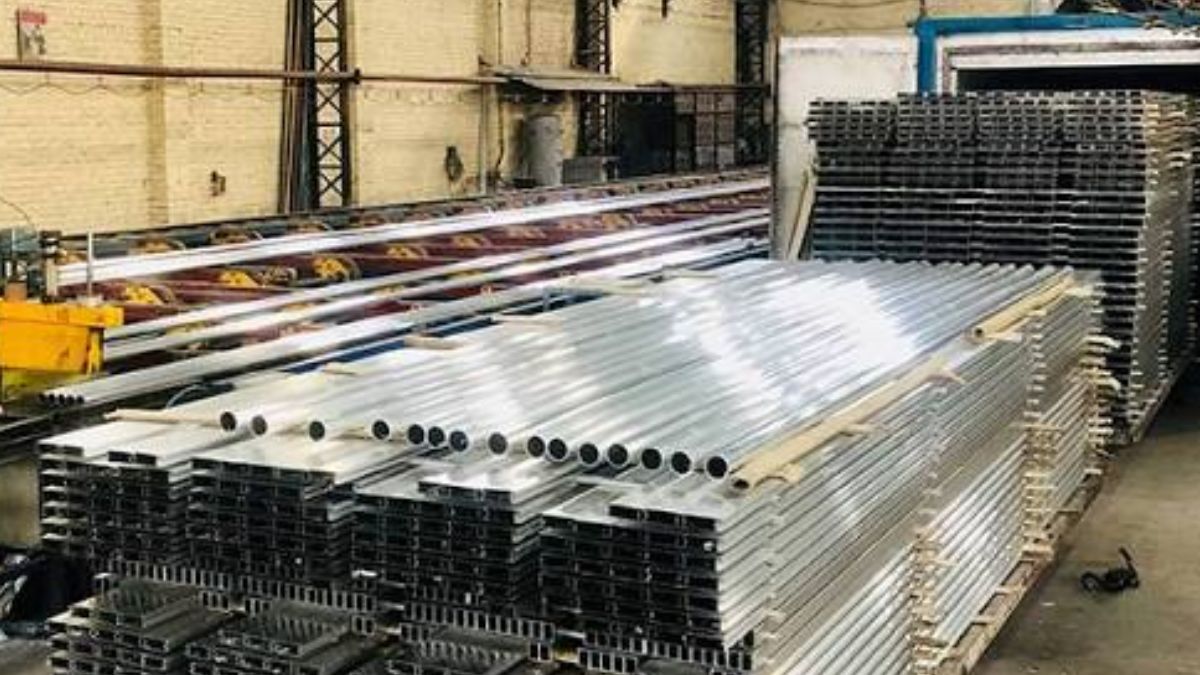
With a legacy dating back to 1974, KMC Aluminium is preparing for a proposed IPO in December 2026. Here’s a look at its business, expansion plans and financial performance.
Aluminium is used across industries, from automobiles and elevators to solar panels and industrial equipment. KMC Aluminium Limited is looking to tap into these opportunities by moving beyond standard aluminium profiles towards specialised, engineered components.
Based in Sriperumbudur, Tamil Nadu, the company manufactures customised aluminium profiles through processes such as extrusion, machining and component processing. Its products cater to automotive, elevator, solar and industrial applications, with a growing focus on supplying Tier-1 and Tier-2 automotive component manufacturers.
What are its expansion plans?
KMC currently has an installed manufacturing capacity of approximately 5,340 metric tonnes (MT), which it plans to increase to around 10,000 MT.
Its expansion plans include:
- An additional aluminium extrusion press.
- CNC machining facilities for precision components.
- In-house anodising and powder coating.
- A dedicated solar-frame manufacturing line.
These additions are aimed at increasing production, improving manufacturing control and expanding the company’s range of value-added products.
How are the financials looking?
KMC reported the following financial performance in FY26:
| Particulars | FY26 |
|---|---|
| Revenue | ₹135.4 crore |
| EBITDA | ₹15.3 crore |
| EBITDA margin | 11.2% |
| PAT | ₹8.3 crore |
The company has reported revenue of ₹90 crore in H1 FY27 and expects to close FY27 at approximately ₹190 crore.
Its projected Profit After Tax (PAT) stands at ₹17.54 crore for FY27 and ₹26.57 crore for FY28.
What do we know about the proposed IPO?
The proposed IPO size is approximately ₹45 crore, with an indicative post-money valuation of ₹170 crore.
Based on projected earnings, the implied valuation multiples are:
| Particulars | FY27E | FY28E |
|---|---|---|
| Projected PAT | ₹17.54 crore | ₹26.57 crore |
| Implied P/E | 9.7x | 6.4x |
The P/E ratio compares a company’s valuation with its earnings. These estimates suggest a lower implied valuation multiple for FY28, provided the company achieves its projected profit growth.
What should investors watch?
While the expansion plans offer potential, investors should look at how successfully the company executes them. Demand from automotive and solar industries, raw material costs, profit margins and the ability to convert additional capacity into actual earnings will be important factors.
The bigger picture
KMC Aluminium is looking to transform an established manufacturing business into a more specialised, value-added player. Its proposed IPO could support this next phase of growth, but the real test will be whether its expansion plans translate into sustainable revenue and profits.
The IPO is tentatively expected in December 2026. Investors should evaluate the company’s official offer documents and financial disclosures once available.
Disclaimer: This article is for informational purposes only and is not investment advice. Financial projections and proposed IPO details are based on information shared in the company’s introductory material and have not been independently verified.

Coca-Cola is moving ahead with plans to potentially list its Indian bottling business on the stock market, with the proposed public offering expected to take place in 2027. The company is preparing to take its bottling operations, housed under Hindustan Coca-Cola Holdings (HCCH), to the public market, subject to regulatory approvals and market conditions.
The proposed IPO could be worth around $1 billion, with the company reportedly targeting a valuation of approximately $10 billion. The offering is expected to primarily involve existing shareholders selling a portion of their stake, rather than the company raising fresh money through new shares.
What Is Hindustan Coca-Cola Holdings?
Hindustan Coca-Cola Holdings is the parent company of Hindustan Coca-Cola Beverages (HCCB), one of Coca-Cola’s largest bottling operations in India.
HCCB manufactures, packages and distributes beverages across the country. Its portfolio includes popular brands such as Coca-Cola, Thums Up, Sprite, Fanta, Limca and Maaza.
The business operates 14 bottling plants across 10 states and has a distribution network of more than 2,000 distributors. It also reaches over 1.7 million customers, supported by approximately 5,000 employees.
Why Is Coca-Cola Considering a Public Listing?
The proposed IPO is part of Coca-Cola’s broader strategy to move towards a more asset-light business model. This approach allows the company to focus more on its brands, marketing, innovation and digital capabilities while working with partners to manage bottling and distribution operations.
In July 2025, Jubilant Bhartia Group acquired a 40% stake in HCCH for approximately ₹12,500 crore, while Coca-Cola retained its majority holding. The potential public listing would be another step in reshaping the ownership and operations of its Indian bottling business.
Why Does India Matter to Coca-Cola?
India remains an important growth market for the global beverage company. Demand for affordable products, zero-sugar beverages and locally relevant offerings has helped support its performance in the country.
Coca-Cola has also pointed to the growing contribution of quick-service restaurants, emerging sales channels and social media and influencer collaborations to its Indian business.
A public listing could give investors an opportunity to participate in the growth of the company’s bottling operations, while allowing existing shareholders to partially monetise their investments.
What Could the IPO Mean for Investors?
If the listing proceeds, investors may get an opportunity to own shares in a business connected to some of India’s most widely recognised beverage brands.
However, the proposed IPO is still subject to regulatory requirements and market conditions. The final issue price, share-sale details and other offer terms will become clearer as the process progresses.
For retail investors, the key will be to look beyond the strength of the brand. Understanding the company’s financial performance, valuation, debt levels, growth prospects and risks will be important before making any investment decision.
The bottom line: Coca-Cola’s proposed Indian bottling business IPO could bring another well-known consumer business to India’s stock market. But as with any public offering, investors should assess the company’s fundamentals and valuation rather than relying on brand familiarity alone.
Source: The Economic Times

Jio Platforms has made a strong entry into the Indian stock market, with its shares listing at a premium of over 21% on October 28, 2026. The debut follows one of India’s largest-ever initial public offerings (IPOs), attracting significant interest from institutional and retail investors.
The company’s shares opened at ₹1,359 on the BSE and NSE, compared with the IPO issue price of ₹1,119 per share. This represents a gain of around ₹240 per share for investors who received an allotment at the issue price. The listing also placed Jio Platforms among India’s most valuable listed companies.
A Record-Breaking IPO
Jio Platforms raised approximately ₹30,213 crore through its IPO, making it the largest public issue in India to date, surpassing Hyundai Motor India’s ₹27,870 crore offering.
Investor demand was strong from the beginning. The issue was fully subscribed within around 100 minutes of opening and received an overall subscription of approximately 22.19 times by the end of the bidding period.
Institutional investors led the demand, with the portion reserved for qualified institutional buyers being subscribed more than 70 times. The retail investor category was subscribed around 2.72 times, reflecting interest across different investor groups.
What Is Driving Investor Interest?
Jio’s position in India’s telecom market is a key factor behind the interest in its shares. The company has built a subscriber base of more than 500 million users and carries a significant share of the country’s mobile data traffic.
However, its growth story extends beyond mobile connectivity. Home broadband, enterprise technology, cloud computing, digital services and artificial intelligence could provide additional opportunities to generate revenue.
Brokerages have also highlighted the possibility of higher telecom tariffs, which could increase the average revenue earned per user. Jio’s expanding broadband business and the potential to generate more cash as its heavy investment in 5G infrastructure eases are other factors supporting expectations of future growth.
What Are Brokerages Saying?
Several brokerages initiated coverage of Jio Platforms following its market debut, issuing Buy ratings and identifying potential growth opportunities.
Nomura set a target price of ₹1,340 per share, while Motilal Oswal assigned a target of ₹1,350. Elara Capital set its target at ₹1,367 per share.
Their outlooks point to factors such as subscriber growth, potential tariff increases, broadband expansion and the development of digital services as possible drivers of future earnings.
These targets reflect the brokerages’ estimates and assumptions, however, and should not be treated as guaranteed future share prices.
What Should Investors Keep in Mind?
A strong stock market debut can generate excitement, but it does not automatically mean a stock will continue to rise. Jio’s listing premium reflects investor demand and expectations about its future performance. Whether the company can meet those expectations will depend on its ability to grow revenue, improve profitability and turn its large customer base into sustainable earnings.
Investors should also consider the price they pay for a share, the company’s valuation, the risks involved and their own financial goals before making an investment decision. Buying a stock simply because it has attracted attention or listed at a premium can lead to decisions based on market excitement rather than research.
For investors who did not receive shares in the IPO, there is no need to rush into buying the stock immediately. Evaluating the company’s fundamentals and understanding its valuation may be more useful than focusing only on its first-day gains.
Jio’s market debut marks an important milestone, but the real test lies in its performance over time. A successful listing can create excitement; long-term value depends on business growth, earnings and the price investors are willing to pay.
-
 News2 months ago
SC Says No Stay On New UPI Charges Above ₹2,000
-
 Podcast1 year ago
Nitin Jain: From IIT to Investment Titan, Managing ₹60,000 Crore AUM
-
 News2 months ago
NSE Makes Long-Awaited Market Debut After ₹22,562-Crore IPO
-

 Explainer6 months ago
How Much SIP Do You Need to Build ₹1 Crore? The Power of Time and Compounding
-
 Podcast2 years ago
From ₹1 Lakh Lost to Managing ₹650 Crore: How Divam Sharma of Green Portfolio Built a Fundamental Investing Approach
-
 Podcast5 months ago
Can ₹200 SIPs Create India’s Next Investing Revolution? Ravi Kumar Jha’s Big Bet On Financial Inclusion
-
 News1 month ago
UPI Charges on Payments Above ₹2,000 Delayed Until After Diwali
-
 IPO Watch1 month ago
Jio IPO 2026: How the ₹30,213 Crore Issue Will Use Its Funds