
News
SEBI Makes Direct Mutual Funds the Default: How Much Could You Save on a ₹10,000 SIP?


A lower expense ratio may not look like much today, but over the years, it could make a difference of several lakhs to your mutual fund investments.
When investing in mutual funds, most people focus on how much they invest and how much their money could grow. But there is another factor that deserves attention: the cost of investing.
From November 1, 2026, direct mutual fund plans will become the default option on asset management companies’ (AMCs) digital platforms, according to Securities and Exchange Board of India (SEBI) Chairman Tuhin Kanta Pandey. Investors who choose regular plans will also be informed about their higher expense ratios.
The move aims to make investment costs more visible and help people make informed decisions. But what does this mean for someone investing ₹10,000 every month through a Systematic Investment Plan (SIP)?
Direct vs Regular Mutual Funds: What Is the Difference?
Direct and regular plans invest in the same mutual fund scheme. They have the same fund manager and invest in the same underlying portfolio. The main difference lies in how investors access them and the costs they pay.
Direct plans: Investors purchase these plans directly from the mutual fund company, without going through a distributor. Since distributor commissions are not included, these plans generally have lower expense ratios.
Regular plans: Investors purchase these plans through distributors or intermediaries. The cost of distribution is reflected in their expenses, which generally makes their expense ratios higher than those of direct plans.
An expense ratio is the annual cost of managing a mutual fund, expressed as a percentage of its assets. This cost is deducted from the fund’s assets and is reflected in its Net Asset Value (NAV), affecting the returns investors ultimately receive.
Although the difference in expenses may appear small, it can have a meaningful impact when investments are held for several years.
How Much Could You Save on a ₹10,000 Monthly SIP?
Consider a hypothetical example in which an investor puts ₹10,000 into a mutual fund every month and earns an annual return of 12% before base expenses.
An illustration using the Groww Large Cap Fund shows how the difference in expenses between its direct and regular plans could affect the final investment value over 20 years.
| Particulars | Direct Plan | Regular Plan |
|---|---|---|
| Monthly SIP | ₹10,000 | ₹10,000 |
| Investment period | 20 years | 20 years |
| Total amount invested | ₹24 lakh | ₹24 lakh |
| Illustrative final value | ₹84.53 lakh | ₹75.06 lakh |
Under these assumptions, the direct plan could accumulate approximately ₹9.47 lakh more than the regular plan.
The difference comes from the assumed gap in base expenses, which affects how much of the fund’s returns remains invested. Over time, even a relatively small cost difference can compound into a much larger amount.
These figures are illustrative, not guaranteed. Actual returns will depend on market performance, the fund’s total expenses and other factors.
Why Do Lower Expenses Matter Over the Long Term?
Mutual fund expenses can affect returns year after year. When costs are lower, more of the fund’s returns remain available to contribute to an investor’s overall wealth.
The impact becomes more noticeable over longer periods because investments have more time to compound. This is why investors should look beyond a fund’s past performance and consider its expense ratio as well.
However, a lower expense ratio does not automatically mean that a fund is the right choice for every investor. The scheme’s investment strategy, risk level and suitability for an individual’s financial goals also matter.
Should You Always Choose a Direct Plan?
Direct plans can be suitable for investors who are comfortable researching mutual funds, selecting schemes and managing their portfolios independently.
Regular plans, on the other hand, may suit investors who value assistance from a distributor when choosing investments and reviewing their portfolios. The higher cost may be worth considering alongside the guidance and services received.
SEBI’s announcement does not mean regular plans are being discontinued. Investors will still be able to choose them, but they must be informed about their higher expense ratios.
The change also does not mean existing regular-plan investments or SIPs will automatically become direct plans. Investors should check their current investments and understand the implications before making any changes.
What Should Mutual Fund Investors Keep in Mind?
Before starting a SIP, compare the direct and regular versions of a scheme and understand the costs associated with each. Also consider whether you need professional assistance with fund selection and portfolio management.
Expense ratios are only one part of the total cost of investing, and the base expense figures used in an illustration may not capture every cost. Market-linked investments also carry risk, and actual returns may differ significantly from assumed returns.
Ultimately, the goal is not simply to choose the cheapest option. It is to understand what you are paying for, what support you need and how your investment fits into your long-term financial plans.
A small difference in costs today can add up over time. Knowing where your money goes is an important step towards making better investment decisions.
Source: MoneyControl

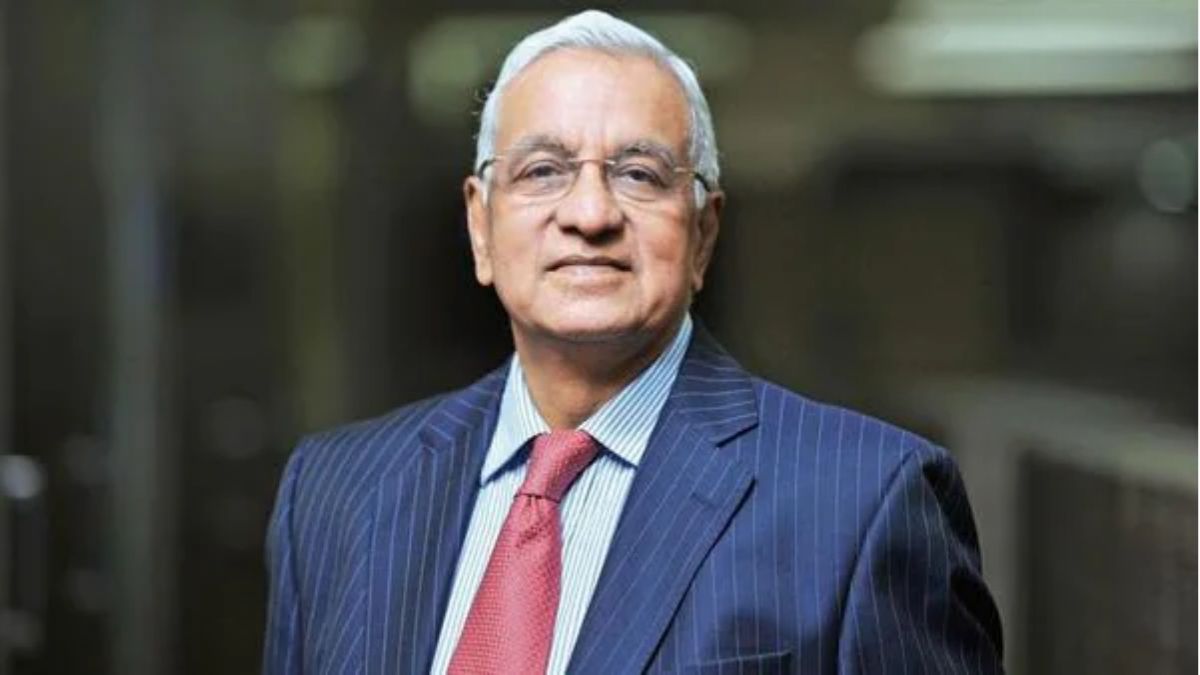


From budgeting pocket money to understanding taxes, savings and mutual funds, financial literacy is slowly becoming part of what Indian students learn in school.
Managing money is a life skill, but for many people, understanding how to save, budget or make informed financial decisions comes much later in life. That could begin to change as financial education finds a place in India’s school curriculum.
The revised NCERT Class IX Social Science textbook, Understanding Society: India and Beyond – Part 2, introduces students to concepts of personal finance, taxation and entrepreneurship. The idea is to familiarise young learners with money management at an early age, rather than leaving them to figure it out as adults.
From Pocket Money to Personal Finance
The new lessons introduce students to several everyday financial concepts, including budgeting, planning expenses, setting savings goals and distinguishing between needs and wants.
Students are also introduced to financial products and concepts such as fixed deposits, mutual funds, Equated Monthly Instalments (EMIs), taxes, investment risks and returns. For the first time, they also get an introduction to personal income tax, including tax slabs under the new tax regime.
These lessons are already translating into small changes in how some students approach money.
At Delhi Public School in Varanasi, for instance, Class IX students have started tracking their daily expenses and identifying the difference between essential and non-essential purchases.
Some are consciously setting aside a portion of their pocket money as savings, while others are cutting down on unnecessary canteen visits. One student even managed to save enough towards buying a gaming console by reducing everyday spending.
Beyond Saving: Understanding How Businesses Work
The financial education lessons go beyond personal money management. The revised curriculum also introduces students to entrepreneurship and the basics of running a business.
Concepts such as profit and loss, accounting, business planning, innovation and risk-taking help students understand how businesses operate and how financial decisions influence them.
This is particularly relevant in a world where children are increasingly exposed to conversations around startups, businesses, investing and the economy.
Why Financial Education Needs to Start Early
Introducing financial concepts during the school years can help children build a stronger foundation for managing money independently.
Understanding the difference between saving and spending, knowing how taxes work and recognising the risks associated with financial decisions are skills that become increasingly important as individuals grow older.
Financial literacy is not just about knowing where to invest money. It is also about developing discipline, planning ahead and making responsible financial choices.
By bringing these subjects into classrooms, schools can give students an opportunity to connect what they learn in textbooks with decisions they will eventually make in real life.
After all, understanding money should not begin with your first salary. It can begin with your first pocket-money budget.
Source : Times of India

Gold has long been considered a safe-haven investment, especially during periods of economic uncertainty. But even gold isn’t immune to market corrections.
After hitting record highs in January 2026, gold prices have witnessed a sharp reversal. On November 20, spot gold fell to $3,585.92 per ounce, nearly 36% below its January peak of $5,594.82.
The decline has brought gold prices to their lowest levels since September 2025 and raised an important question for investors: Is this the right time to buy gold, or could prices fall further?
Interestingly, despite the correction, Goldman Sachs continues to maintain a positive long-term outlook, forecasting gold prices to reach $4,650 per ounce by the end of 2027.
Let’s understand what’s driving the fall and what investors should make of it.
Why Are Gold Prices Falling?
Gold’s recent decline can be linked to a combination of global economic factors, particularly expectations around US interest rates and the strength of the dollar.
1. Higher US interest rates
Gold does not generate regular income like bonds or fixed deposits. When interest rates rise, interest-bearing investments become more attractive, reducing the appeal of holding gold.
Markets have been anticipating further interest rate hikes by the US Federal Reserve, putting pressure on gold prices.
2. A Stronger US Dollar
Gold is internationally traded in US dollars. When the dollar strengthens, gold becomes more expensive for buyers using other currencies, which can affect global demand.
3. Investors Selling Gold to Raise Cash
The recent sell-off in technology and AI-related stocks has also contributed to gold’s weakness. Some investors have reportedly sold their gold holdings to raise cash and cover losses in other investments.
Together, these factors have weighed on gold, reversing much of the rally seen earlier this year.
Goldman Sachs Still Sees Gold at $4,650 by 2027
Despite the sharp correction, Goldman Sachs remains optimistic about gold’s longer-term prospects.
The investment bank has revised its end-2027 gold price forecast to $4,650 per ounce, from its earlier estimate of $4,800.
One of the key reasons behind this outlook is continued buying by central banks.
Goldman expects central banks, including China’s central bank, to remain important buyers of gold. Such purchases can provide long-term support to prices.
The bank also expects private investor demand to recover when the US Federal Reserve begins cutting interest rates towards the end of 2027.
However, the near-term outlook remains challenging, as higher interest rates could continue to limit investor demand.
Central Banks Are Still Buying Gold
While individual investors have become more cautious, central banks continue to add gold to their reserves.
According to the World Gold Council, central banks purchased 675 tonnes of gold between January and September 2026, a 6% increase compared with the same period last year.
Purchases in the third quarter alone stood at 321 tonnes, up 42% year-on-year.
Investment demand has also shown some interesting trends.
- Global physically backed gold ETFs attracted 211 tonnes of inflows in the third quarter of 2026.
- Total global gold ETF holdings reached a record 4,256 tonnes.
- In contrast, demand for physical gold bars and coins fell 19% year-on-year to 268 tonnes during the quarter.
This suggests that institutional and financial investors continue to show interest in gold, even as demand from individual buyers for physical gold has weakened.
Interestingly, lower prices have also started attracting buyers in major gold markets such as India and China.
Should You Buy Gold After the Correction?
A 36% fall from its peak may make gold look attractive. However, a falling price does not automatically mean an investment has become cheap.
Gold’s recovery will depend on several factors, including the US Federal Reserve’s interest rate decisions, the movement of the dollar, central-bank purchases and the return of private investor demand.
For individual investors, the decision should depend on why they want to own gold in the first place.
Gold can play a role in portfolio diversification, but it should not be treated as a guaranteed way to make short-term gains.
Rather than trying to predict the exact bottom, investors looking to build gold exposure could consider spreading their purchases over time. This helps reduce the risk of investing the entire amount at one price.
It is also important to remember that international gold prices quoted in dollars do not directly translate into Indian retail gold rates. Currency movements, import duties, taxes and other local costs influence the final price in India.
The Simple Hai Take:
Gold’s recent correction is a reminder that even traditionally safe-haven assets can experience sharp price swings. While central-bank buying and expectations of lower interest rates could support a recovery, uncertainty remains.
For investors, the bigger question isn’t simply whether gold will rise again. It is how much gold belongs in their portfolio and whether that allocation fits their financial goals.
Sources: The Economic Times
News
NSE Becomes World’s Fifth-Largest Stock Exchange, Enters India’s Top 10 Most Valuable Companies

India’s National Stock Exchange (NSE) has added another milestone to its journey, becoming the world’s fifth-largest publicly traded stock exchange operator by market capitalisation. In the process, it has moved ahead of global names such as Nasdaq and Hong Kong Exchanges and Clearing (HKEX).
The development comes as NSE’s share price continues to gain momentum following its much-awaited stock market debut in September. At the latest market price on November 20, 2026, the exchange’s market capitalisation stood at approximately ₹5.56 lakh crore (US$59.7 billion).
This places NSE ahead of HKEX, valued at around US$58.1 billion, and Nasdaq, at approximately US$57.7 billion.
NSE Joins the World’s Five Most Valuable Exchange Operators
The latest ranking puts NSE among some of the biggest exchange businesses in the world.
CME Group leads the list with a market capitalisation of approximately US$111.05 billion, followed by Intercontinental Exchange at US$95.5 billion. Deutsche Börse and London Stock Exchange Group occupy the third and fourth positions, respectively, with valuations of around US$65 billion and US$60.3 billion.
NSE follows in fifth place with a valuation of US$59.7 billion.
This is a significant development for India’s capital markets. It also reflects the growing scale of NSE as a business, beyond its role as a platform where millions of investors and traders participate in the financial markets.
NSE Becomes India’s Ninth Most Valuable Listed Company
The global milestone is accompanied by another domestic achievement.
At a market capitalisation of approximately ₹5.56 lakh crore, NSE has become the ninth most valuable listed company in India, moving ahead of Kotak Mahindra Bank, whose market capitalisation stood at around ₹5 lakh crore.
The top positions in the Indian market continue to be occupied by companies such as Reliance Industries, Bharti Airtel, HDFC Bank, ICICI Bank and State Bank of India.
NSE’s entry into the country’s top 10 places it alongside some of India’s largest businesses and financial institutions.
From Its IPO to a ₹5.56 Lakh Crore Market Capitalisation
The milestone is particularly noteworthy given how recently NSE entered the public markets.
After years of anticipation, NSE launched its ₹22,561-crore initial public offering (IPO) in September 2026. The issue was an offer for sale (OFS), allowing existing shareholders to sell a portion of their holdings rather than raising fresh capital for the exchange.
The IPO was subscribed 5.69 times during the bidding period from September 17 to September 21. NSE shares subsequently made their stock market debut on the BSE on September 24, listing at ₹1,800 against an issue price of ₹1,785.
Since then, the stock’s market value has continued to rise. On November 20, shares were trading at ₹2,236.10 at the time of the latest market report, taking the exchange’s valuation to approximately ₹5.56 lakh crore.
What Makes NSE Such a Significant Player?
NSE’s growing valuation also brings attention to the scale of its operations.
Established in 1992, the exchange began operations in 1994 and has played a major role in transforming India’s financial markets through electronic trading.
Today, its business spans equities, equity derivatives, currencies, commodities, clearing and settlement, indices and market data.
According to NSE’s November 2026 investor presentation, the exchange had 13.7 crore unique registered investors as of September 30, 2026, with its network covering over 99% of India’s postal codes.
It also accounted for around 93% of India’s cash market share during the first half of FY27 and nearly 100% of equity futures market share.
NSE was also ranked the world’s largest equity derivatives exchange by trading volume in 2025, according to the Futures Industry Association ranking cited by the exchange.
A New Chapter for India’s Capital Markets
NSE’s latest market capitalisation milestone is more than just a ranking change. It highlights the growing scale and significance of India’s capital market infrastructure.
From enabling electronic trading in the 1990s to becoming one of the world’s most valuable publicly traded exchange operators, NSE’s journey reflects how much India’s financial ecosystem has evolved.
And with its market capitalisation now at approximately ₹5.56 lakh crore, the exchange has firmly placed itself among India’s largest listed businesses.
-
 News2 months ago
SC Says No Stay On New UPI Charges Above ₹2,000
-
 Podcast1 year ago
Nitin Jain: From IIT to Investment Titan, Managing ₹60,000 Crore AUM
-
 News2 months ago
NSE Makes Long-Awaited Market Debut After ₹22,562-Crore IPO
-

 Explainer6 months ago
How Much SIP Do You Need to Build ₹1 Crore? The Power of Time and Compounding
-
 Podcast2 years ago
From ₹1 Lakh Lost to Managing ₹650 Crore: How Divam Sharma of Green Portfolio Built a Fundamental Investing Approach
-

 Podcast5 months ago
Can ₹200 SIPs Create India’s Next Investing Revolution? Ravi Kumar Jha’s Big Bet On Financial Inclusion
-
 News1 month ago
UPI Charges on Payments Above ₹2,000 Delayed Until After Diwali
-
 IPO Watch1 month ago
Jio IPO 2026: How the ₹30,213 Crore Issue Will Use Its Funds