
News
Your PF Balance Is Now Just a WhatsApp Message Away: Here’s What EPFO Has Introduced


Checking your Provident Fund (PF) balance doesn’t always have to mean logging into a website, remembering passwords or navigating through multiple pages.
The Employees’ Provident Fund Organisation (EPFO) has introduced a new WhatsApp-based service that makes accessing basic PF account information much simpler. With this facility, subscribers can check their PF balance, view their latest five transactions and access their passbook directly through WhatsApp.
Launched by Union Labour and Employment Minister Mansukh Mandaviya on November 1, 2026, during EPFO’s 74th Foundation Day celebrations, the initiative aims to make everyday PF-related services more accessible to India’s salaried workforce.
And that’s not all. EPFO has also announced automatic settlement of certain inactive PF accounts, making it easier for eligible members to recover small, unclaimed balances.
What Can You Do Through EPFO’s New WhatsApp Service?
The new facility brings some frequently used PF services to a platform that most people already use every day.
Here’s what subscribers can access:
- Check PF balance: Members can view the amount accumulated in their provident fund accounts.
- Access the PF passbook: Subscribers can check their contribution details and transaction records.
- View the latest five transactions: Members can track the most recent activity in their PF accounts.
- Get PMVBRY assistance: The service will provide personalised guidance to members completing requirements related to the Pradhan Mantri Viksit Bharat Rozgar Yojana (PMVBRY), an employment-linked government initiative.
The service is expected to benefit EPFO’s more than 8 crore subscribers by reducing the need to visit EPFO offices or navigate different digital platforms for routine account-related information.
How Can You Check Your PF Details on WhatsApp?
Getting started is fairly simple. Members can access the service through EPFO’s verified WhatsApp number.
Here are the steps:
- Save EPFO’s official WhatsApp number, +91 87964 41800, on your phone.
- Open WhatsApp and send a ‘Hi’ message to start the conversation.
- Select your preferred language from the available options.
- Choose the PF-related service you want to access.
- Follow the instructions and complete the required verification using the OTP sent to your registered mobile number.
- Once verified, select the relevant option to view your PF balance, recent transactions or passbook.
Members can also access the service by scanning the QR code shared through EPFO’s official communication channels.
A quick safety reminder: Always verify that you are interacting with EPFO’s authorised WhatsApp account. Never share your UAN password, OTP, bank details or other sensitive information with unverified contacts.
An Added Benefit: Automatic Settlement of Inactive PF Accounts
Alongside the WhatsApp facility, EPFO has introduced another measure that could help members recover money lying untouched in old PF accounts.
Under the new initiative, eligible inoperative EPF accounts with balances of up to ₹1,000 will be considered for automatic settlement.
This means members with Aadhaar-verified accounts meeting the prescribed conditions will not have to file individual claims to receive their eligible dues.
Instead, EPFO will initiate the settlement after completing the required identity and bank account verification. The amount will then be transferred to the rightful beneficiary.
According to the Labour Ministry, approximately 1 lakh accounts holding a combined amount of around ₹5 crore are expected to benefit from this initiative.
This could be particularly helpful for individuals who have changed jobs over the years or have small balances sitting in older PF accounts.
Why Does This Matter for Your Personal Finances?
Your Employee Provident Fund is more than just another salary deduction. It is an important part of your long-term retirement savings.
Regularly checking your PF account helps you keep track of your accumulated savings, monitor contributions and ensure that your employer’s share is being credited correctly.
The new WhatsApp service makes these routine checks easier, while the automatic settlement initiative could help eligible members recover money that might otherwise remain unnoticed.
EPFO currently manages a retirement corpus of approximately ₹32 lakh crore, built through contributions from more than 8 crore members over its 74-year journey.
As more financial services move towards digital platforms, making your savings easier to access and monitor is a step in the right direction.
After all, managing your money should be simple, not another task that requires you to navigate a maze of websites and passwords.
Sources: Business Standard, EPFO and Ministry of Labour and Employment announcements, The Economic Times.



News
NSE Becomes World’s Fifth-Largest Stock Exchange, Enters India’s Top 10 Most Valuable Companies

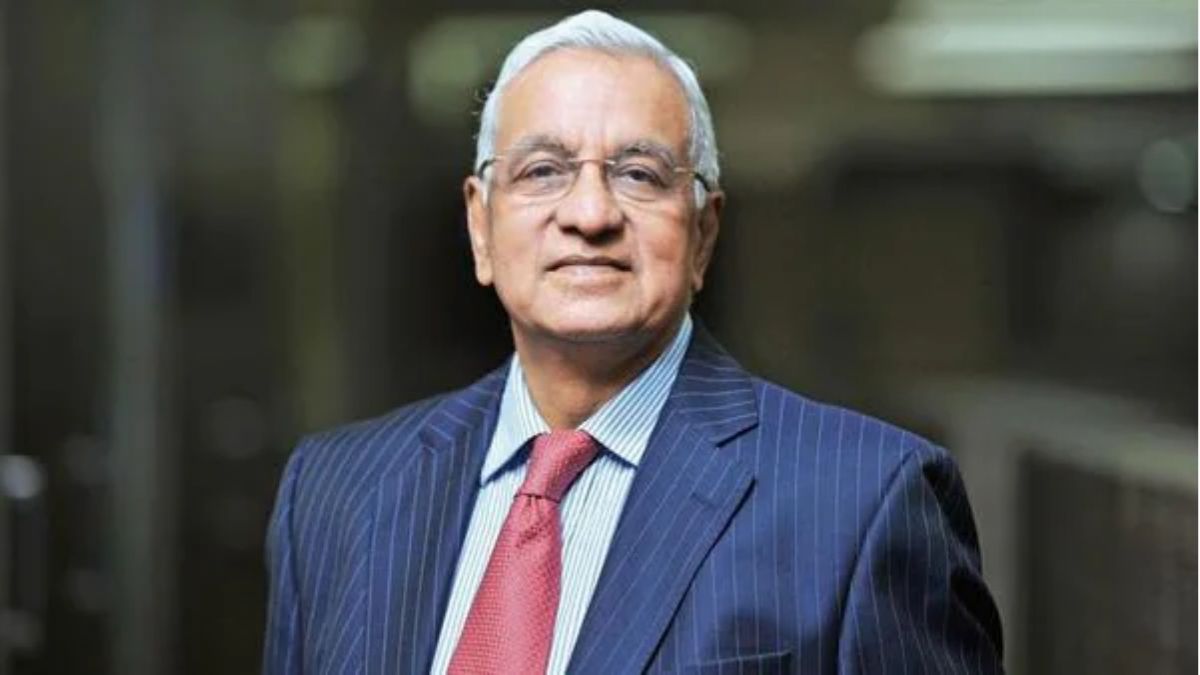
India’s National Stock Exchange (NSE) has added another milestone to its journey, becoming the world’s fifth-largest publicly traded stock exchange operator by market capitalisation. In the process, it has moved ahead of global names such as Nasdaq and Hong Kong Exchanges and Clearing (HKEX).
The development comes as NSE’s share price continues to gain momentum following its much-awaited stock market debut in September. At the latest market price on November 20, 2026, the exchange’s market capitalisation stood at approximately ₹5.56 lakh crore (US$59.7 billion).
This places NSE ahead of HKEX, valued at around US$58.1 billion, and Nasdaq, at approximately US$57.7 billion.
NSE Joins the World’s Five Most Valuable Exchange Operators
The latest ranking puts NSE among some of the biggest exchange businesses in the world.
CME Group leads the list with a market capitalisation of approximately US$111.05 billion, followed by Intercontinental Exchange at US$95.5 billion. Deutsche Börse and London Stock Exchange Group occupy the third and fourth positions, respectively, with valuations of around US$65 billion and US$60.3 billion.
NSE follows in fifth place with a valuation of US$59.7 billion.
This is a significant development for India’s capital markets. It also reflects the growing scale of NSE as a business, beyond its role as a platform where millions of investors and traders participate in the financial markets.
NSE Becomes India’s Ninth Most Valuable Listed Company
The global milestone is accompanied by another domestic achievement.
At a market capitalisation of approximately ₹5.56 lakh crore, NSE has become the ninth most valuable listed company in India, moving ahead of Kotak Mahindra Bank, whose market capitalisation stood at around ₹5 lakh crore.
The top positions in the Indian market continue to be occupied by companies such as Reliance Industries, Bharti Airtel, HDFC Bank, ICICI Bank and State Bank of India.
NSE’s entry into the country’s top 10 places it alongside some of India’s largest businesses and financial institutions.
From Its IPO to a ₹5.56 Lakh Crore Market Capitalisation
The milestone is particularly noteworthy given how recently NSE entered the public markets.
After years of anticipation, NSE launched its ₹22,561-crore initial public offering (IPO) in September 2026. The issue was an offer for sale (OFS), allowing existing shareholders to sell a portion of their holdings rather than raising fresh capital for the exchange.
The IPO was subscribed 5.69 times during the bidding period from September 17 to September 21. NSE shares subsequently made their stock market debut on the BSE on September 24, listing at ₹1,800 against an issue price of ₹1,785.
Since then, the stock’s market value has continued to rise. On November 20, shares were trading at ₹2,236.10 at the time of the latest market report, taking the exchange’s valuation to approximately ₹5.56 lakh crore.
What Makes NSE Such a Significant Player?
NSE’s growing valuation also brings attention to the scale of its operations.
Established in 1992, the exchange began operations in 1994 and has played a major role in transforming India’s financial markets through electronic trading.
Today, its business spans equities, equity derivatives, currencies, commodities, clearing and settlement, indices and market data.
According to NSE’s November 2026 investor presentation, the exchange had 13.7 crore unique registered investors as of September 30, 2026, with its network covering over 99% of India’s postal codes.
It also accounted for around 93% of India’s cash market share during the first half of FY27 and nearly 100% of equity futures market share.
NSE was also ranked the world’s largest equity derivatives exchange by trading volume in 2025, according to the Futures Industry Association ranking cited by the exchange.
A New Chapter for India’s Capital Markets
NSE’s latest market capitalisation milestone is more than just a ranking change. It highlights the growing scale and significance of India’s capital market infrastructure.
From enabling electronic trading in the 1990s to becoming one of the world’s most valuable publicly traded exchange operators, NSE’s journey reflects how much India’s financial ecosystem has evolved.
And with its market capitalisation now at approximately ₹5.56 lakh crore, the exchange has firmly placed itself among India’s largest listed businesses.
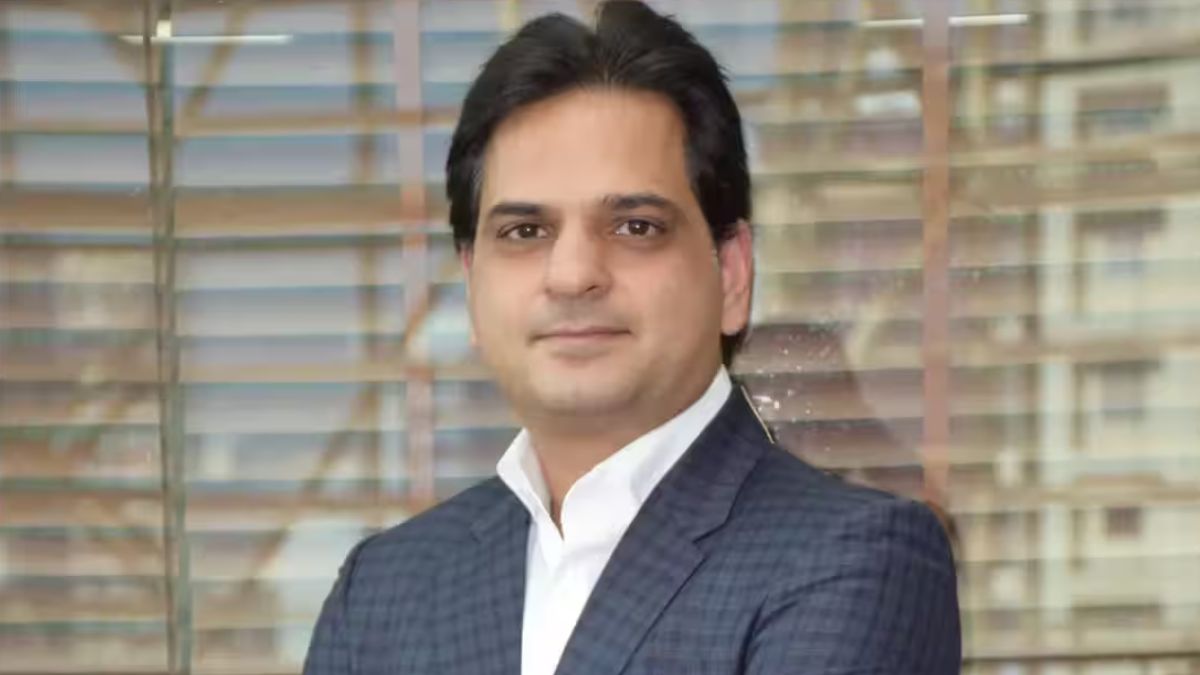
A new chapter begins for Akhil Chaturvedi. After concluding his 13.5-year association with Motilal Oswal Asset Management Company, Chaturvedi has joined ASK Asset Management Private Limited as its Chief Executive Officer (CEO).
The appointment marks another significant milestone in a career spanning over 25 years across asset management, sales and distribution, product development and business growth.
ASK Asset Management announced the appointment, welcoming Chaturvedi as the company looks to begin its next chapter under his leadership. With extensive experience in the mutual fund and asset management industry, he brings a strong understanding of India’s evolving investment landscape.
A Career Built Across Asset Management
Before joining ASK Asset Management, Chaturvedi spent over 13.5 years at Motilal Oswal AMC. He joined the organisation in July 2013 as Senior Vice President and Head of Sales and Distribution, eventually rising to become Executive Director and Chief Business Officer (CBO).
During his association with the company, he was actively involved in driving growth strategies across mutual funds and alternative products.
His professional journey also includes associations with Birla Sun Life Mutual Fund and Daiwa Mutual Fund, where he gained experience across different aspects of the asset management business.
Chaturvedi holds an MBA in Marketing and an MA in Accounting and Finance from the University of Leeds, UK. He is also a Financial Planning Standards Board-accredited Certified Financial Planner and has undertaken additional programmes in sales, management and strategy at institutions including ISB Hyderabad and Cornell University.
A New Chapter at ASK
His appointment comes after a long association with Motilal Oswal AMC, which he described as a journey shaped by professional growth, mentorship and lasting relationships.
In his farewell message, Chaturvedi had written, “I joined Motilal Oswal to build a career. I leave having built relationships, gained invaluable lessons and created memories that will last a lifetime.”
Now, as he takes charge as CEO of ASK Asset Management, Chaturvedi brings more than two decades of industry experience to his new role.
For the asset management industry, this marks another leadership move, while for Chaturvedi, it is the beginning of a new professional chapter.
A New Recognition for a Familiar Voice in Indian Finance
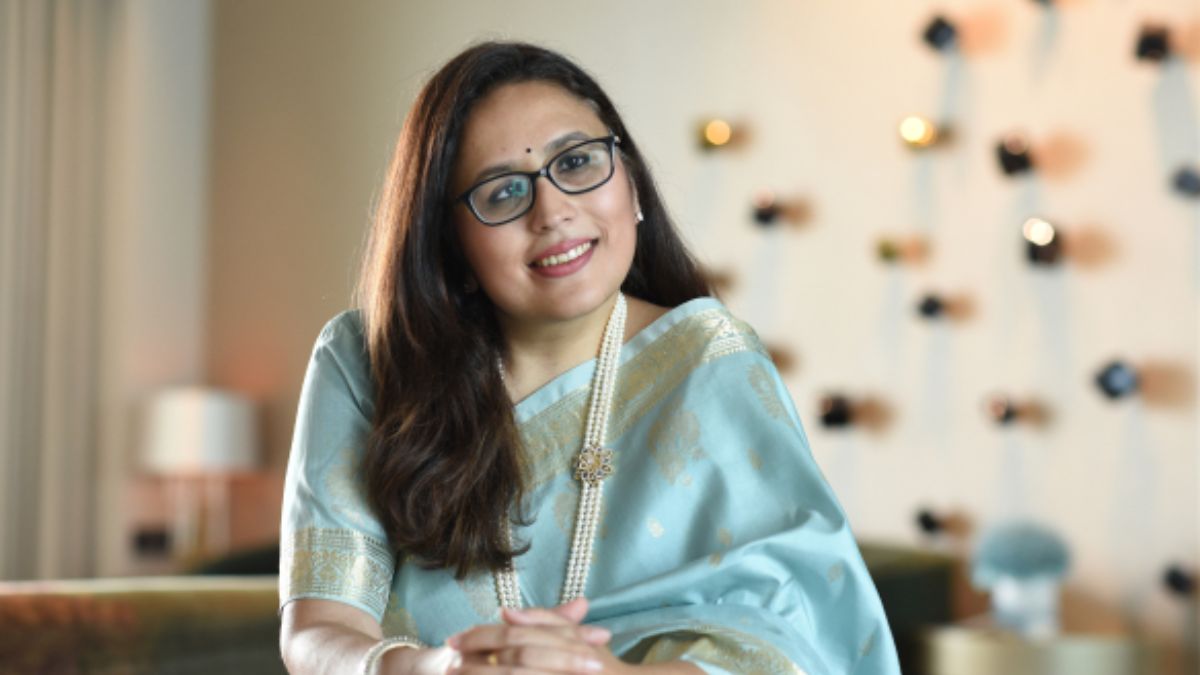
Radhika Gupta, Managing Director and CEO of Edelweiss Mutual Fund, has been named to TIME’s inaugural TIME100 Next India list, recognising 100 emerging leaders shaping India’s future across business, technology, entertainment, sports and other fields. PR Newswire+1
For Gupta, the recognition comes at a time when India’s relationship with money and investing is changing. More people are exploring mutual funds, starting Systematic Investment Plans (SIPs) and looking at ways to build wealth over the long term. Her work has been closely connected to making this shift easier to understand and participate in.
Making investing simpler for everyday Indians
Under Gupta’s leadership, Edelweiss Mutual Fund has recorded significant growth. Between October 2022 and October 2025, the fund house’s assets under management (AUM) increased from approximately ₹91,000 crore to ₹1.64 lakh crore, marking a growth of over 80%.
Its monthly SIP book also crossed ₹500 crore in October 2025, rising from ₹142 crore three years earlier. The number of investor folios more than tripled to 31.5 lakh during the same period. The Economic Times+1
But Gupta’s approach to finance goes beyond numbers. She has often spoken about the importance of making investing less intimidating for first-time investors. Her philosophy of dal chawal investing reflects this belief: simple, everyday financial habits and solutions that help people stay invested rather than constantly chase complicated strategies.
The idea is straightforward. Building wealth does not always require complex financial products or constant market activity. Sometimes, consistency, patience and the power of compounding can do much of the work.
Taking financial conversations beyond the boardroom
Gupta has also built a strong public voice around financial literacy and career development. A former investor on Shark Tank India, she has used public platforms to make conversations around money, ambition and professional growth more approachable.
Through her books, Limitless and Mango Millionaire, she has explored subjects ranging from career growth and overcoming challenges to understanding personal finances and developing healthier money habits.
She has also been candid about her own experiences, including facing bullying over her appearance while growing up and navigating challenges in her professional journey. By speaking openly about these experiences, she has made conversations around confidence, resilience and leadership more relatable, particularly for women.
In a country where financial decision-making has traditionally not always been equally encouraged among women, voices that make money conversations more accessible can play an important role in changing that mindset.
The next generation of investors
Sharing the news of her recognition, Gupta credited her team at Edelweiss Mutual Fund and highlighted the opportunity ahead in India’s financial savings journey. She emphasised the importance of simple innovations, everyday investing habits and the long-term power of compounding.
Her message also pointed towards an important shift: India’s wealth creation story will not be shaped only by large investors and financial institutions, but also by ordinary individuals who are beginning to participate in the markets.
Being featured on TIME’s inaugural TIME100 Next India list is an important recognition of Gupta’s contribution to this evolving financial landscape.
And perhaps the bigger takeaway is this: making finance easier to understand is not just about simplifying numbers. It is about helping more people feel confident enough to take charge of their financial futures.
-
 News2 months ago
SC Says No Stay On New UPI Charges Above ₹2,000
-
 Podcast1 year ago
Nitin Jain: From IIT to Investment Titan, Managing ₹60,000 Crore AUM
-
 News2 months ago
NSE Makes Long-Awaited Market Debut After ₹22,562-Crore IPO
-

 Explainer6 months ago
How Much SIP Do You Need to Build ₹1 Crore? The Power of Time and Compounding
-
 Podcast2 years ago
From ₹1 Lakh Lost to Managing ₹650 Crore: How Divam Sharma of Green Portfolio Built a Fundamental Investing Approach
-
 Podcast5 months ago
Can ₹200 SIPs Create India’s Next Investing Revolution? Ravi Kumar Jha’s Big Bet On Financial Inclusion
-
 News1 month ago
UPI Charges on Payments Above ₹2,000 Delayed Until After Diwali
-
 IPO Watch1 month ago
Jio IPO 2026: How the ₹30,213 Crore Issue Will Use Its Funds